Ampelos, Gavdos, Chania,Crete
Fortification of Gavdos
1
2 / 21
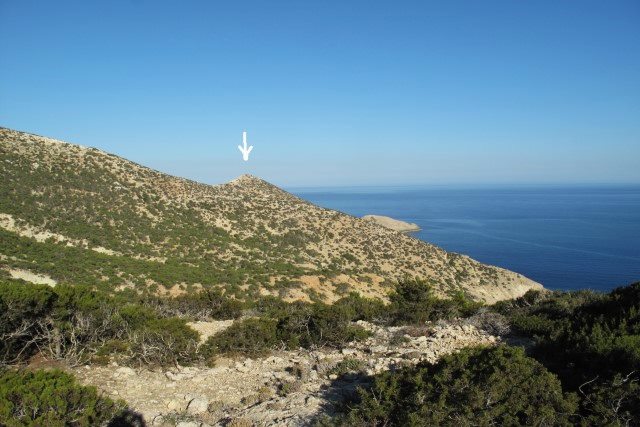
view of the hill from the path Ampelos-Potamos
3 / 21
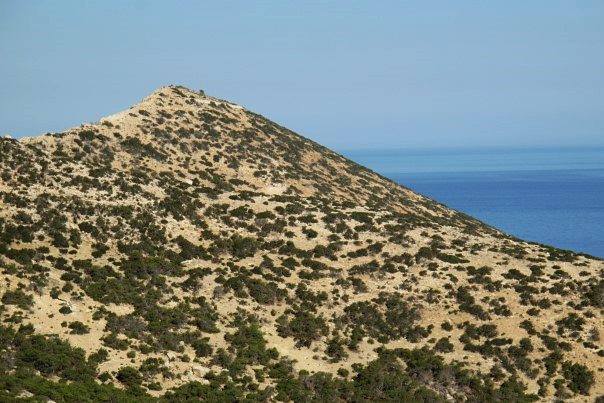
view of the hill from the path Ampelos-Potamos
4 / 21
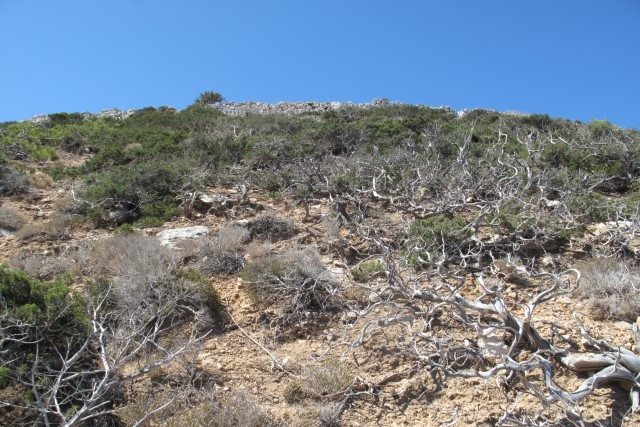
hiking - first view of the wall
5 / 21
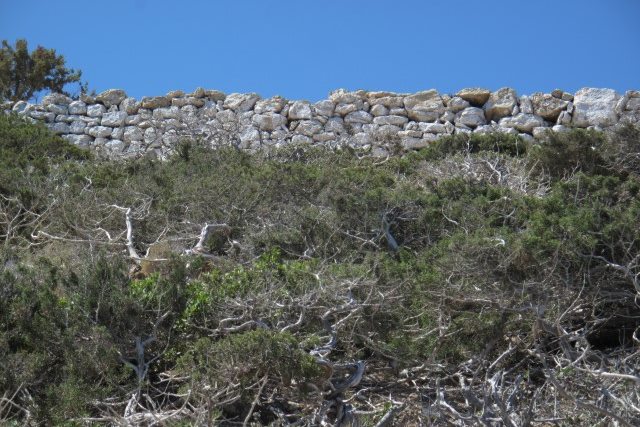
hiking - view of the wall
6 / 21
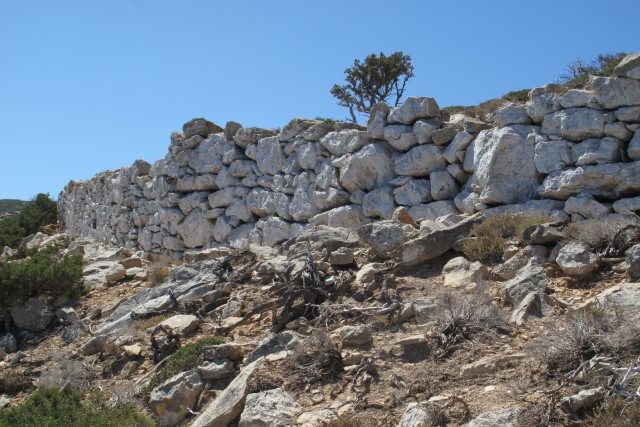
the wall
7 / 21
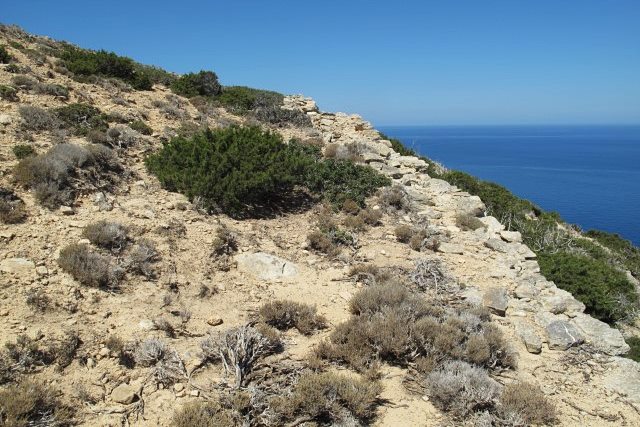
view of the NW section of the wall from the interior
8 / 21
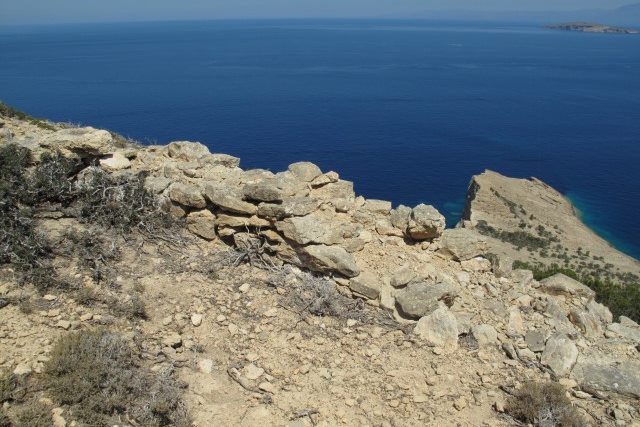
view of the NW section of the wall from the interior
9 / 21
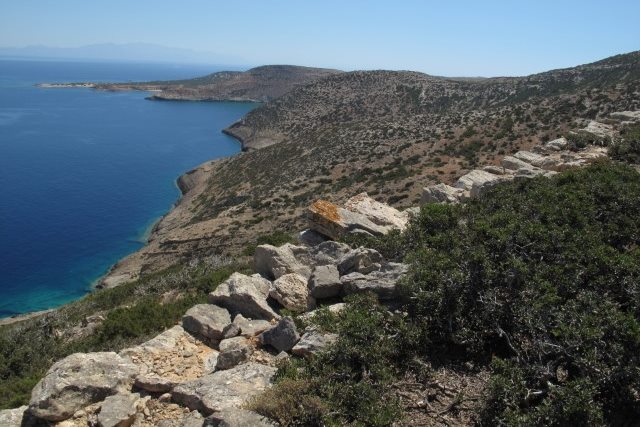
view from the interior with the nearby beaches
10 / 21
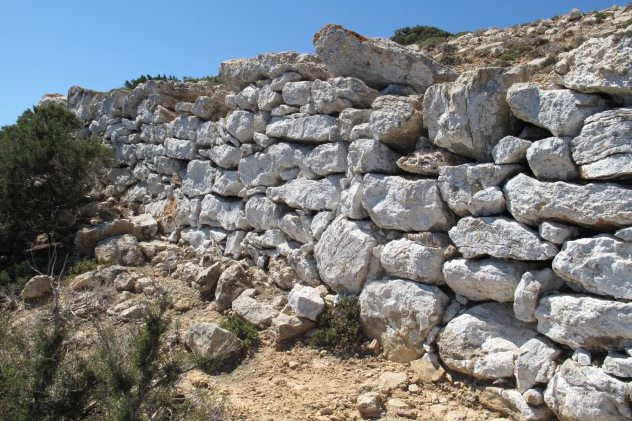
the wall
11 / 21
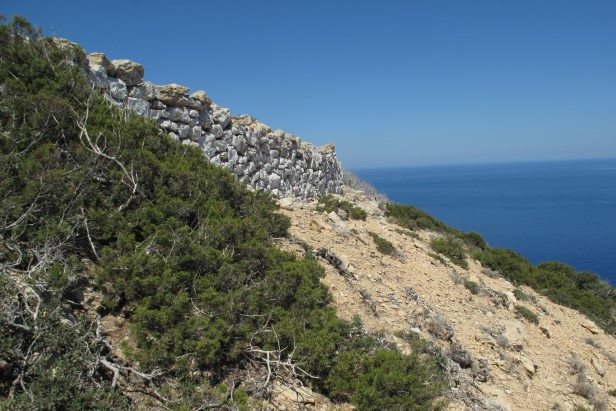
the wall
12 / 21
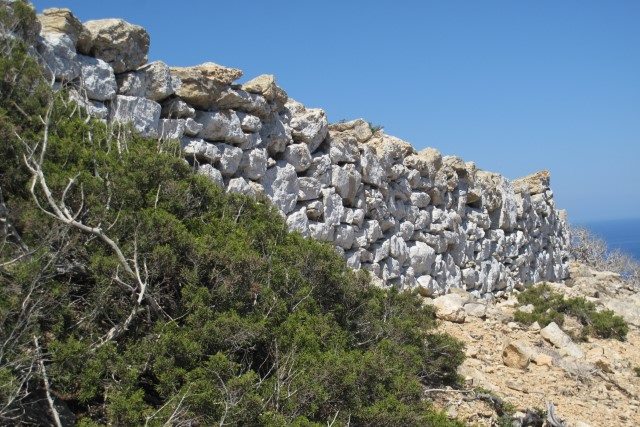
the wall
13 / 21
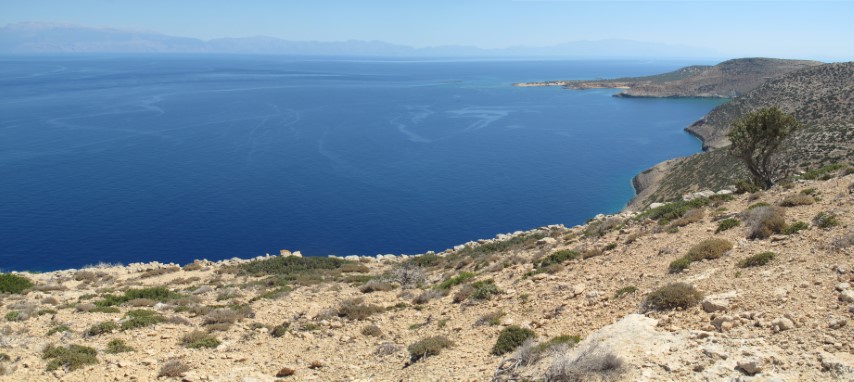
panorama if the interior of the fort
14 / 21
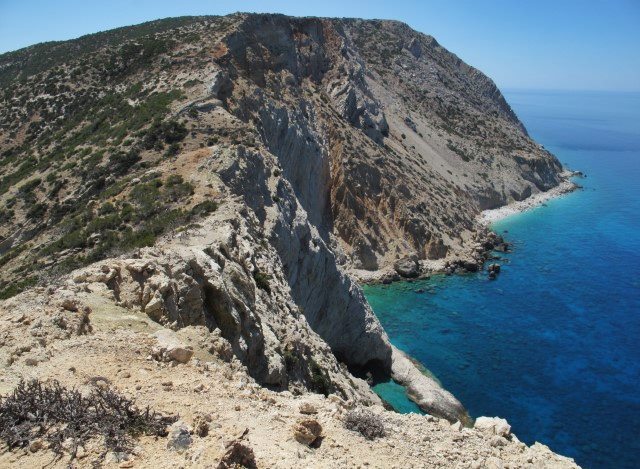
the unwalled back-side of the fort
15 / 21
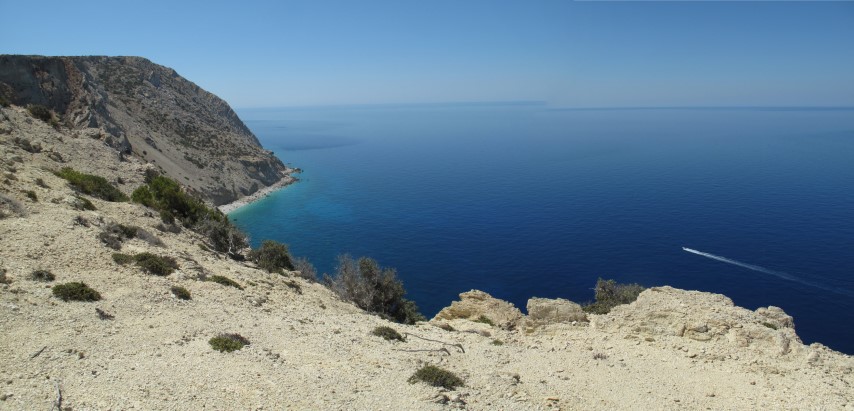
the unwalled south-side of the fort
16 / 21
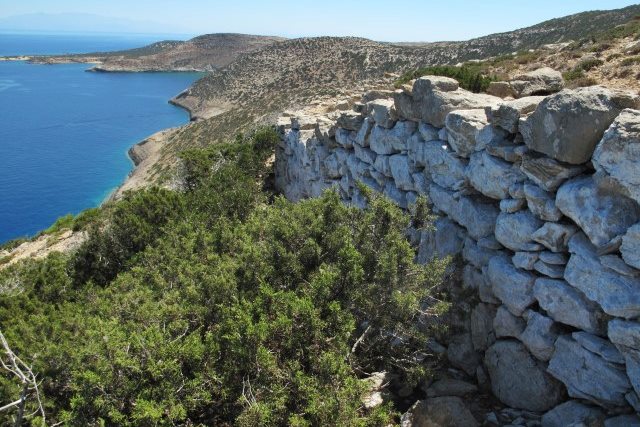
the wall
17 / 21
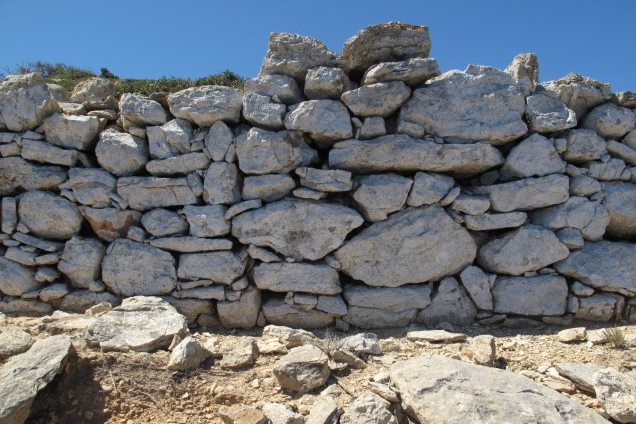
details of the wall
18 / 21
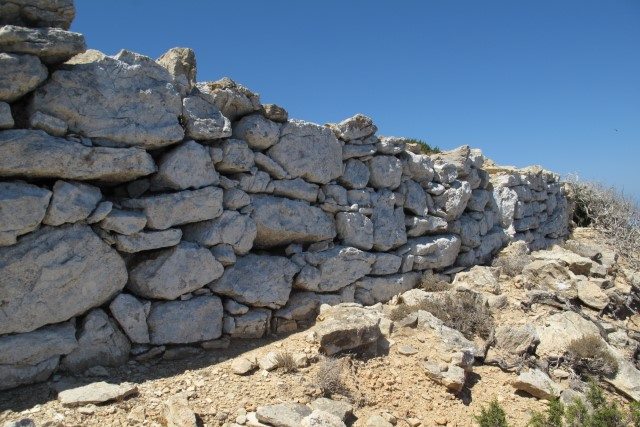
details of the wall
19 / 21
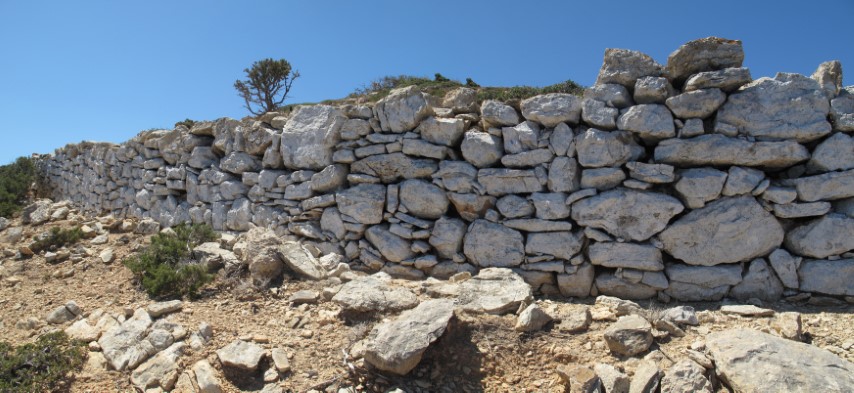
panorama of the fortification
20 / 21
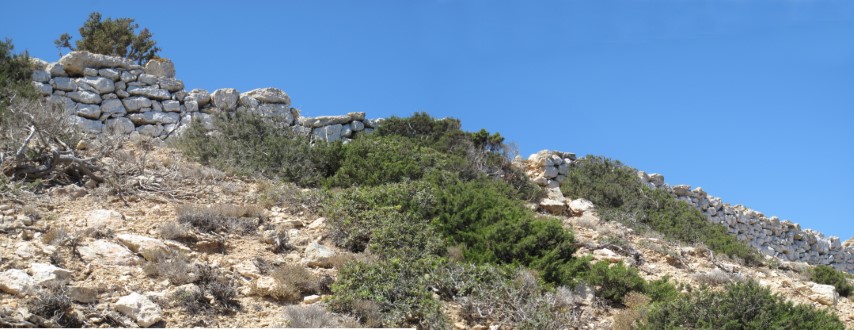
panorama of the fortification
21 / 21
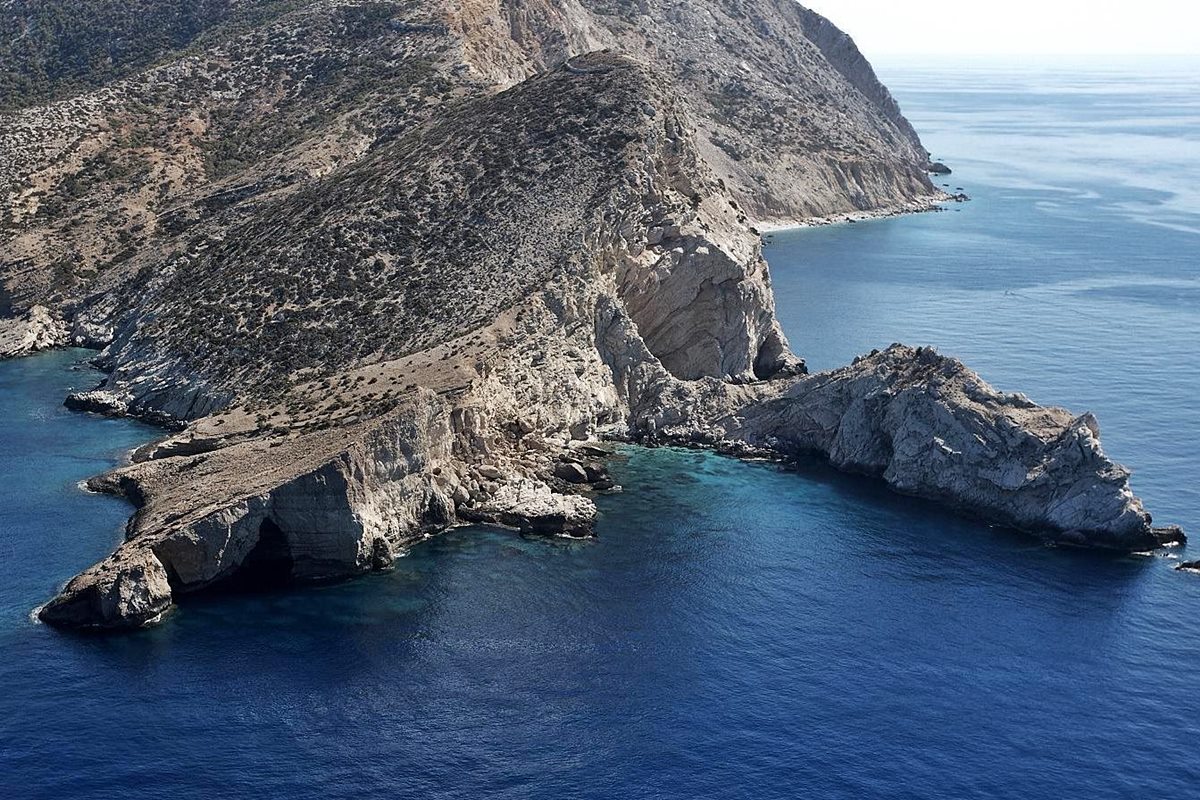
the rock and the fortification from the sea (from west)
THE END
| Location: |
| On a conical rock above the sea at the northwestern coast of Gavdos island, south of Crete |
| Region > Prefecture: | 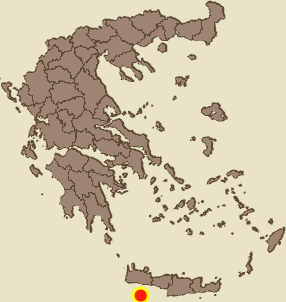 |
| Crete Chania | |
| Municipality > Town: | |
| City of Gavdos • Ampelos | |
| Altitude: | |
| Elevation ≈ 120 m |
| Time of Construction | Origin | |
| perhaps 13th - 15th cent. | VENETIAN  |
|
| Castle Type | Condition | |
| Dry-Stone Fortification |
In Ruins
|
Ruins of a dry-stone Venetian fortification on a conical rock at the northwestern tip of Gavdos island.
History
This is a very small fort built on the top of a steep hill about 120m high, near Cape Kefali at the northwestern tip of the island. Its name, history and date of construction are unknown.
According to a brochure of the history of the island published by the Municipality of Gavdos, with information drawn from the Archaeological Service, the construction of the fort probably dates back to the years of Venetian rule.
And indeed, the construction characteristics as well as the location and purpose of the fort (as will be seen below) make such a dating very likely.
Structure, Fortification & Buildings
The fortification, quite rough, consists of a semicircular enclosure approximately 90 meters long which extends from NW to SE. The southern side of the peak was not fortified because from there the rock falls vertically into the sea making any access impossible.
The small enclosure had no towers and in general the fortification is weak and does not seem intended for serious defense. The purpose of the fort was probably to observe the sea routes northwest of the island and towards Crete. The view and the breadth of the horizon from this peak are truly astonishing.
We must imagine that this small fort-observatory was part of the wider defense of Crete and especially of its southern coasts, towards which Muslim invaders (Arabs, Turks) were particularly directed. It is worth noting that the same area is currently overlooked by the modern military outpost located at the nearby Lighthouse of Ambelos.
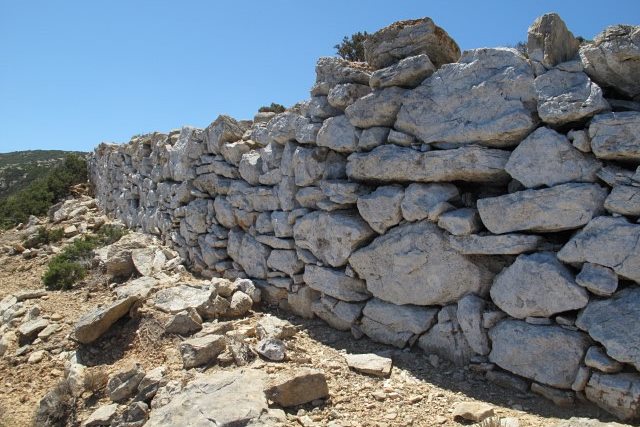
The wall is built with rough or slightly hewn stones of various sizes without mortar between them (dry stone). The construction is certainly not ancient and does not appear to be Byzantine either. It is generally preserved at a height of about 2.50m. The original height was probably not much greater if we judge by the small number of stones that have fallen, although many have probably rolled down the steep slope. The front of the stones retains a strange whiteness, making the wall visible from afar as if it were plastered.
In the windswept interior of the fort, the ground is quite sloping and no ruins of buildings or even cisterns can be seen, and they probably did not exist. Probably the small guard-observers used some wooden huts – if they existed.
The absence of sherds (ceramics) that would help dating is striking. Probably the fort was built in a hurry to serve an urgent need (e.g. the outbreak of a war) and then abandoned. No entrance gates can be seen in the fortification today. One or two openings that exist are simply ruined parts. The entrance must have been located at the southeastern end of the wall, which is completely destroyed today. We must imagine that the only access path that would start from the area of Ampelos and end up at the fort following the brow of the rocks also ended there.
Today, access from this point is impossible as dense vegetation has covered everything. Ruined terraces can still be seen among the bushes, showing that the landscape was once different. In general, there is no path leading to the fort today, making it completely isolated and unknown even to locals. Perhaps the only access is from Bo beach. Walking along the sharp cliffs of the coastline to the west, one can reach the base of the fort hill. From there, one climbs with difficulty (and sometimes with danger) the steep slope with the unstable ground (essentially a slippery slope) by stepping wherever one finds a place free of vegetation.
Beyond the historical interest for a completely unknown monument, the amazing view from the top compensates the hiker.
Sources
- Research, photos (AUG 2025) and presentation by Γιώργος Μπάλος
- Info by Tony G An
| Access |
|---|
| Approach to the monument: |
| (see description of the fortification) |
| Entrance: |
| Free access after trekking and hiking. |
| Other castles around |
|---|