Gavrio, Andros, Cyclades,South Aegean
Tetrapyrgion of Gavrio
| Location: |
| Location “Stavros Pelekitis”, between the villages Ano Fellos and Koumari at NW Andros, 2.5km north of Gavrio |
| Region > Prefecture: | 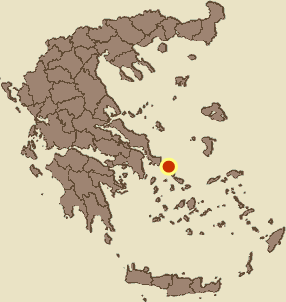 |
| South Aegean Cyclades | |
| Municipality > Town: | |
| City of Andros • Gavrio | |
| Altitude: | |
|
Elevation ≈ 322 m (Relative Height≈190 m) |
| Time of Construction | Origin | |
| perhaps 10th cent. | BYZANTINE  |
|
| Castle Type | Condition | |
| Castle Ruins |
In Ruins
|
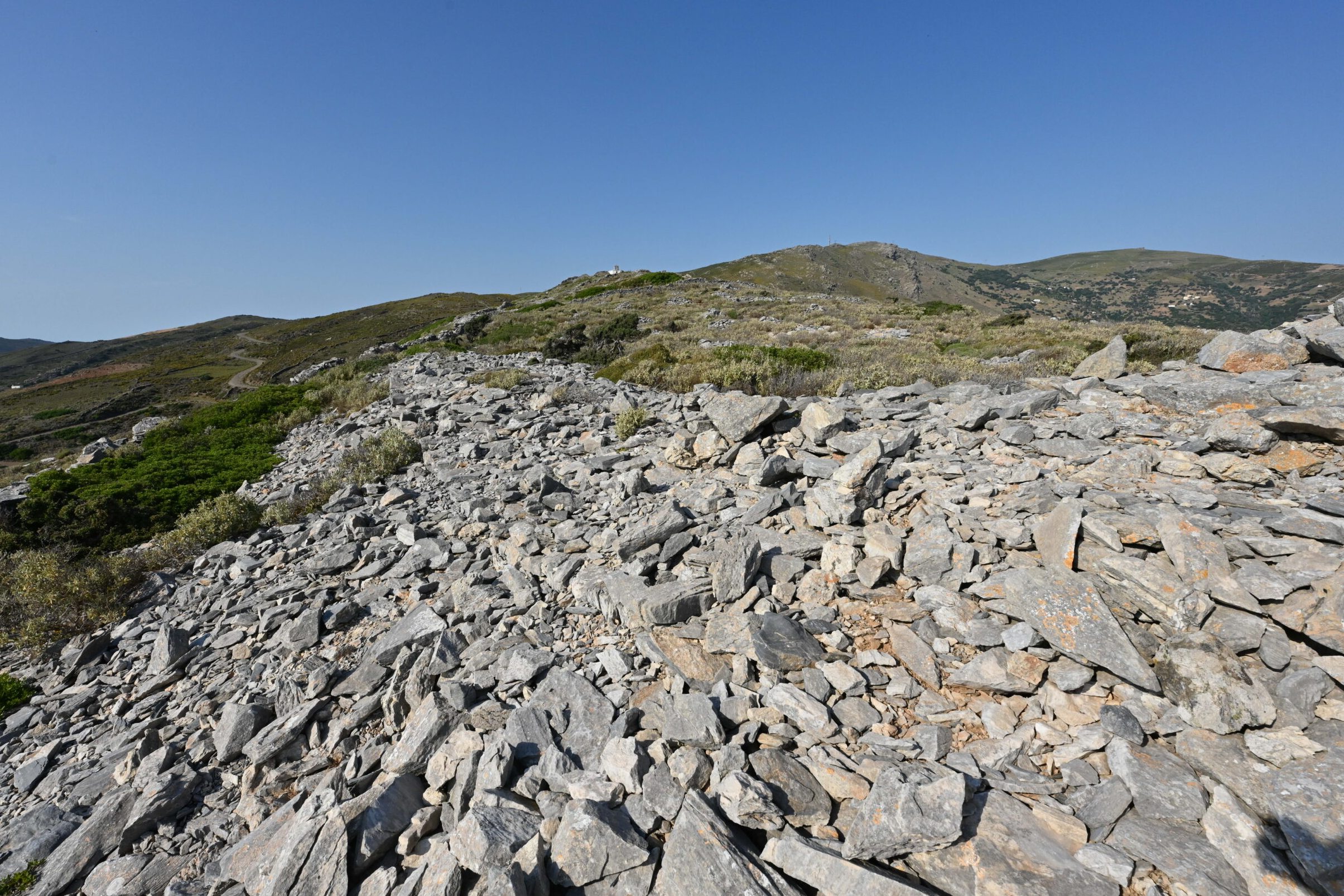
Ruins of a small medieval fortress, of uncertain date, on the plateau of a narrow hill north of Gavrio, in the island of Andros.
On the hill and in the surrounding area there are remains of both an older fortification and a settlement.
Location & Strategic Scope
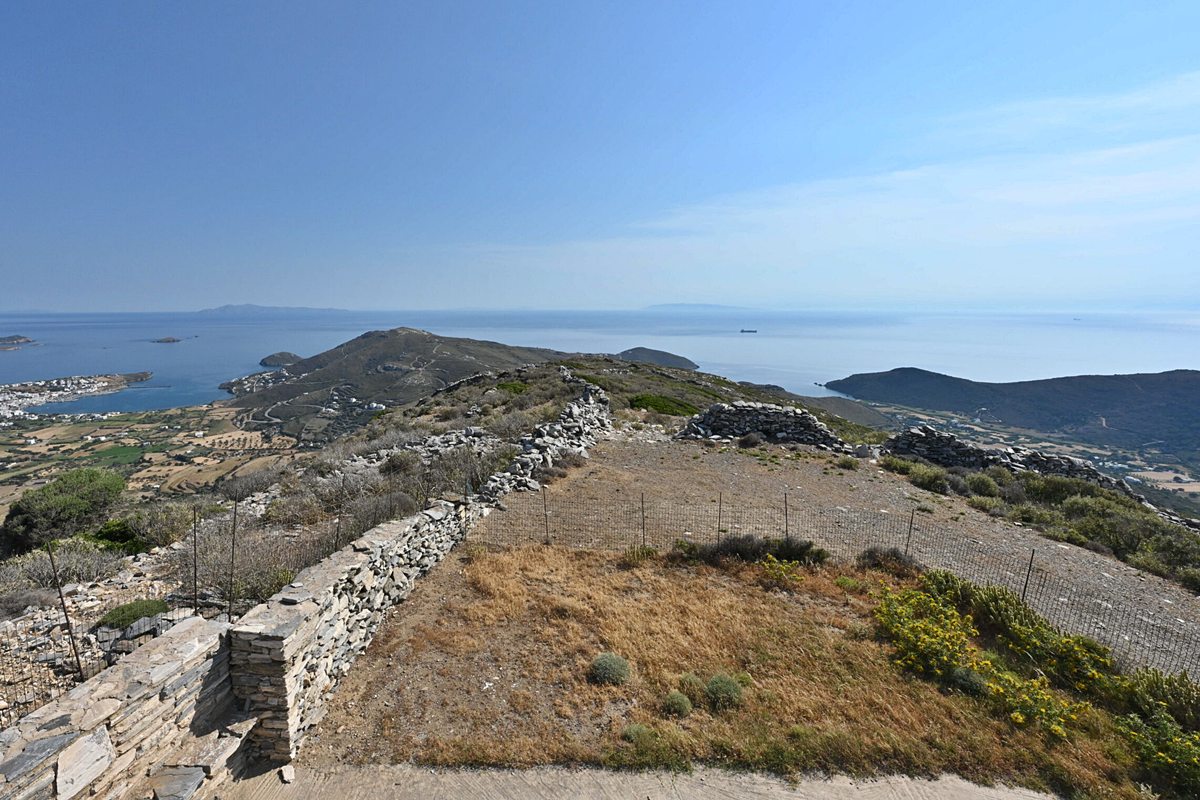
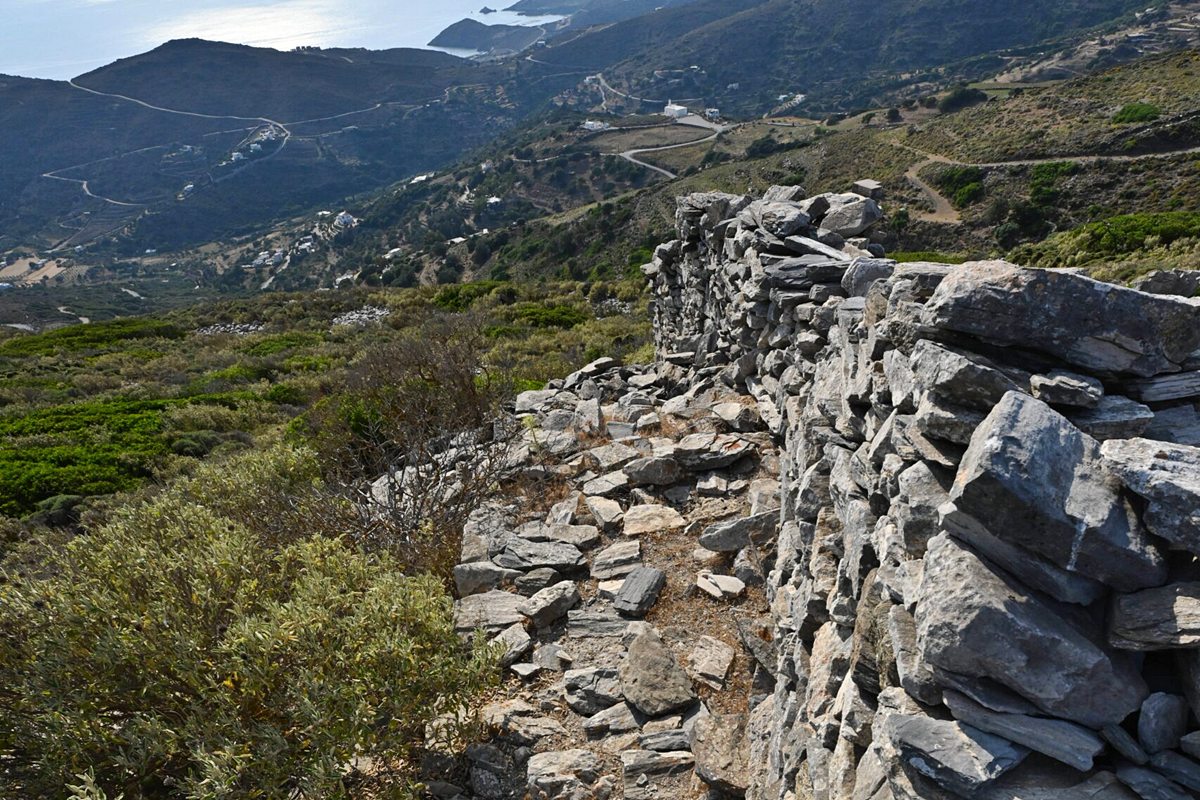
The position of the fortress is prominent, as it dominates the valley of Gavrio and Fellos, controlling the port of Gavrio and overlooking the southern side of the Kafireas sea channel (Kavo Doro) to the middle of the west coast of Andros.
When the weather is good, visibility from Tetrapyrgio reaches as far as Evia, Attica, Kea and Kythnos. To the east, it reaches as far as the central Cyclades islands.
The Name of the Castle
The fortress was called – somewhat arbitrarily – “tetrapyrgion” by modern scholars, because it had 4 towers and because its quadrilateral shape is similar to a characteristic type of fortress of the Roman and Early Byzantine Period, the tetrapyrgion or quadriburgium.
History
There are no references to the fortress from historical sources or from various foreign travelers.
Gavrio with its leeward bay was a port known since antiquity, which was located opposite Attica, but also on the busy Kafireas passage. On the hill above Gavrio, in the area of Fellos, and near the ancient quarries, there was a settlement, part of which was fortified, and it also had an acropolis during Antiquity. At one end of this ancient fortification, the Tetrapyrgion was founded, apparently for the protection of the port of Gavrio during the Early Byzantine or Middle Byzantine Period.
The usage of binding mortar in the walls of the fortress indicates that it is not an ancient castle. Its similarity to the Roman tetrapyrgia and to some Justinian fortresses leads to the hypothesis (Koutsoukou, 2016) that it may be a creation of the Early Byzantine Period, with a construction more likely in the 6th century, during the reign of Justinian.
According to another theory, it may be a Byzantine castle of the 10th century and its construction is related to the regrouping of the Byzantines in the Aegean and the preparations for the reconquest of Crete.
However, there is no strong evidence for a secure dating. The only thing certain is that it is a medieval fortification and does not belong to the Venetian Period of Andros. And we must point out that the construction of the fortress is not of high standards. The forts of the 6th century were more elaborate. This Tetrapyrgion seems to have been hastily constructed to meet current needs. So it is more likely that it was built after the 7th/8th century (when the Saracen raids began) and a dating around the 10th century seems more likely.
Structure, Fortification & Buildings
The fortress is located at the northern end of the hill. The fortified enclosure has a total length of 113.35m. The area within the perimeter is 832sqm.
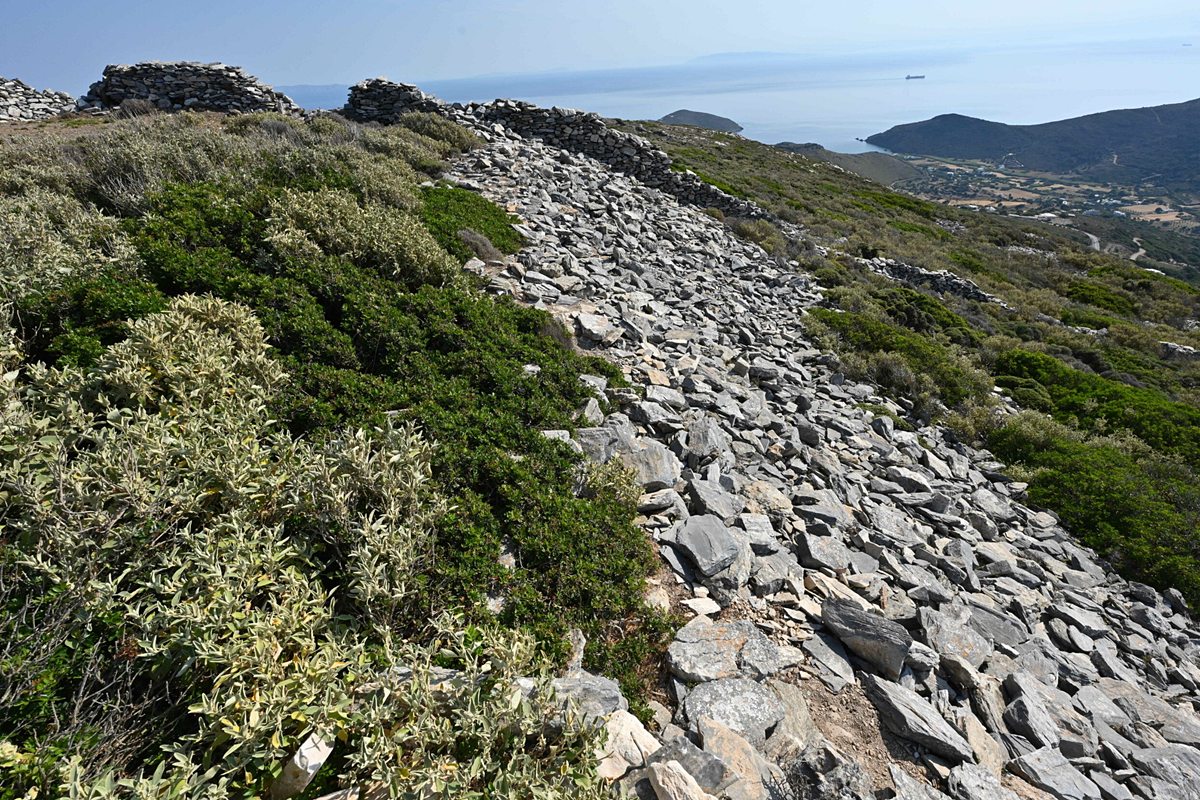
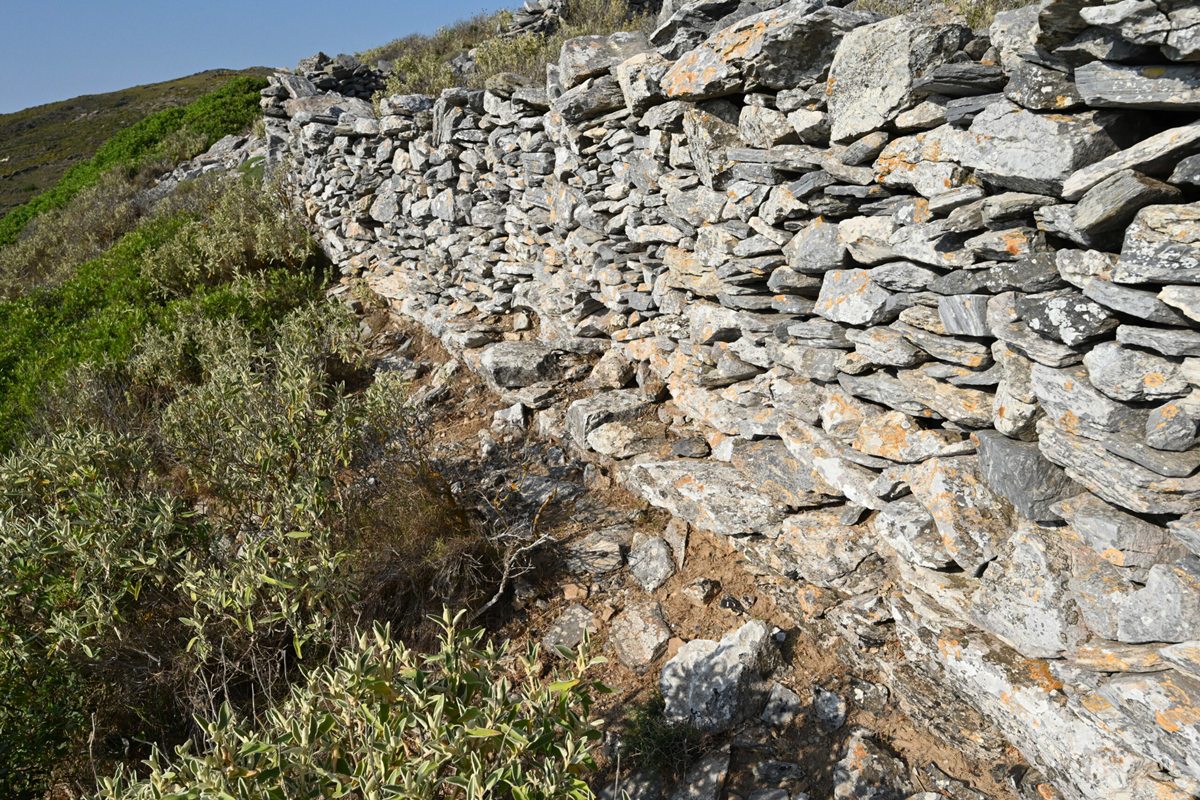
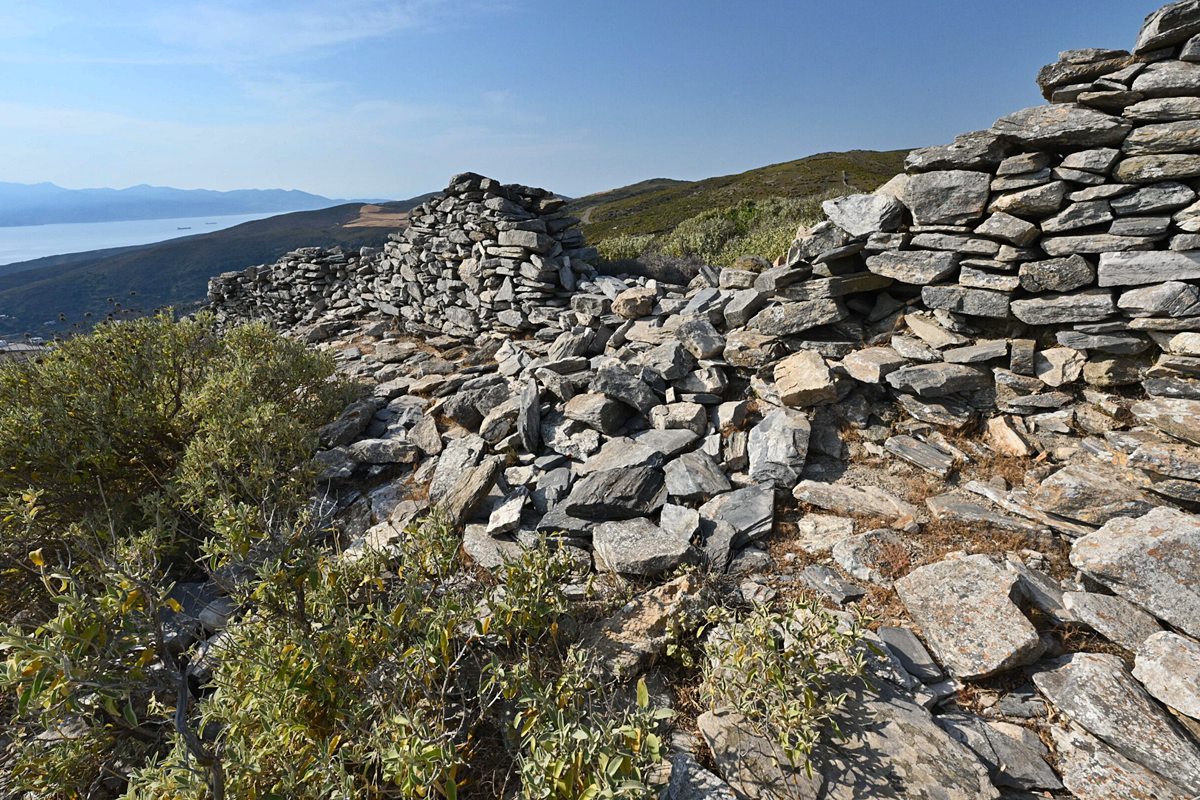
The walls are maintained at a maximum height of 1.5m in some places, while in others it is at foundation level. The thickness of the walls is 1.5 – 2m.
The fortress is quadrilateral, with a slightly trapezoidal layout and with maximum external dimensions of 32✖26m.
Four rectangular towers protrude on its eastern and western sides, while the entrance gate is on the southern side.
The 4 towers are preserved at a low height, approximately 0.50m, and are relatively small, with external dimensions of 3.60✖2.55m. the NW, 3.85✖2.20m the NE, 4.0✖3.0m the SE and 5.90✖3.60m the SW.
The interior of the towers is very small with average dimensions of 1.70✖2m, with the exception of the largest SW tower which reaches 3.70✖2.80m.
The towers must have had wooden floors and communicated with retractable ladders.
The entrance gate is indicated by a simple opening on the south side, while the existence of a slanting wall in front of it has been interpreted as a rampart.
The walls of the fortress are based on the natural rock and rise vertically, with a preserved maximum height of 1.50m. They constitute a strong structure with a thickness of 1.50m and consist of two layers: an outer wall 0.90m thick and an inner one 0.60m thick.
Inside the Tetrapyrgion (where no ceramic finds-shards were found) two buildings have been found, both adjacent to its north wall. One is rectangular in plan, with dimensions of 4.0✖5.6m and a wall thickness of 0.65m. The second building has now been converted into the chapel of Stavros.
The limited dimensions of the fortress suggest that it was used more as a military fort.
The walls of Tetrapyrgion are made of local raw limestone with a binding material of whitish lime mortar. For their construction, larger stones were used on the facades and smaller ones on the inside of the walls. The building material came from the nearby ancient quarries of Pelekiti. It should be noted that in the masonry, no bricks or fragments of tiles were used in the fillings, as was customary in Byzantine buildings.
The relatively modern Chapel of Stavros (Cross) on its northern side has been built on remains of the fort, having also used building material from it.
The Tetrapyrgion has been declared an archaeological site since 1995.
Sources
- Website Cycladic Castles της Εφορείας Αρχαιοτήτων Κυκλάδων, Τετραπύργιο Φρούριο Γαυρίου
- Aνθή Κουτσούκου, «Το τετραπύργιο του Γαυρίου», Γ. Πάλλης (επιστ. επιμ.), Η Βυζαντινή Άνδρος (4ος – 12ος αιώνας): νεότερα από την αρχαιολογική έρευνα και τις αποκαταστάσεις των μνημείων, Πρακτικά επιστημονικής συνάντησης, Αθήνα, 20 Μαρτίου 2015, Ανδριακά Χρονικά 43, Άνδρος: Καΐρειος Βιβλιοθήκη, 2016, 59-64.
| Access |
|---|
| Entrance: |
| Free access |
| Other castles around |
|---|
| Tower of Agios Petros |
| Lower Castle of Andros |
| Castle of Faneromeni |
| Tower of Giannoulis |
| Bistis-Mouvelas Tower |
| Tower of Ostodosia |
| Tower of Sargiannis |