Eleochori, Kalamata, Messenia,Peloponnese
Castle of Gianitsa
or Castle of Eleochori
1
2 / 32
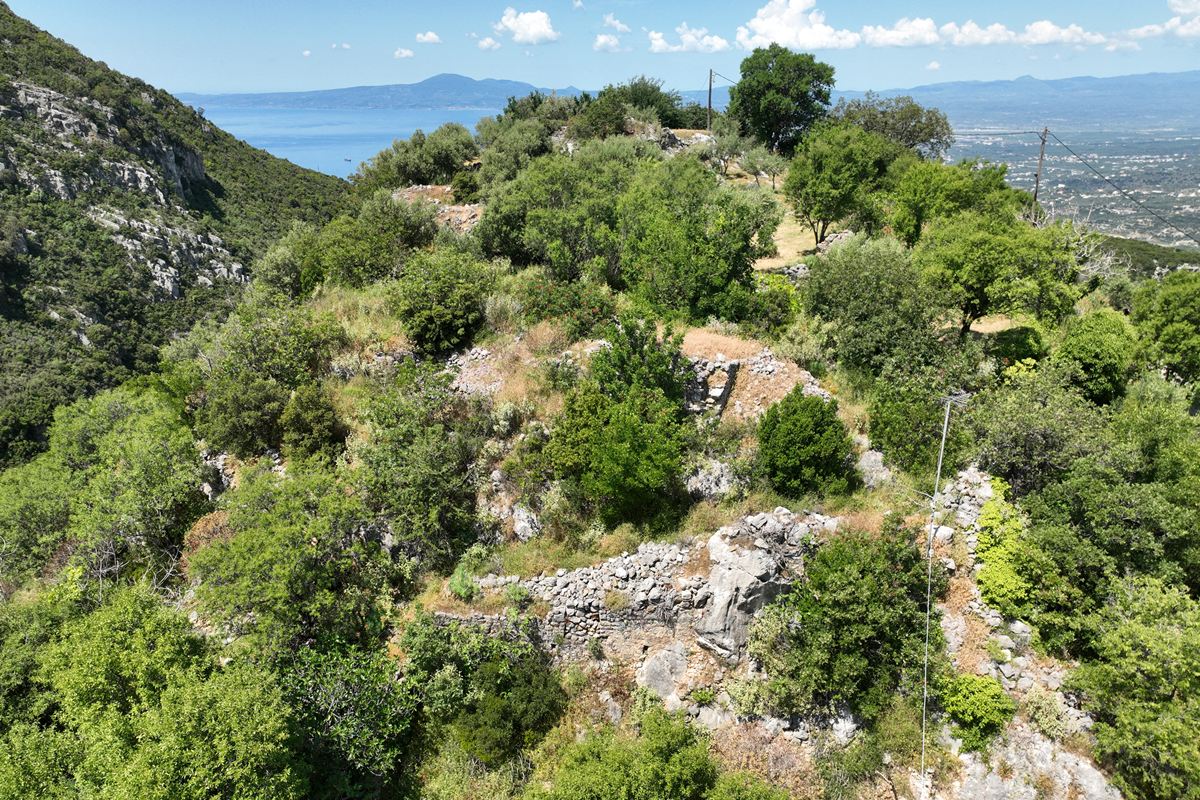
the castle from the east
3 / 32
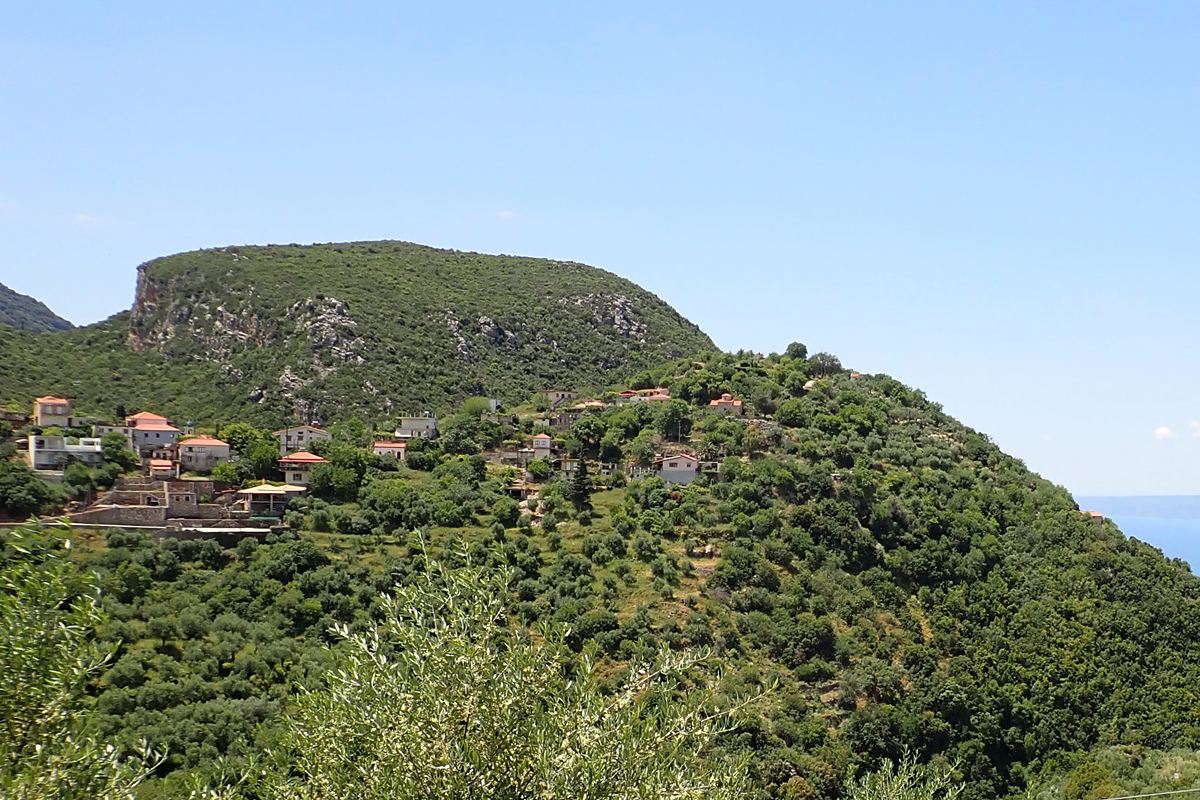
the hill of the castle from the NE
4 / 32
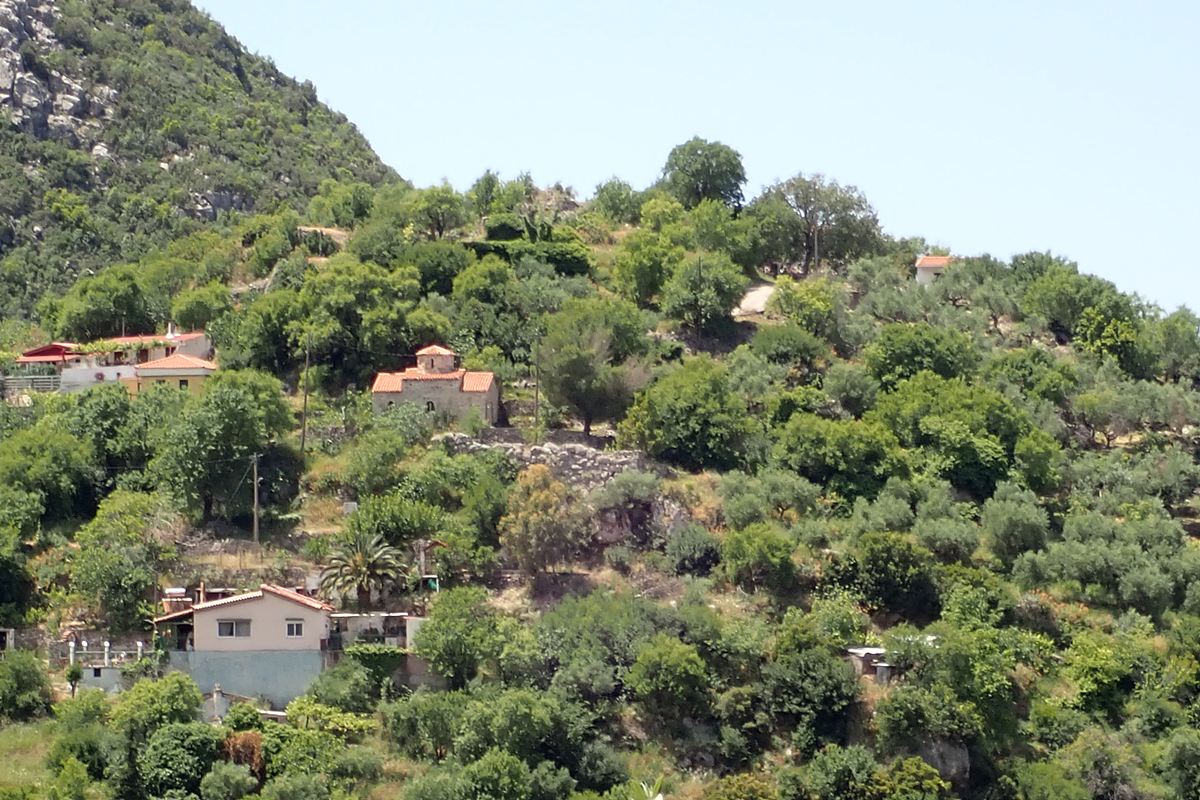
the hill of the castle from the NE
5 / 32
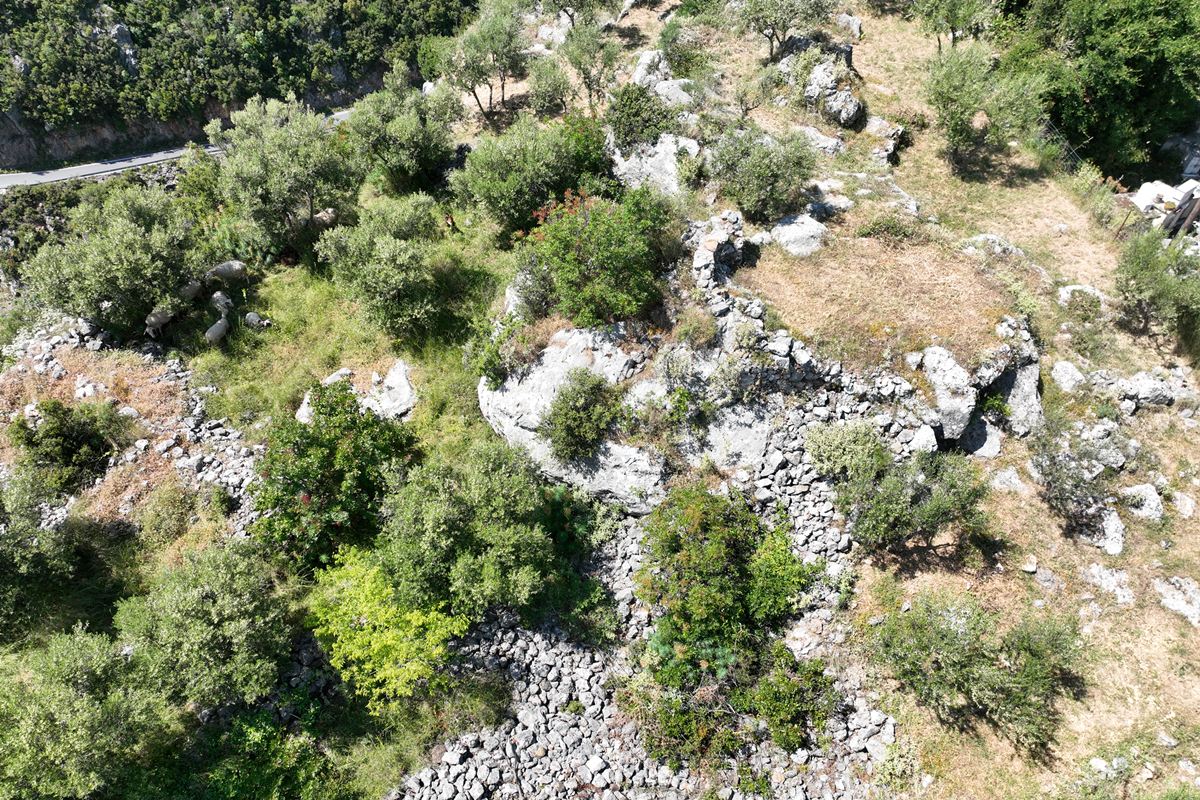
aerial view of the castle
6 / 32
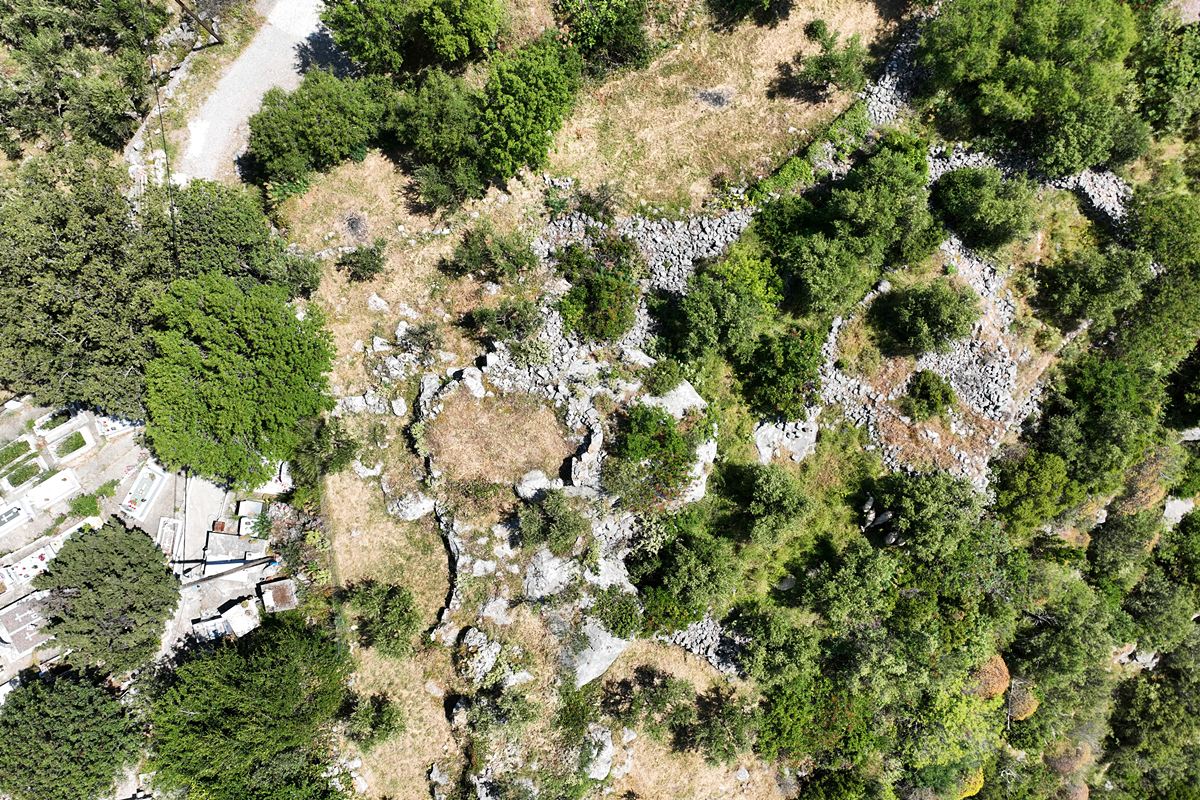
aerial view of SW side of the castle
7 / 32
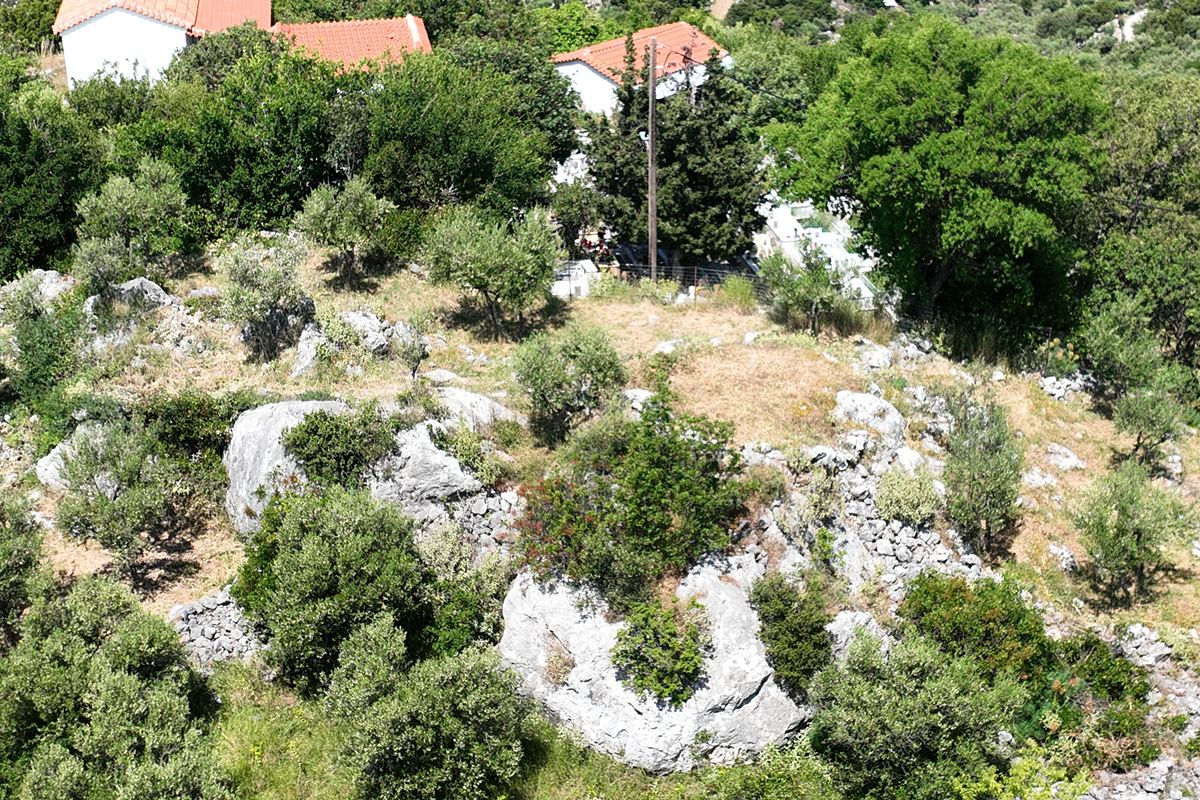
aerial view of SE side of the castle
8 / 32
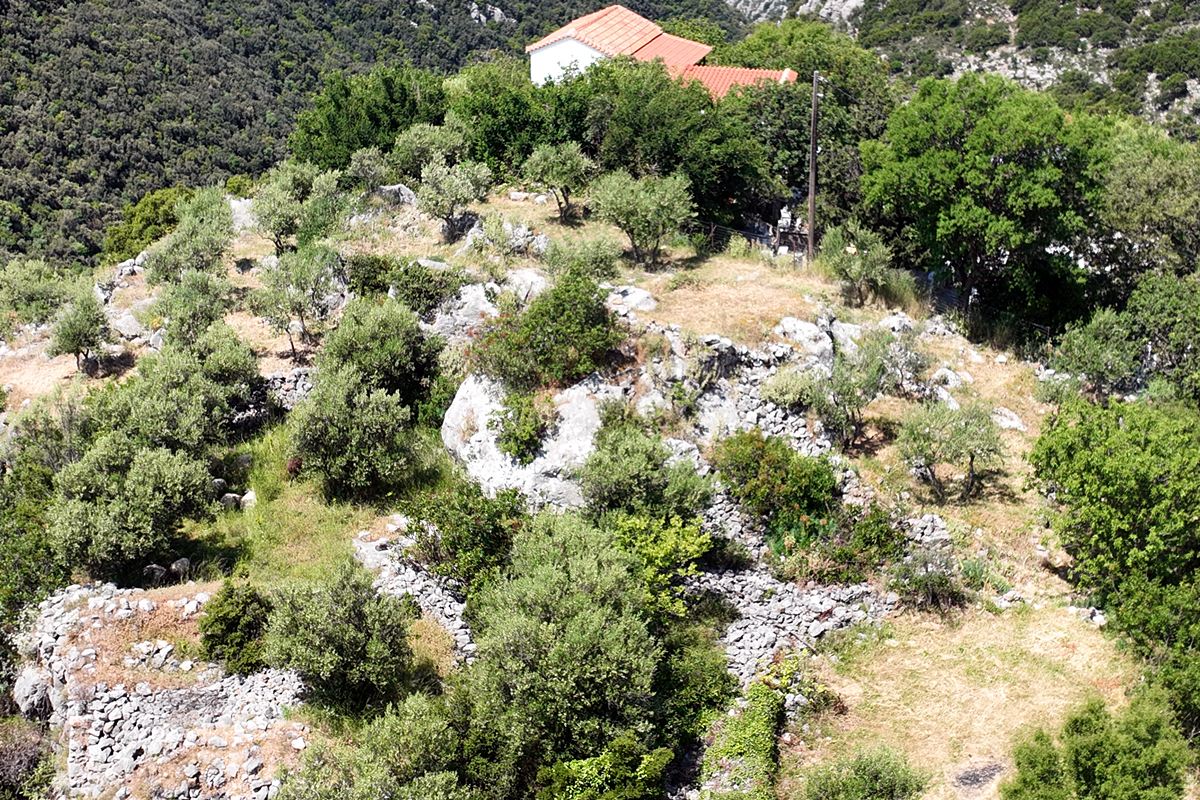
aerial view of east side of the castle
9 / 32
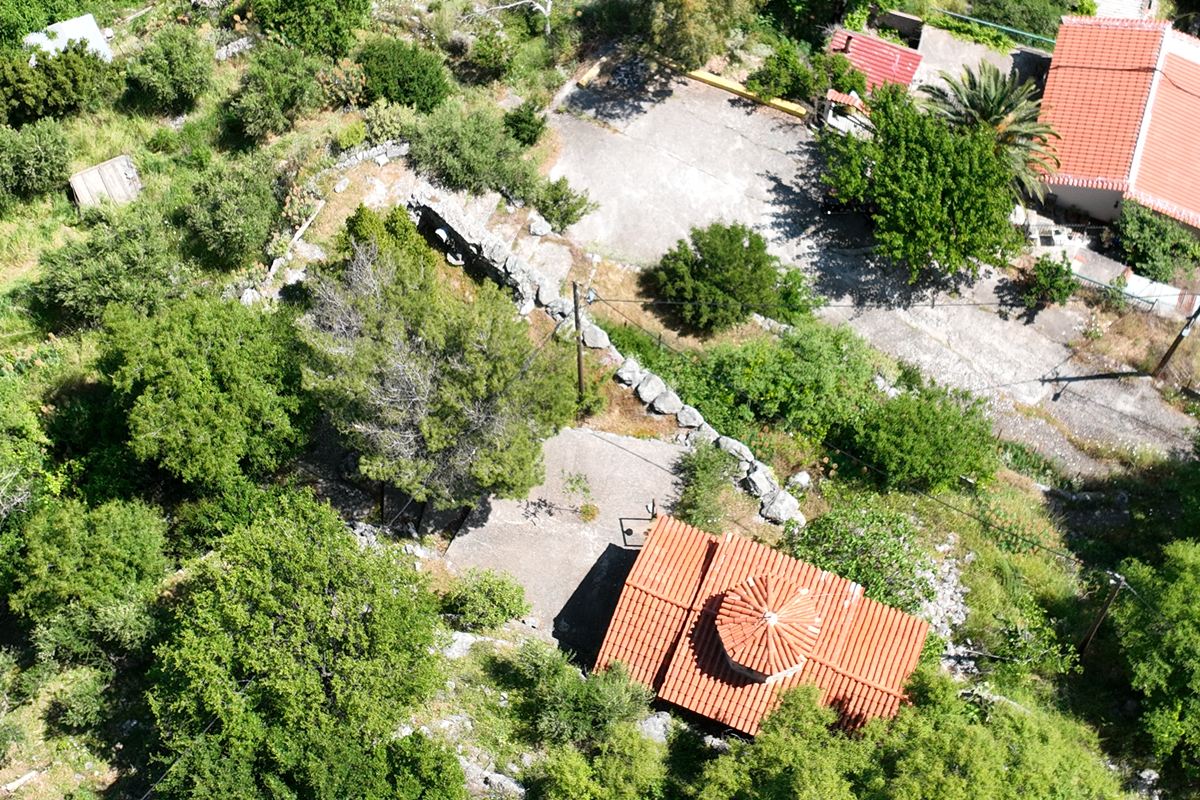
aerial view of NE side of the castle with the ancient wall
10 / 32
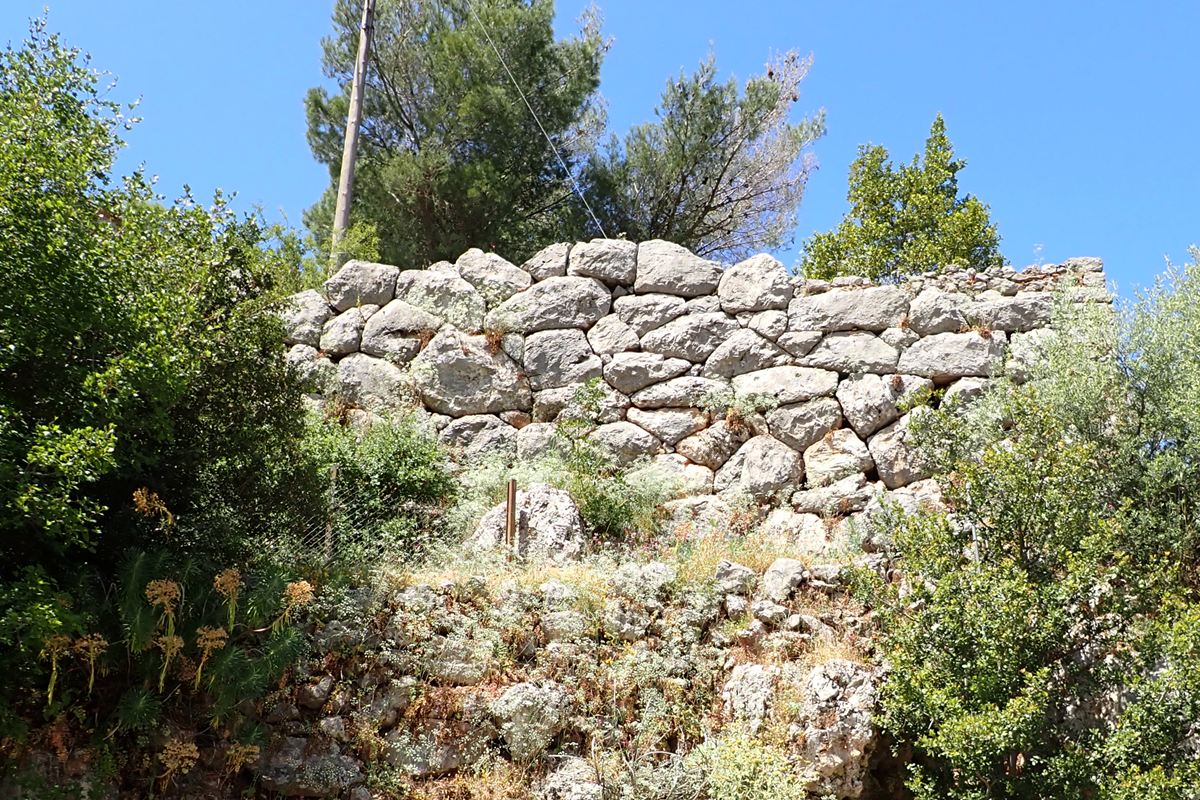
the ancient wall a the NE side, below the church of Agioi Taxiarches
11 / 32
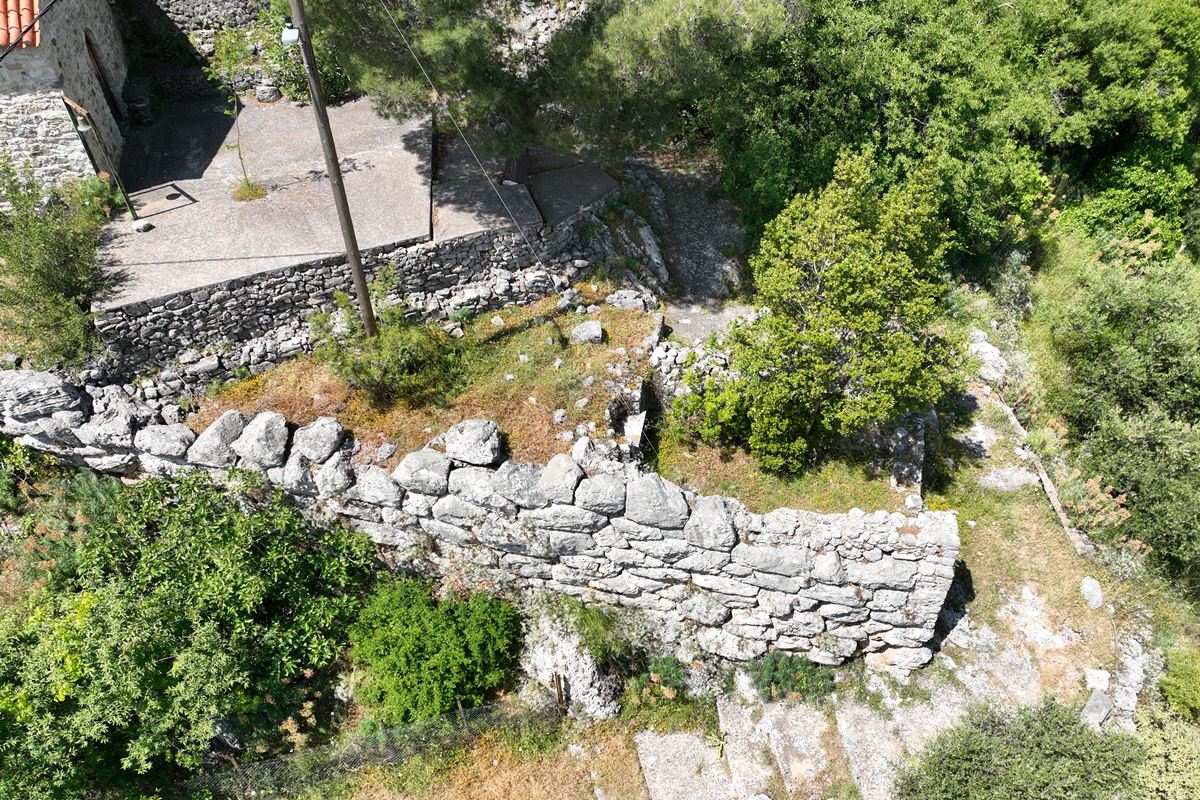
the ancient wall a the NE side, below the church of Agioi Taxiarches
12 / 32
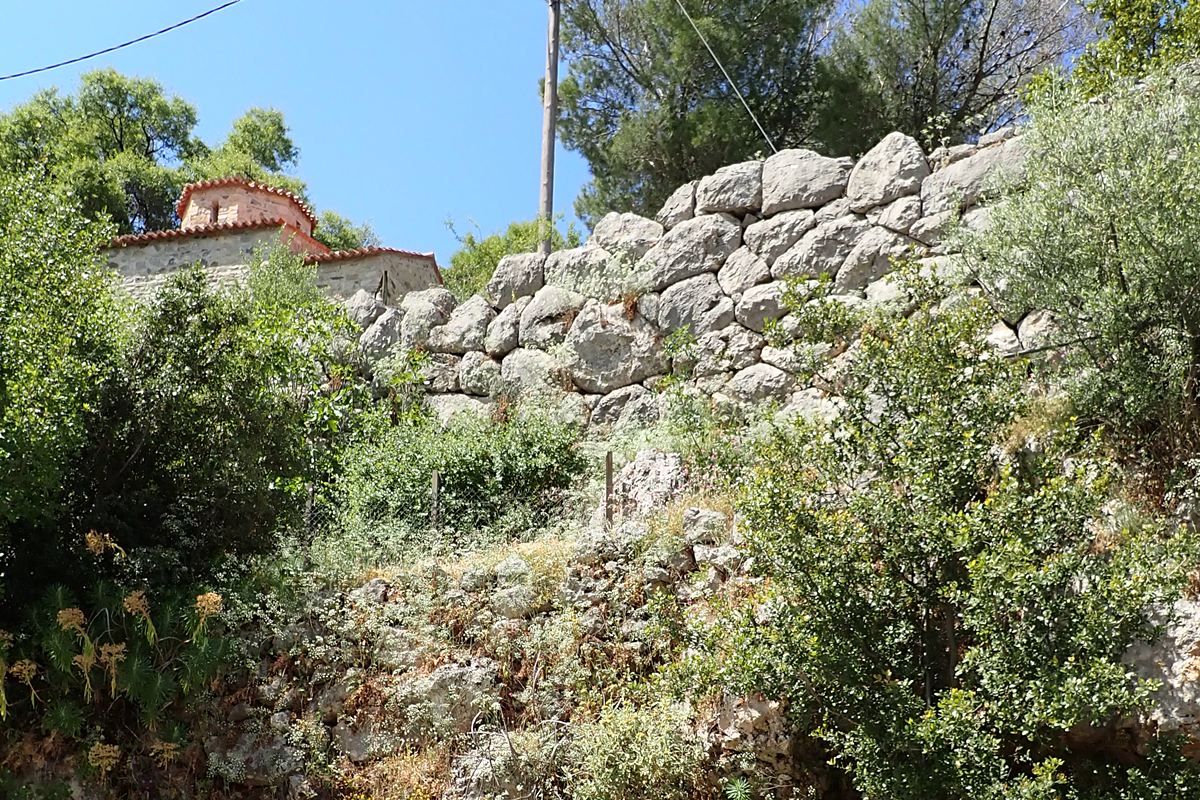
the ancient wall a the NE side, below the church of Agioi Taxiarches
13 / 32
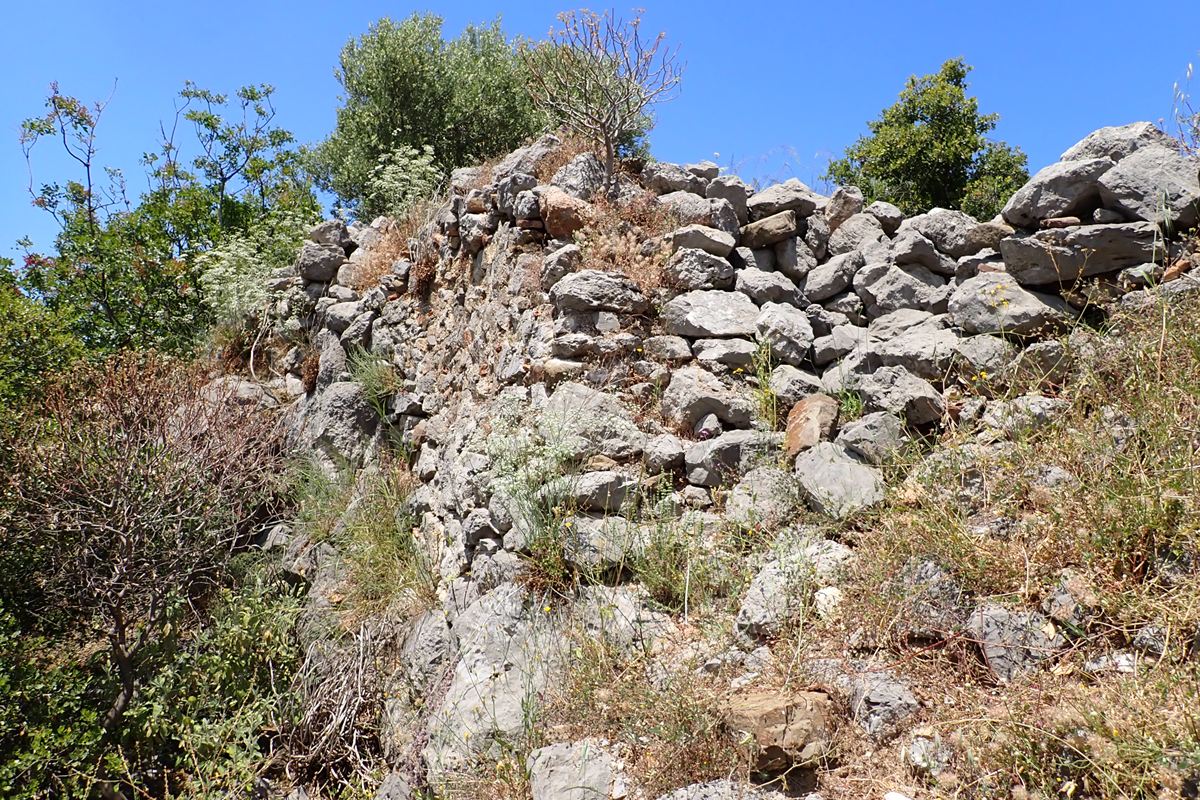
ruins of a building, probably a tower, at the south edge of the perimeter
14 / 32
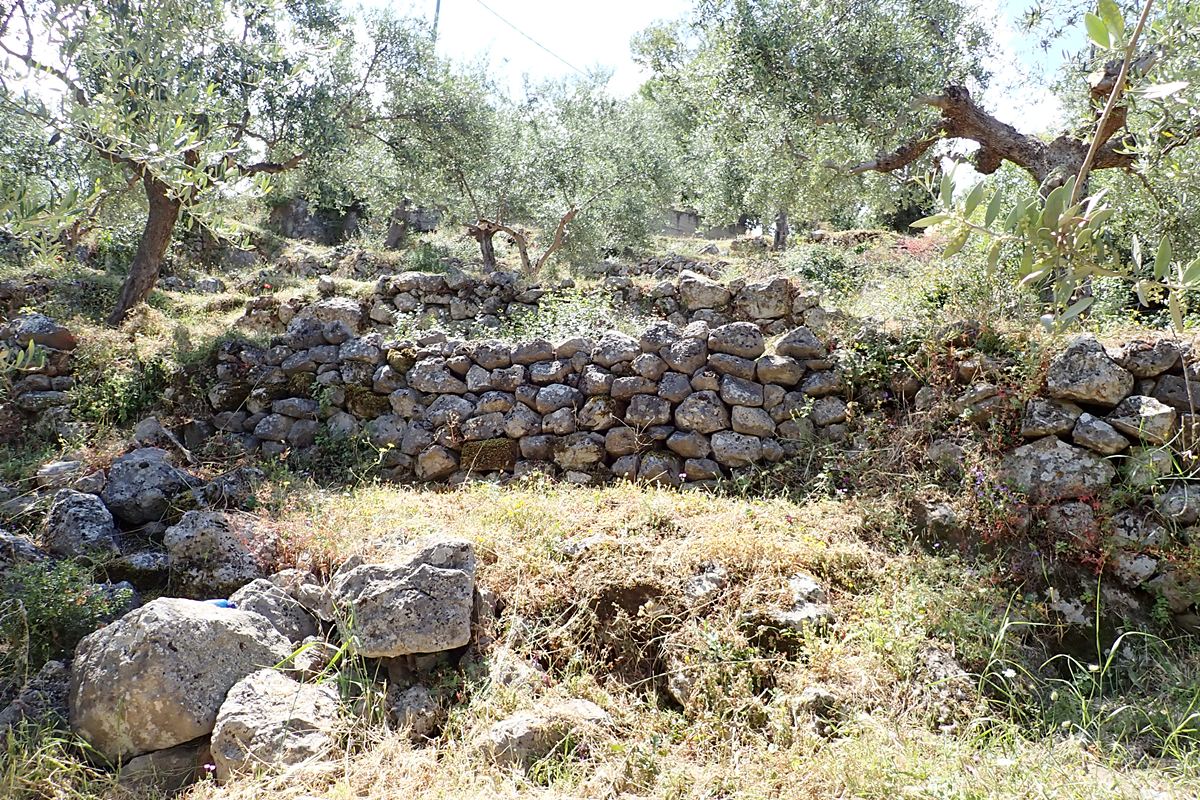
wall in the interior
15 / 32
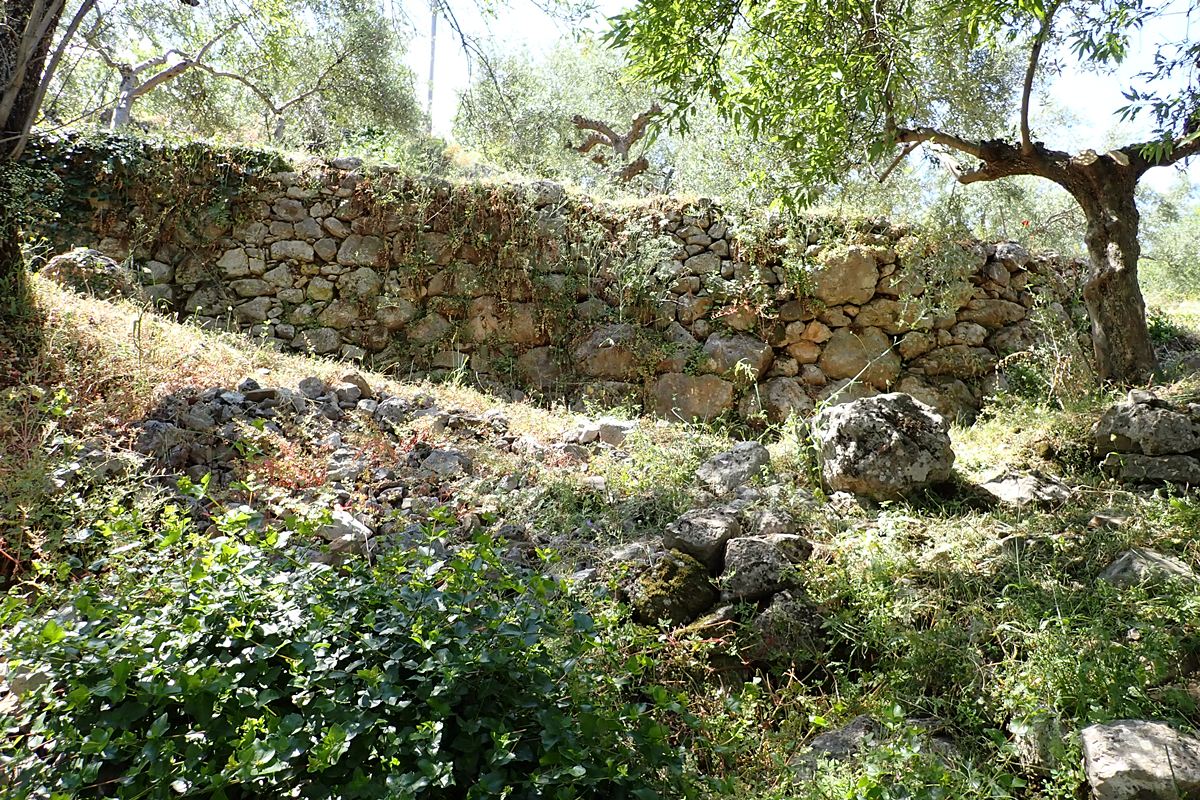
part of wall in the NW side
16 / 32
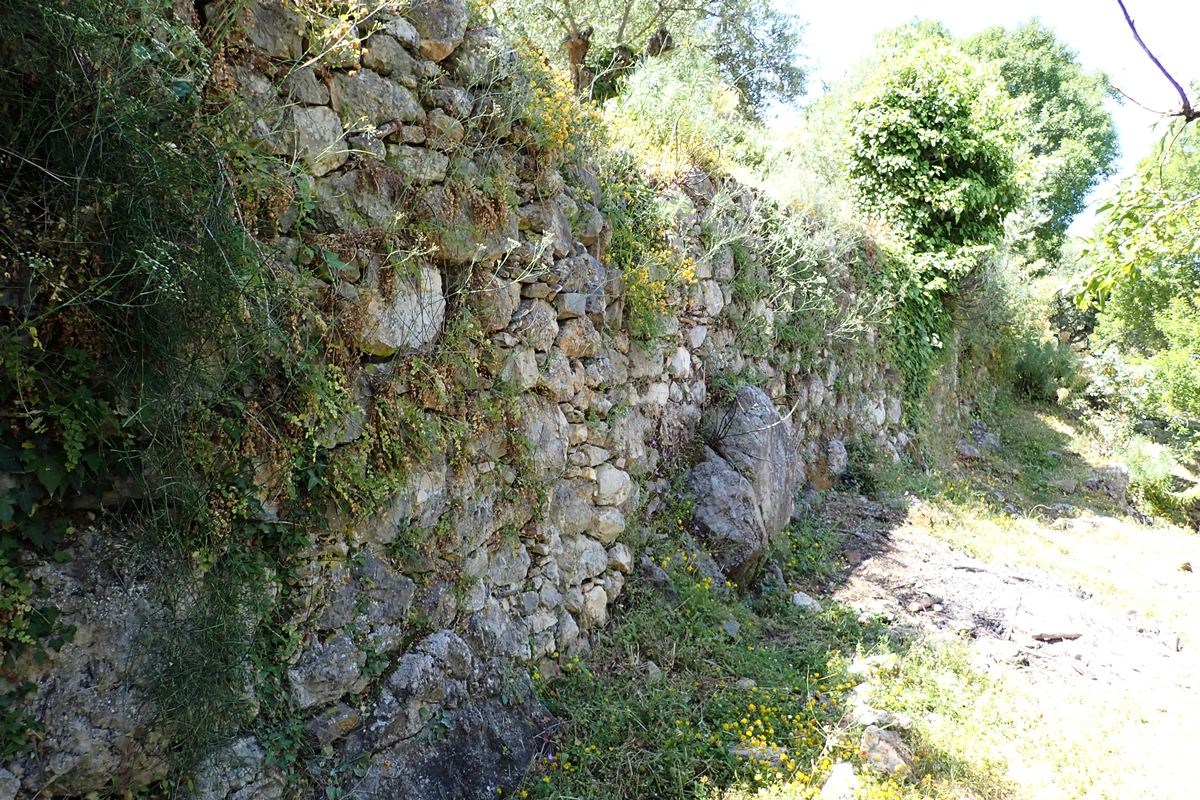
part of wall in the NW side
17 / 32
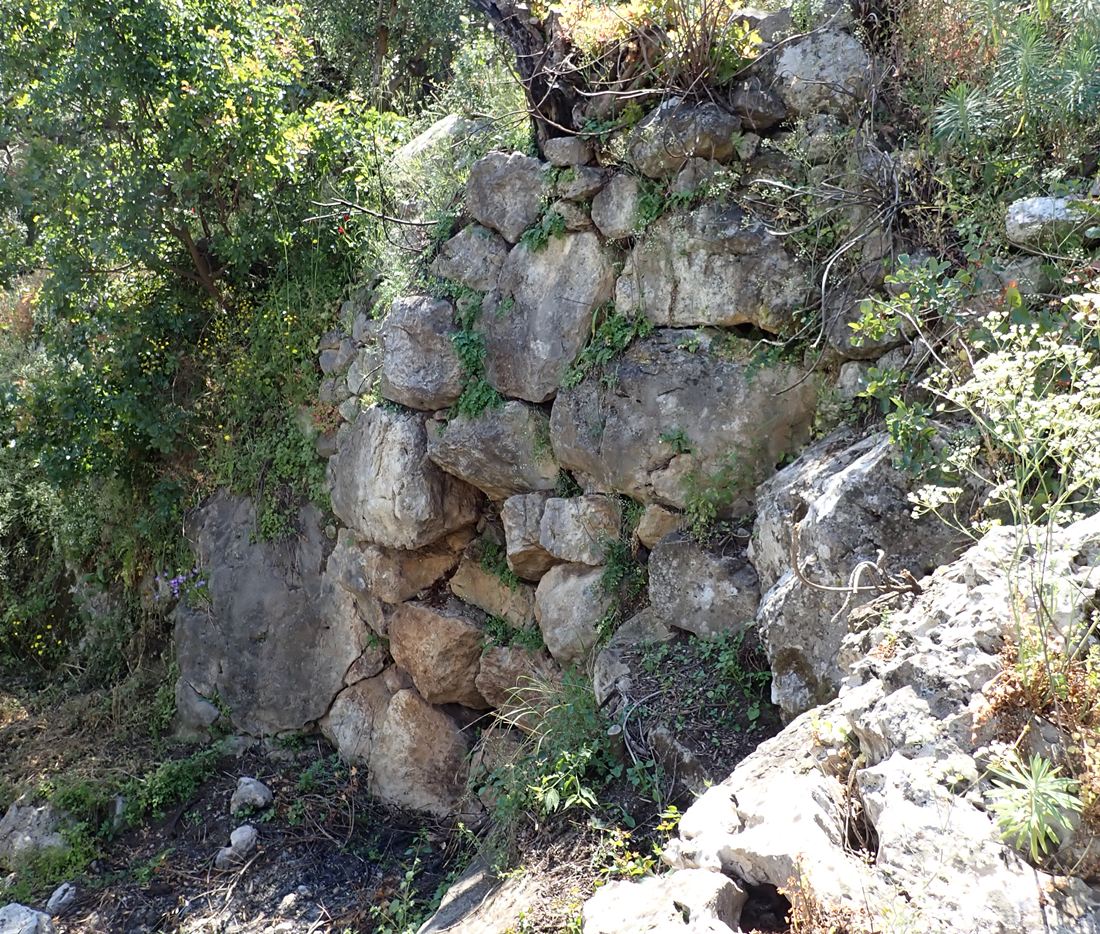
detail of the construction of the wall in the NW side
18 / 32
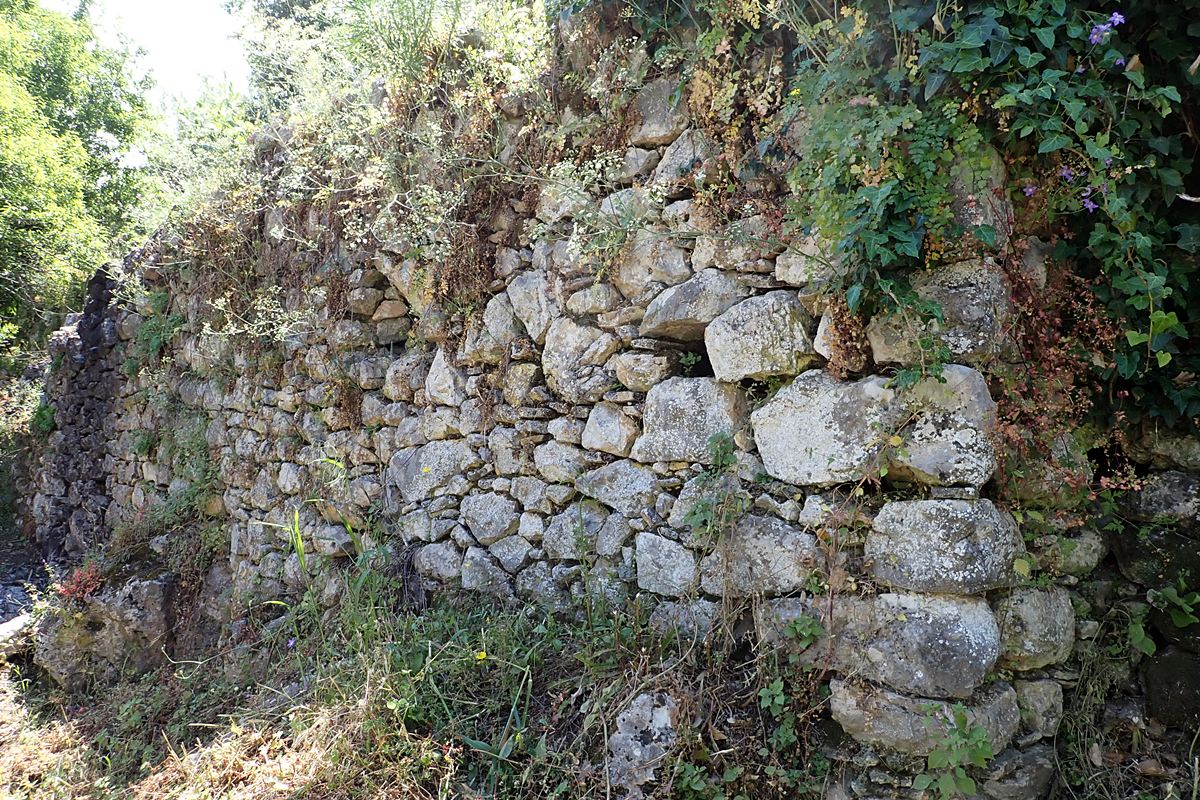
part of wall in the NW side
19 / 32
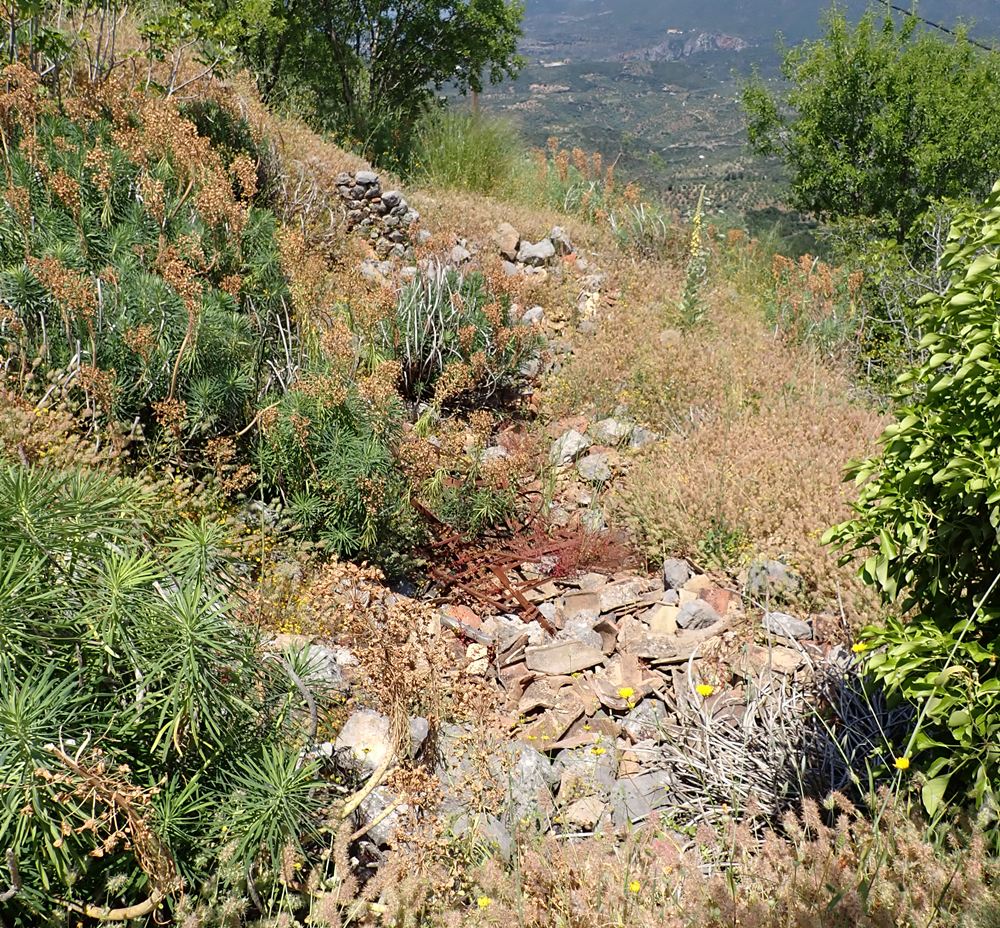
shreds, possibly from water pipes
20 / 32
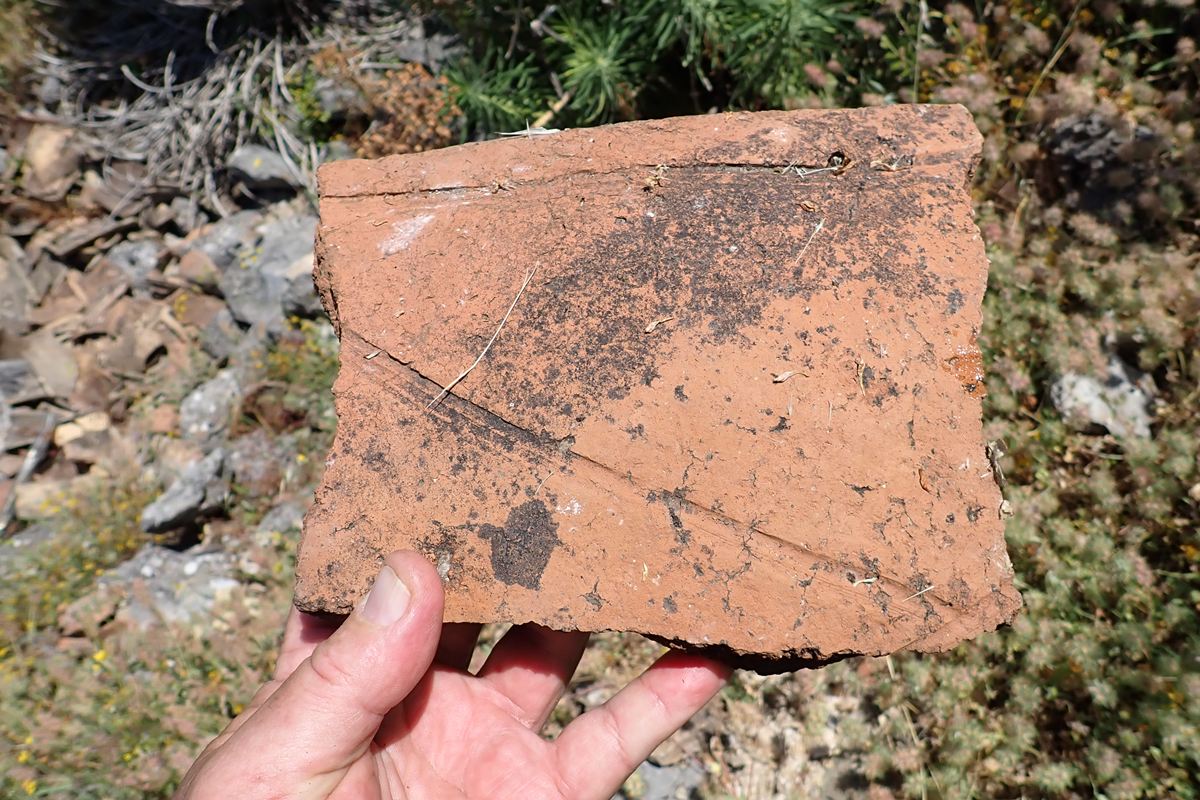
21 / 32
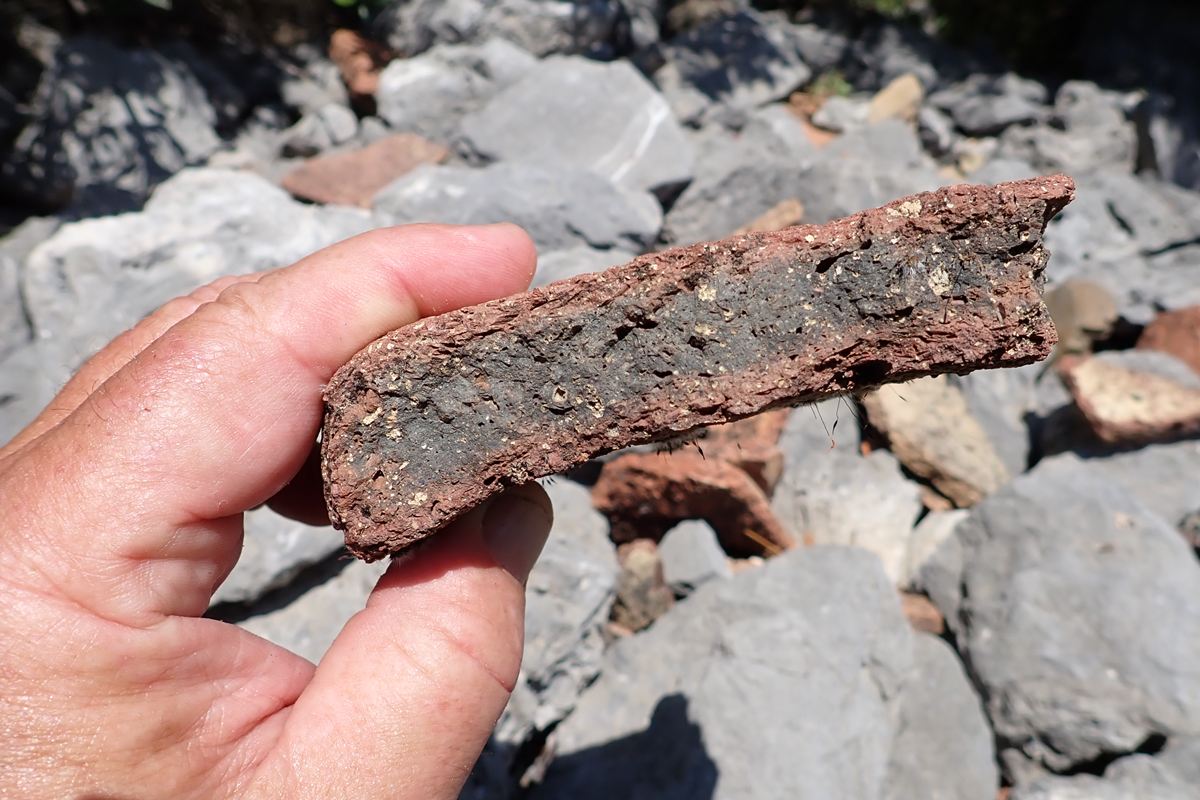
22 / 32
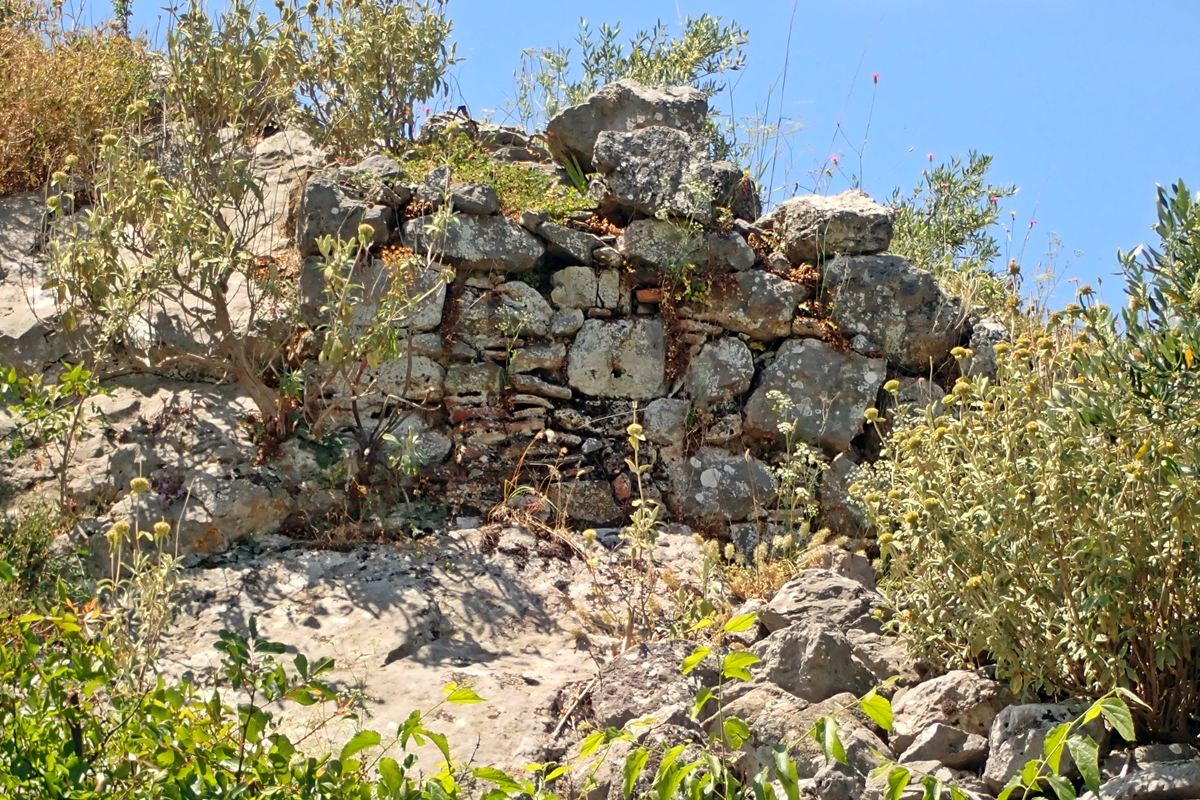
ruins in the middle of the top of the hill
23 / 32
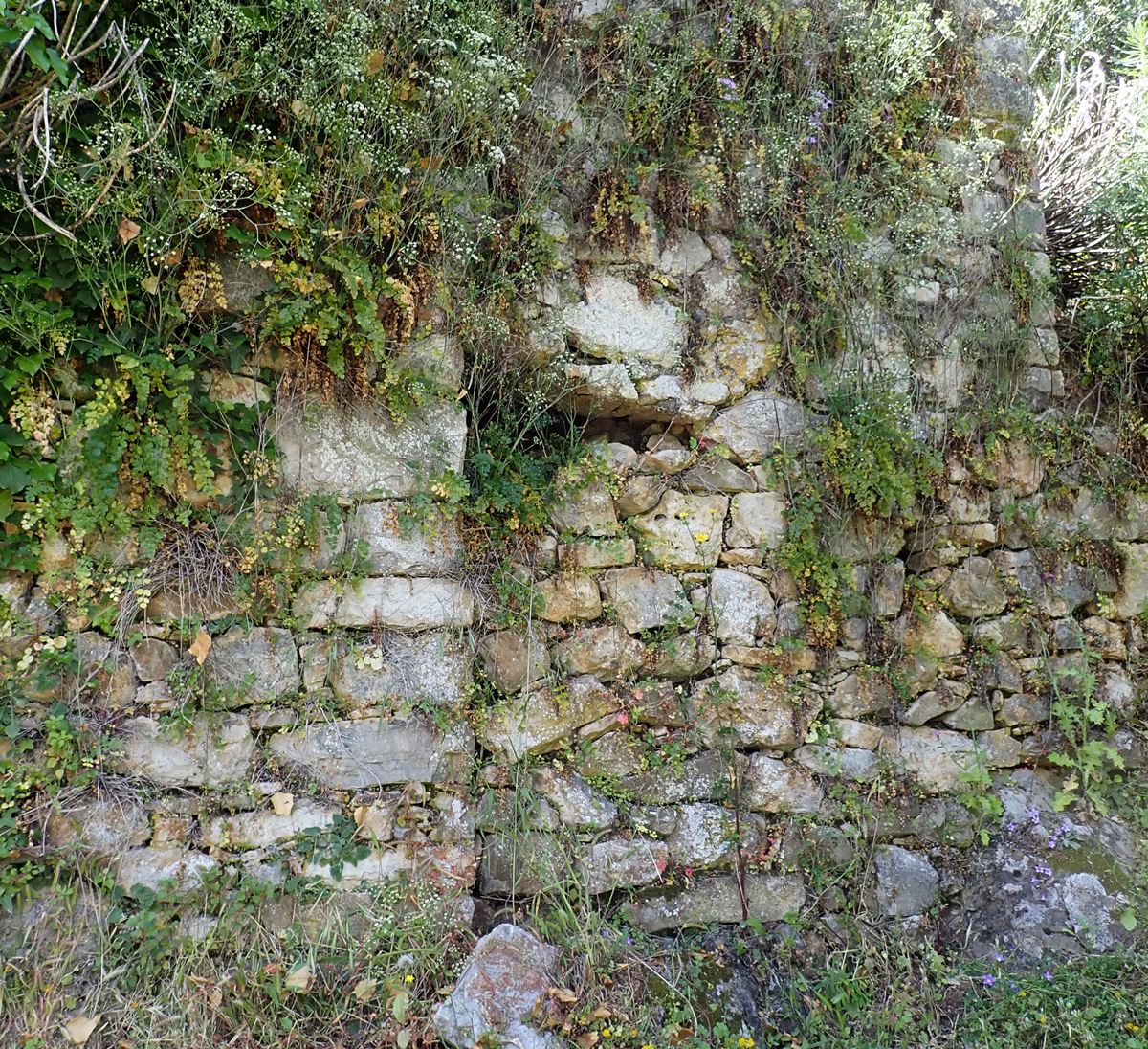
ruins of a building in the north side of the hill
24 / 32
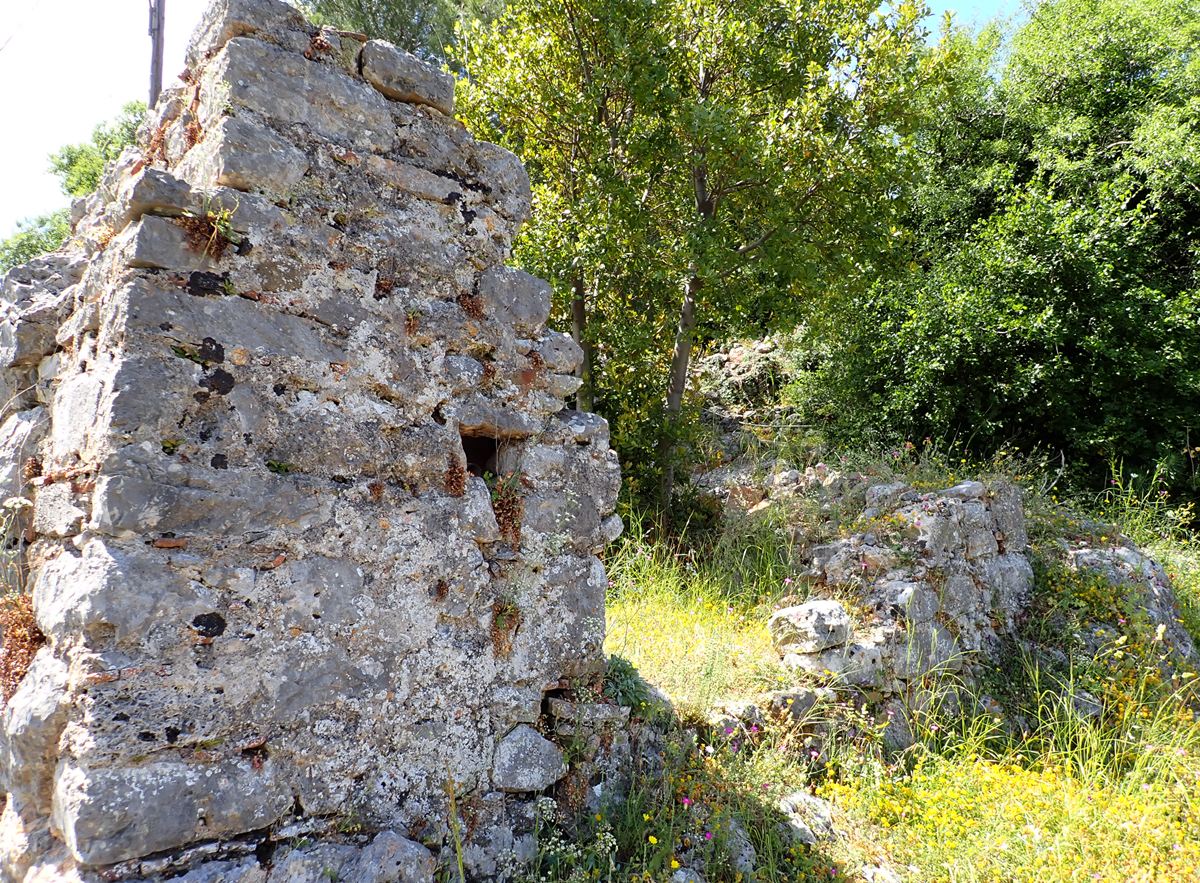
ruins of a building, possibly of a church
25 / 32
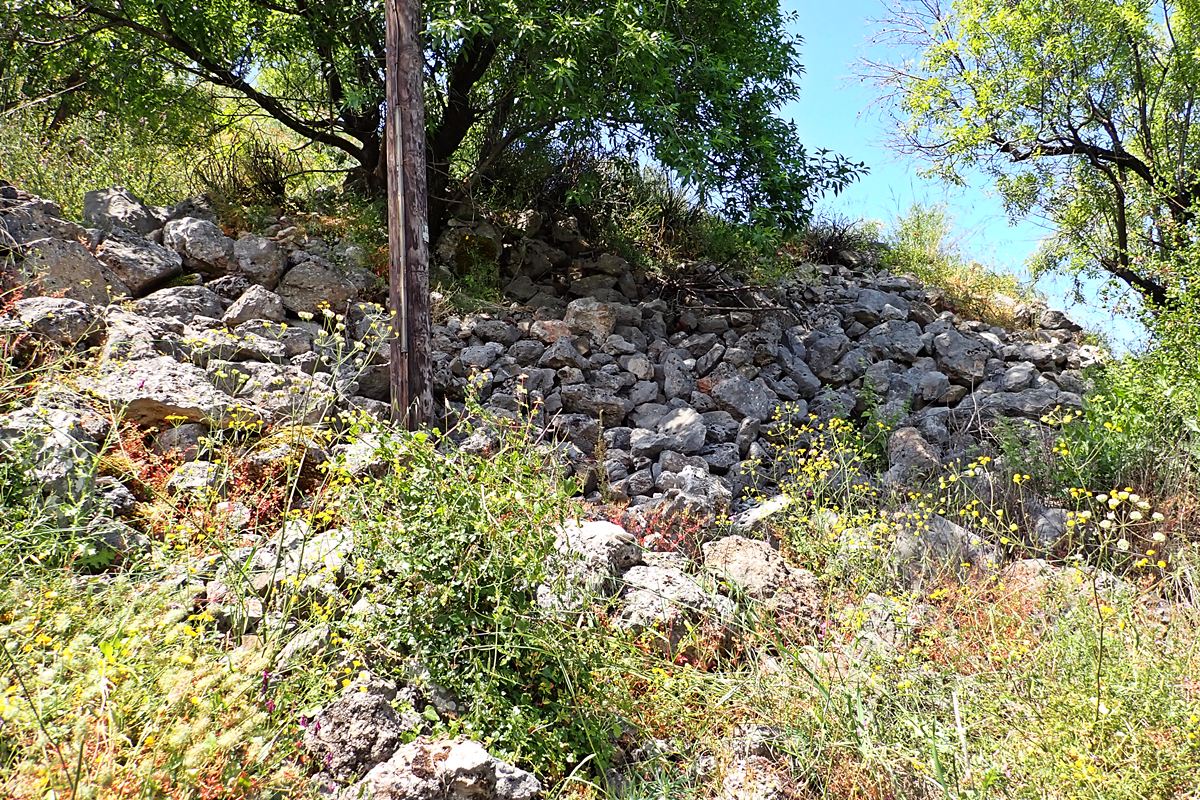
ruins of a building in the north side of the hill
26 / 32
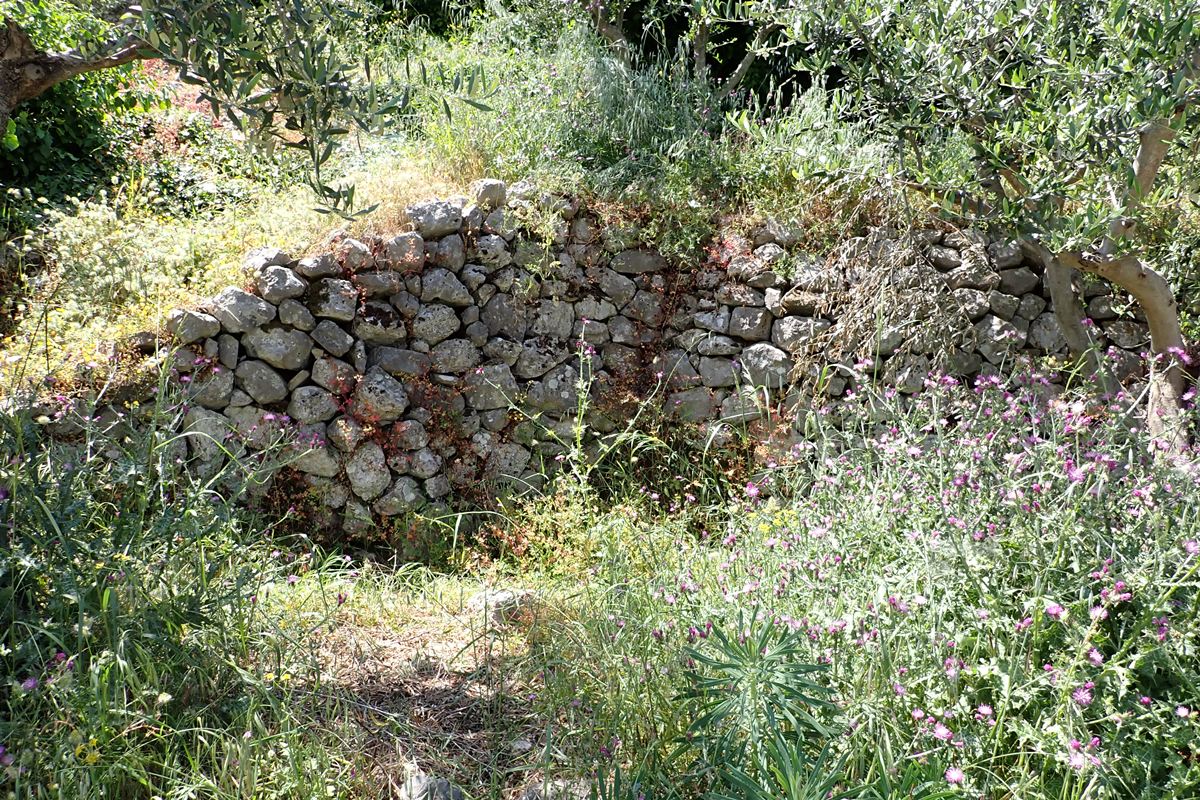
ruins of a building in the north side of the hill
27 / 32
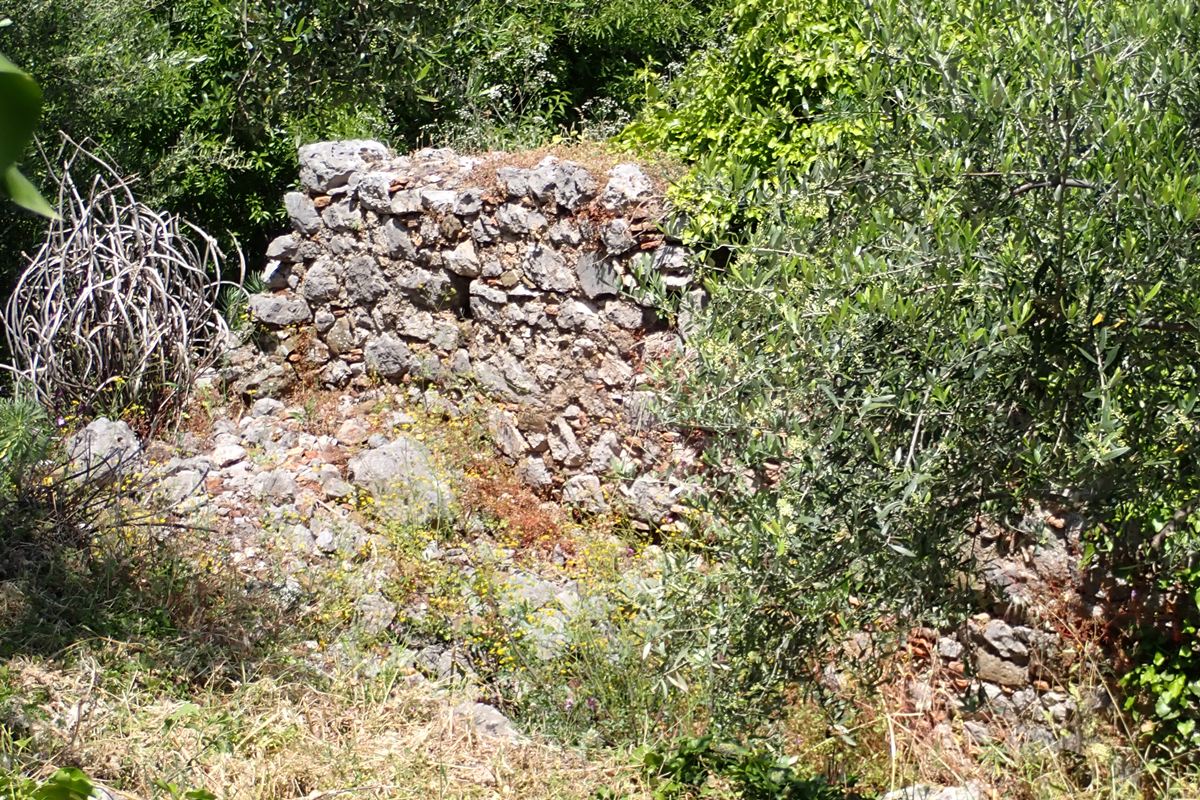
ruins lower in the north side of the hill
28 / 32
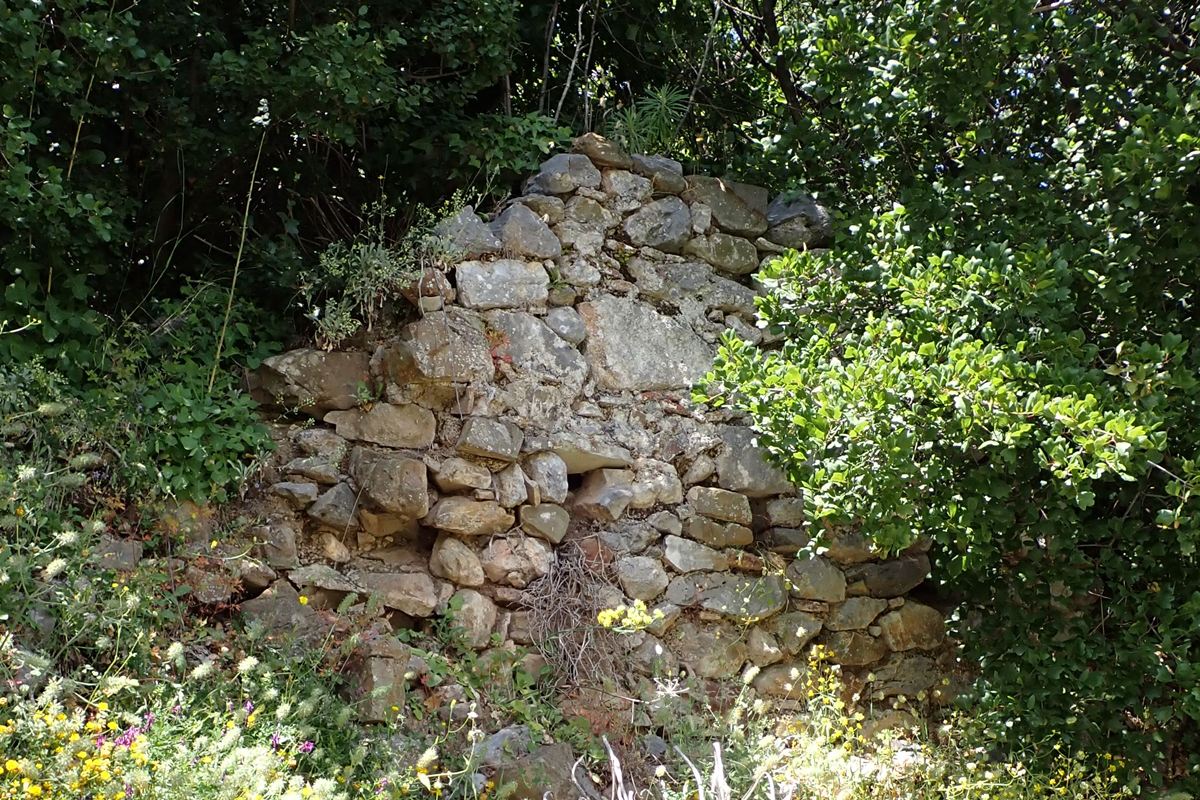
wall ruins in the NE side of the hill
29 / 32
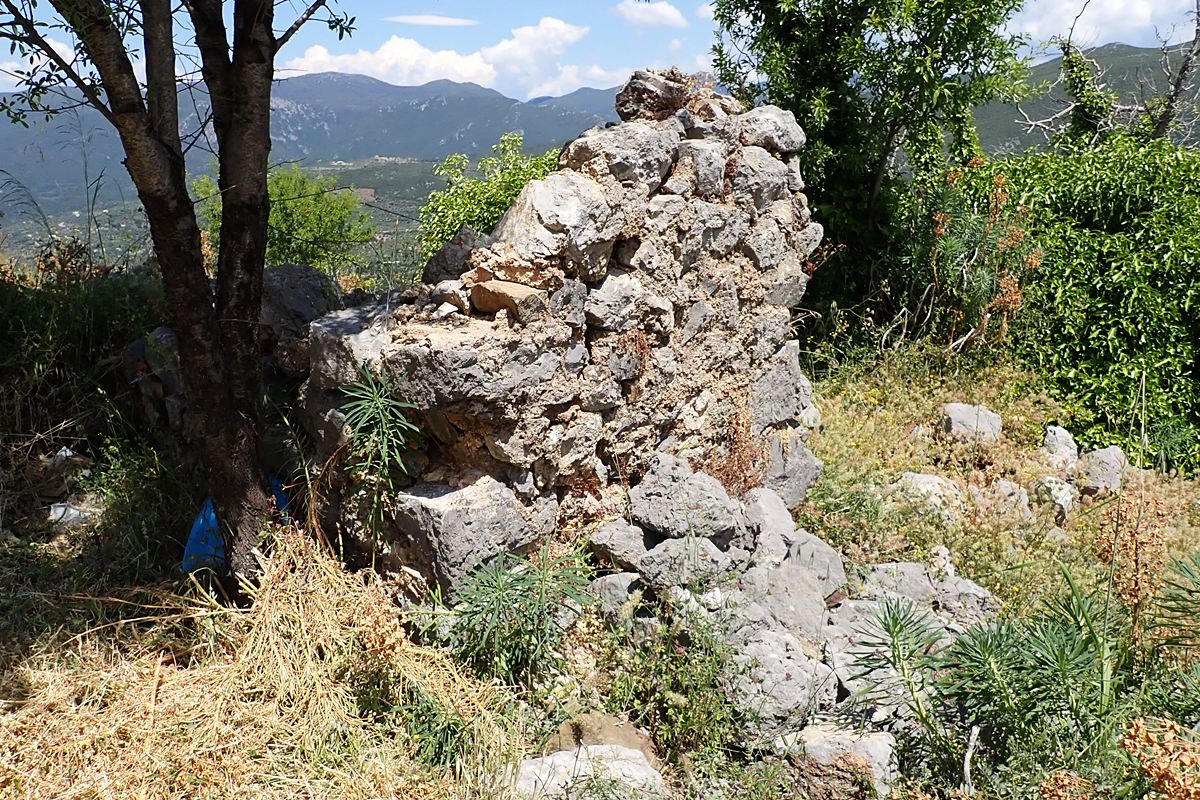
ruins at the top of the castle
30 / 32
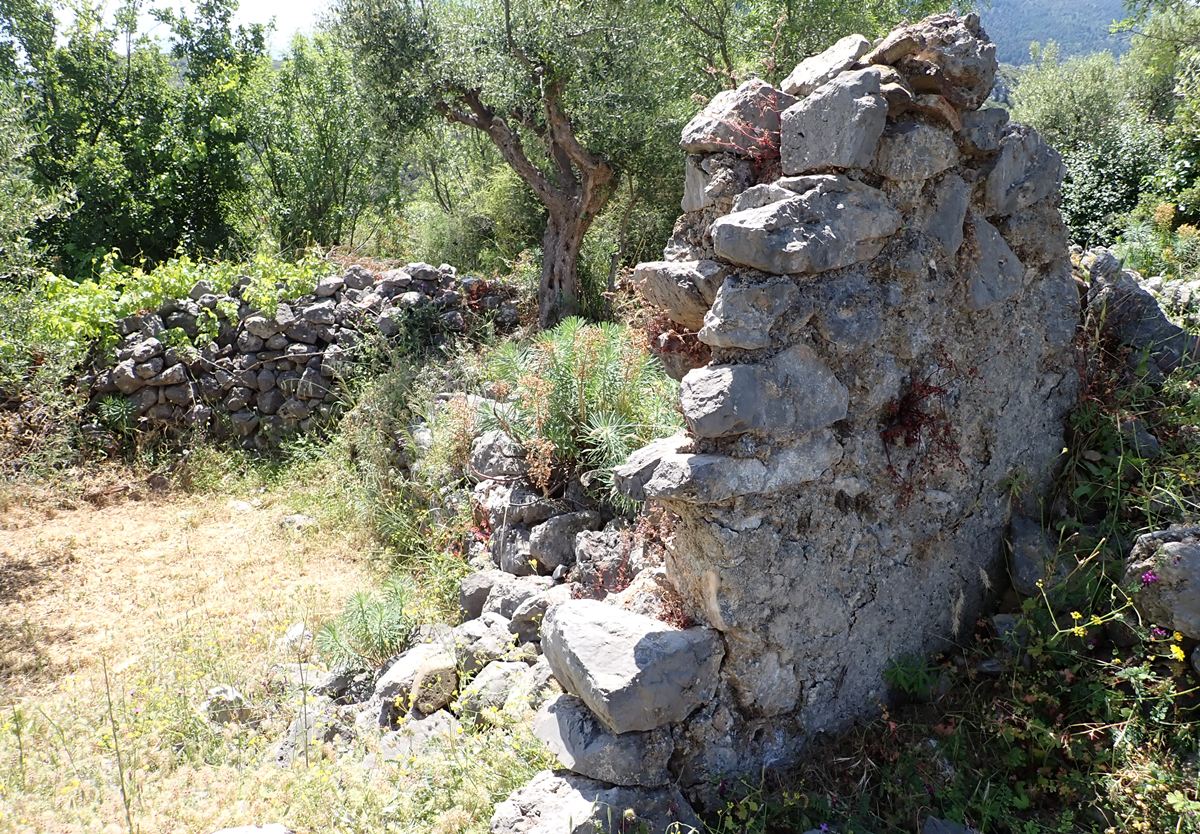
ruins of a building, possibly a church, at the top of the castle
31 / 32
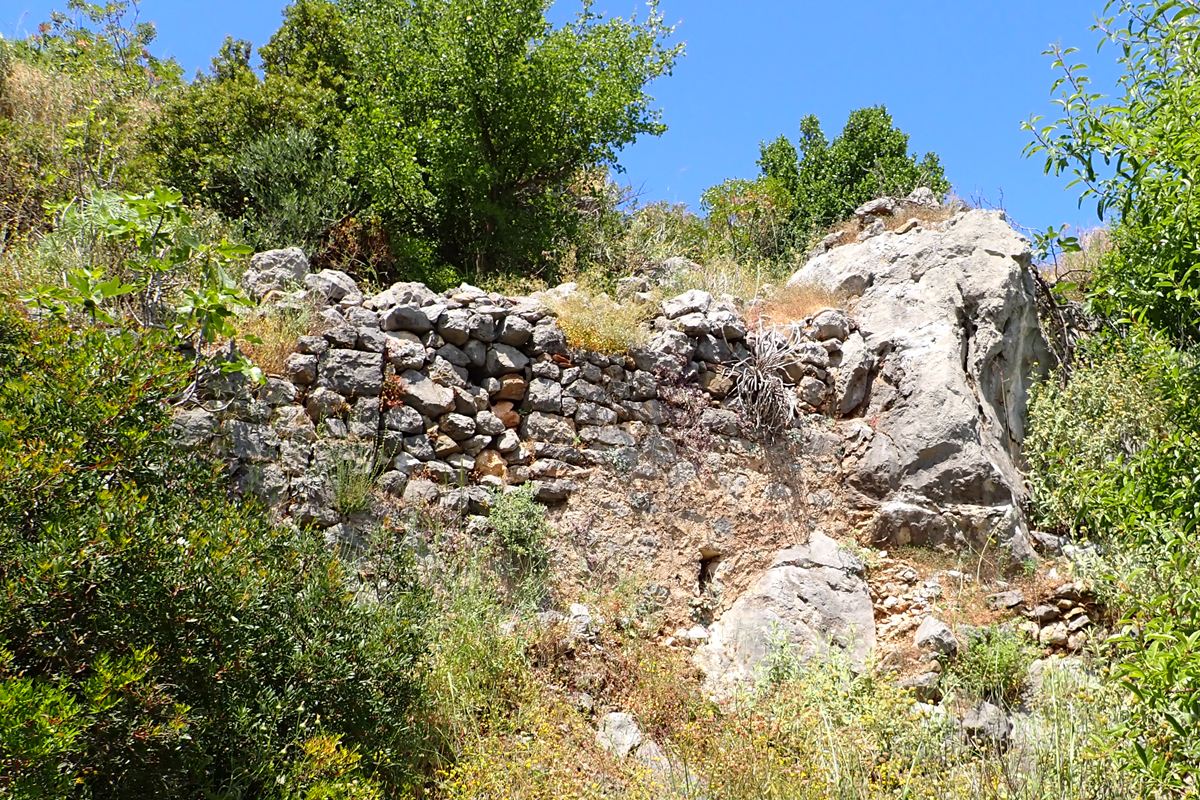
wall remains at the NE side, above the church of Taxiarches
32 / 32
THE END
| Location: |
| On a hill above (and west of) the village Eleochori near Kalamata in Messinia |
| Region > Prefecture: | 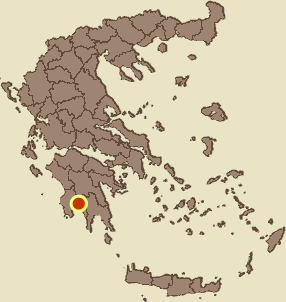 |
| Peloponnese Messenia | |
| Municipality > Town: | |
| City of Kalamata • Eleochori | |
| Altitude: | |
|
Elevation ≈ 570 m (Relative Height≈30 m) |
| Time of Construction | Origin | |
| perhaps early 14th cent. | Late-BYZANTINE  |
|
| Castle Type | Condition | |
| Castle Ruins |
In Ruins
|
Castle ruins on a hill above the village of Eleochori in Messinia, which is located very close to Kalamata (east, 10 km – uphill), in a mountainous area.
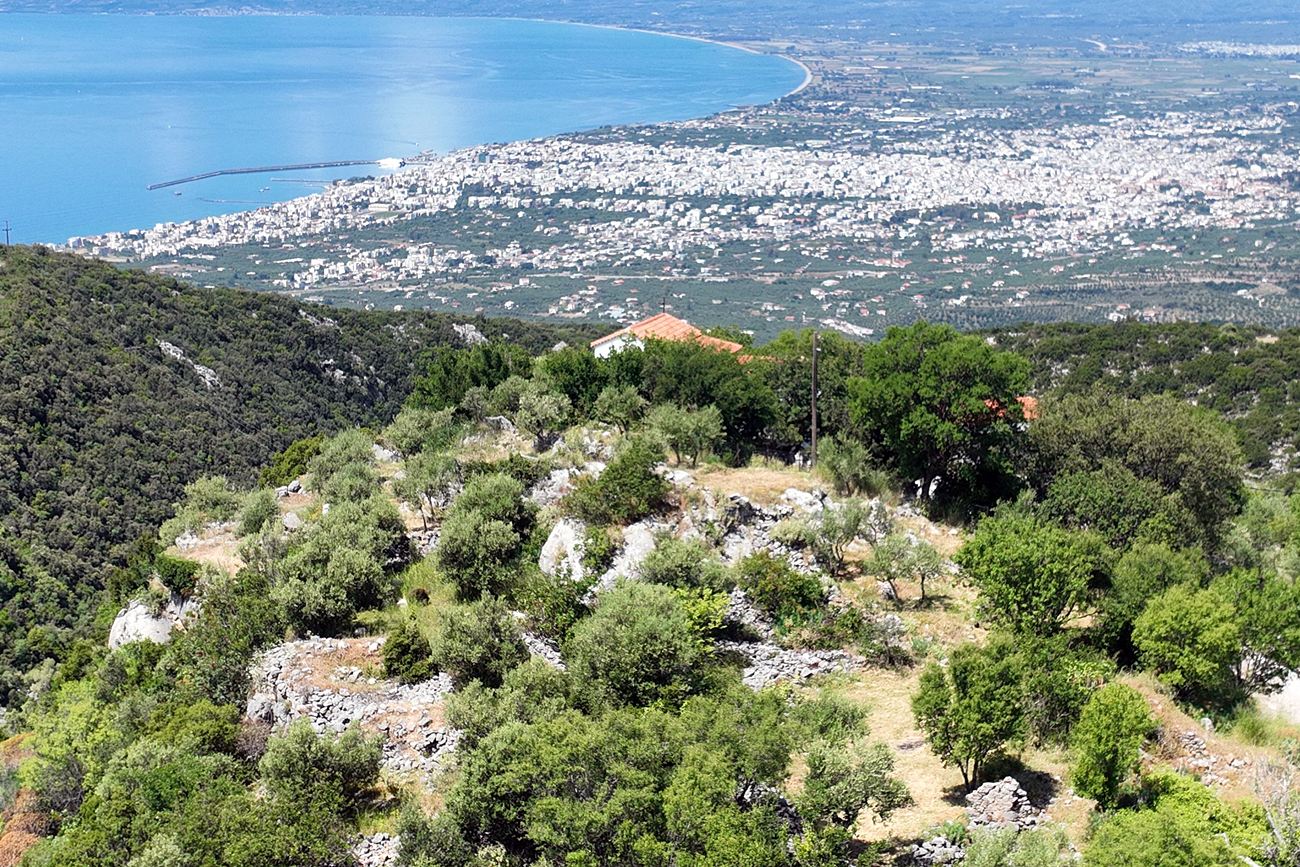
From the top of the castle, the view is excellent towards Kalamata (photo 1) but also towards the entire Messinian Gulf.
History
We have historical references to the existence of a castle in Gianitsa only in the lists of fiefs (more on this below).
From the form of the ruins we see today, we conclude that on the hill, initially, there was an ancient castle, which, despite the characterization of its walls by some researchers as “Cyclopean” or “Pelasgian”, is not, after all, among the Mycenaean acropolises of Messinia, and is probably a creation of the Classical or Hellenistic Period (i.e. somewhen between the 6th and 3rd centuries BC).
Much later, during the Middle Ages, a small settlement with fortifications developed on the hill – not particularly elaborate. This settlement appears to have been inhabited until the period of the Tourkokratia.
The location has been identified with the ancient commune of Kalamai, which is mentioned by Pausanias. (Previously it was believed that the ancient city of Farai was in Gianitsa and that the ancient Kalamai was in present-day Kalamata, but epigraphic findings have shown that the opposite is true).
The MelingoiDuring the Byzantine Period, Slavs settled in the region. And, specifically, Slavs of the Melingoi (or Milingoi) tribe. This is how this happened:
After the plague epidemic of 746-747, the population of the Peloponnese had decreased dramatically and, for this reason, the Byzantine administration tolerated a partial settlement by Slavs, who belonged to two tribes, the Ezerites and the Melingoi.
These tribes, being barbaric and unruly, often rebelled. In one of these rebellions, in 783, they were successfully confronted by the Byzantine army led by the patrician Stavrakios, who subdued them (temporarily) and expelled the remaining Slavs to mountainous areas. As for the southern Peloponnese, the Ezerites settled on the eastern slopes of Taygetos and the Melingoi on the western ones. The Ezerites do not seem to have stayed long on Taygetos, but the Melingoi took root in their area, which extended towards Kynouria and was called Zygos of Melingos or Drongos of Melingos. The heart of their territory corresponded approximately to what is today called “Western Mani”.
In the west, it reached as far as Gianitsa.
These Slavs, although they were gradually Christianized and Hellenized by the end of the 10th century, did not easily abandon their robber and aggressive activities. In the life of Saint Nikon (who preached in Laconia during the 2nd half of the 10th century), the Melingoi are mentioned in the worst possible terms: “...bloodthirsty men and murderous, who are set on evil, running and seeing nothing else but to rob and plunder others' property.”
Frankish periodWhen the Franks conquered the Peloponnese in the early 13th century, the Melingoi were among those who participated in the only serious attempt of defense by the Byzantines: when it was heard that the Franks had taken Kalamata, a Byzantine force was assembled, the infantry of which, according to the Chronicle of Morea consisted of Melingoi. This force was crushed in the Battle of the Olive Grove of Kountouras.
Despite the unfortunate outcome of that effort against the Franks, the Slavs continued to be dangerous. They were such a serious threat that the ruler of the Principality of Achaea was forced – according to the Chronicle – to build 3 castles to control them: The castle of Lefktro, the castle of Maini and the castle of Mystras itself.
At times, the Melingoi were used to man military forces both by the Franks of the Principality of Achaea and, later, by the Greeks of the Despotate of the Morea.
In 1262, the captured Byzantine ruler of Achaea, William of Villehardouin, and his barons were released in exchange for the castles of Mystras, Monemvasia, Megali Maini, and Geraki which passed to the Byzantines. According to the Byzantine historian Pachymeres, the Thema of Kisterna was among the exchanges.
The area of Kisterna is assumed to have been the area of the Melingoi, centered on Lefktro in Messinia, which probably also included Gianitsa.
Regardless of where the “Thema” of Kisterna actually was, it is believed that from about that time – towards the end of the 13th century– Gianitsa, de facto, no longer belonged to the Franks, but was located in a semi-autonomous area on the border between the territory of Byzantine Mystras and the Frankish principality without being fully controlled by either side.
In 1293 (or according to other, rather inaccurate sources, in 1295 or 1296) one of the most strange episodes of the Frankish rule in the Morea took place, with the protagonists being two prominent residents of Gianitsa, Lianortis and Fanaris. The two men, after a night raid, captured the castle of neighboring Kalamata. Then, with the assistance of 600 Slavs – mainly from Gianitsa – they captured the entire city, declaring it under the jurisdiction of Byzantine Mystras.
This action put an end to the peace with the Franks that had been agreed upon in the “Treaty of Glarentza” of 1290 between the prince of Achaea Florent de Hainaut, and the Byzantine emperor Andronikos II Palaiologos.
The Franks protested strongly about the violation of the treaty. The lords of Mystras claimed that they had nothing to do with the incident and that the raiders from Gianitsa were beyond their control and not under their jurisdiction.
To resolve the crisis, the Grand Constable of the principality, Jean Chauderon, was sent to Constantinople for direct consultations with Andronikos II. The Byzantines followed a dubious tactic: while pretending to seek a compromise solution, they secretly sent instructions to Mystras to hold on to Kalamata at all costs.
However, the protoallagator (military commander) of Mystras, George Sgouromallis, head of the Byzantine delegation, betrayed his people by helping the Franks present to Mystras an oral and vague promise from Constantinople as an official order of surrender, with the result that the castle of Kalamata was finally returned to the Franks.
The Kalamata incident is recorded in the French version of the Chronicle of the Morea, while it was transferred with minor modifications to the novel “Princess Izambo” (1937) by Angelos Terzakis. According to the French Chronicle, Sgouromallis’ treachery was quickly discovered, resulting in his removal from office and his death in poverty and contempt.
Problems with the VenetiansIn the following decades, the Melingoi continued to cause problems. In the Venetian archives, we find reports of naval/pirate attacks in the early 14th century by the Byzantines on the Venetian lands of Messinia and especially on the territories of Koroni and Methoni.
In these archives, the leaders of the attackers are two brothers of the Zassi family, one of whom was a lord in Kisterna (Gisterna/Lefktro) and the other in Giannitsa.
We have no further information about the Zassi family, whose Greek name may have been Tzaousios.
In 1334 the Venetians sent an army and fleet against the Zassi and it seems that in 1337 they managed to get rid of them and destroy their strongholds.
During the First Venetian-Turkish War (1463-1479), the area was under Venetian control, but later it fell into the hands of the Turks, like the entire Peloponnese.
The CastleIn all this turbulent history of the Milingoi, there is no mention of a castle in Gianitsa. But there is reference to it in the feudal lists of Peloponnese. Specifically:
♦ In Hopf’s 1463 list of castles, Janizza is among the castles captured by the Venetians that year (1463).
♦ In the 1467 list (Hopf–Stefano Magno), Janizza is again included as a castle belonging to Venice, but marked as destroyed.
♦ In the list Moustoxidis-Buchon of 1471, Janiza is again included as an active (and undamaged) Venetian castle.
From these reports it is verified that there was an active castle in Gianitsa in the middle of the 15th century and it probably existed much earlier. On the other hand, we can assume with certainty that in the 13th century, during the Frankish reign, there was no castle there, otherwise it would have been included in the oldest lists that included Frankish castles.
Based on these indications, we assume that the castle in Gianitsa was built sometime after the liberation of the area from the Franks and before the middle of the 15th century. It is most likely that it was created – with local funding and by local craftsmen – in the first decades of the 14th century.
We do not know if the castle was used during the Tourkokratia. Probably yes. Perhaps it housed the residence and lair of a local chieftain/captain.
Structure, Fortification & Buildings
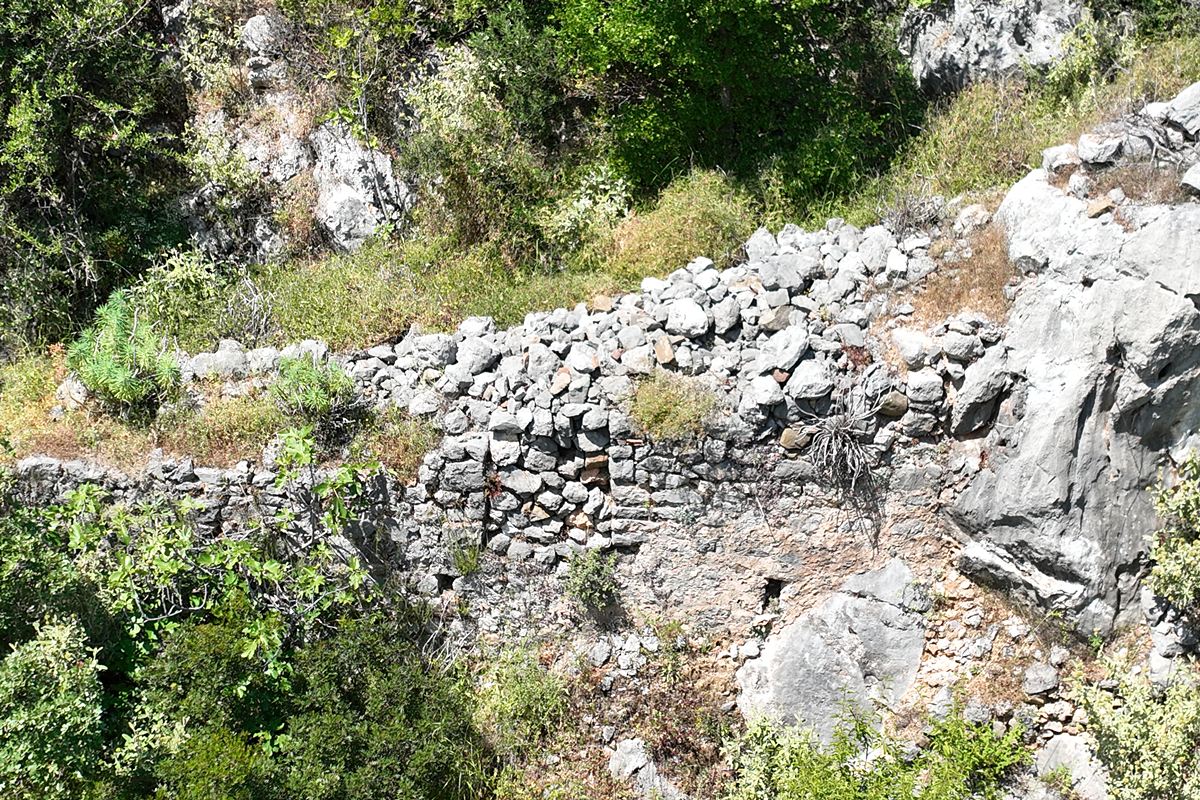
From the ancient castle, a wall with polygonal masonry of approximately 30 meters in length (photo 9-12) survives on the northeastern side of the hill, below the church of Agioi Taxiarches. The wall is characterized – probably incorrectly – “Pelasgian” or “Cyclopean” by various local sources.
Many parts of the ancient wall have been destroyed or have been used for the construction of newer structures on the hill. However, it seems that the ancient fortification did not surround the entire hill, but was probably limited to the more vulnerable eastern side and probably did not extend at all to the other sides.
From the Late-Byzantine castle, various sections of walls and buildings survive scattered on the hill, the construction of which is with stonework from semi-finished stones, using binding mortar. Some of these structures are probably relatively recent, that is, from the Ottoman period.
The western side of the hill, towards Kalamata, probably did not have a wall because it was the steepest.
The ruins of some buildings on the perimeter (eastern and southern sides - photo 23,13) could be the remains of towers, while a relatively large building at the top could have been a church (photo 24,30). No remains of a cistern have been spotted, but there will certainly be one somewhere.
The area occupied by the late Byzantine castle was less than 2000 sq.m., within a perimeter of approximately 160 meters. However, this is the area occupied, simply, by its surviving ruins. A reasonable hypothesis is that the castle – in its original Late Byzantine form – may have extended over a considerably larger area than that represented in the plan (see above) extending north (lower on the hill) and east – towards the village.
Sources
- Research, info and photos by Peter Barkevics – May 2026
- Antoine Bon, 1969, La Morée franque. Recherches historiques, topographiques et archéologiques sur la principauté d'Achaïe (12051430), Editions de Boccard, pp.168,211,221,409,438,,506
- Website Αριστομένης ο Μεσσήνιος - Αρχαίαι Καλάμαι- Ελαιοχώρι Μεσσηνίας
- Παναγιώτης Σ. Καπετανέας, «Ιστορία της Γιάννιτσας Από της Προϊστορικής εποχής μέχρι της επαναστάσεως του 1821 στο πλαίσιο της ιστορίας όλης της Μεσσηνίας»
- Περικλής Ζερλέντης (1922), Μηλιγγοί και Εζερίται Σλάβοι εν Πελοποννήσω, Εν Ερμουπόλει , Τύποις Νικολάου Γ. Φρέρη.
| Access |
|---|
| Entrance: |
| Free access |