Palatos, Megalopoli, Arcadia,Peloponnese
Castle of Palatos
| Location: |
| On a peak of mount Lykaion, 1.7 km SE ftom the village Palatos of Arcadia |
| Region > Prefecture: | 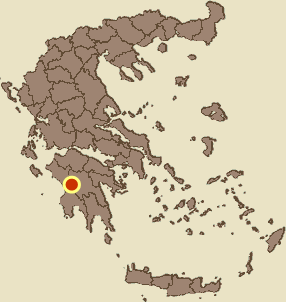 |
| Peloponnese Arcadia | |
| Municipality > Town: | |
| City of Megalopoli • Palatos | |
| Altitude: | |
| Elevation ≈ 1325 m |
| Time of Construction | Origin | |
| shortly after 1296 | FRANKISH  |
|
| Castle Type | Condition | |
| Castle Ruins |
In Ruins
|
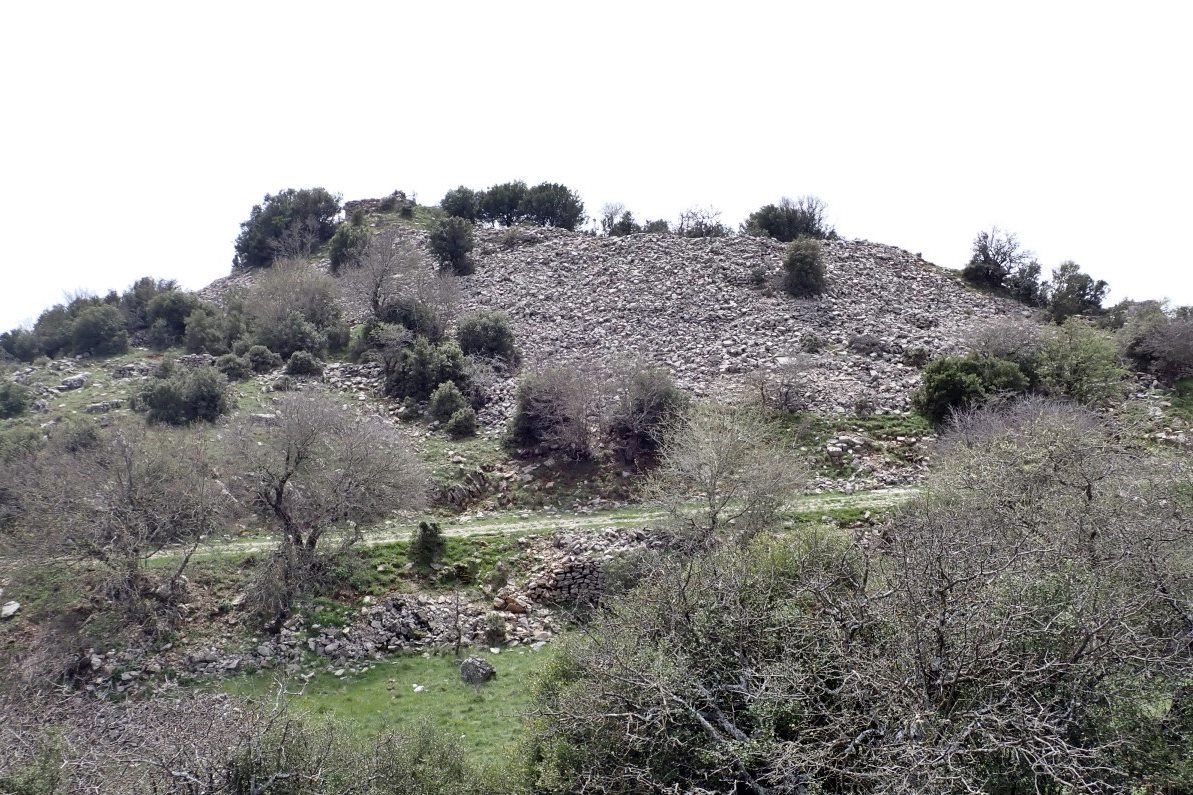
Ruins of a small castle on a peak of Mount Lycaion, 1.7 km SE from the village of Palatos in Arcadia and 1.7 km NE from the village of Agios Sostis in Messinia.
Location & Strategic Scope
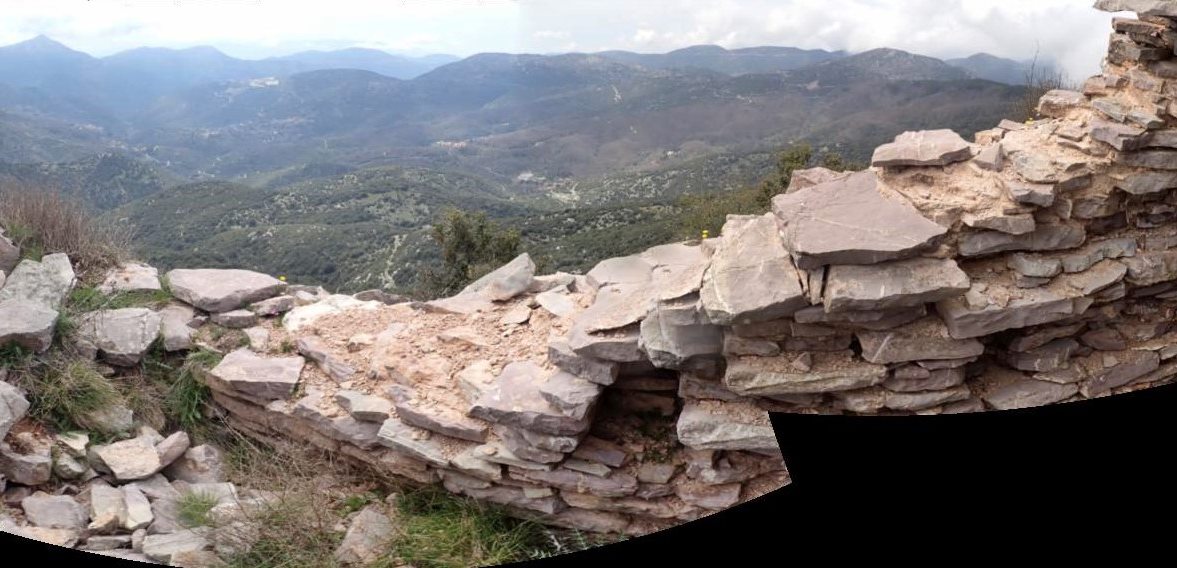
The castle is located at a high altitude (1325m) in a spot with an excellent view of the river Neda valley to the south-southwest. It has visual contact with the castles of Agios Georgios and Lykosoura to the south.
The spot is located in Arcadia, almost on the border of the prefectures of Arcadia and Messinia. During the Middle Ages, it was in the heart of the “Drongos of Skorta”.
The Drongos of Skorta or, simply, Skorta (Escorta for the Franks) was the name used in the 13th and 14th centuries for the mountainous western part of Arcadia, which was of strategic importance for the Principality of Achaea as it controlled the passages from the north to the fertile plains of Elis and Messinia.
There were garrisons and fortifications in Skorta. This particular castle does not have good visual contact with other castles of Skorta to the north, because higher peaks of mount Lycaion intervene.
History
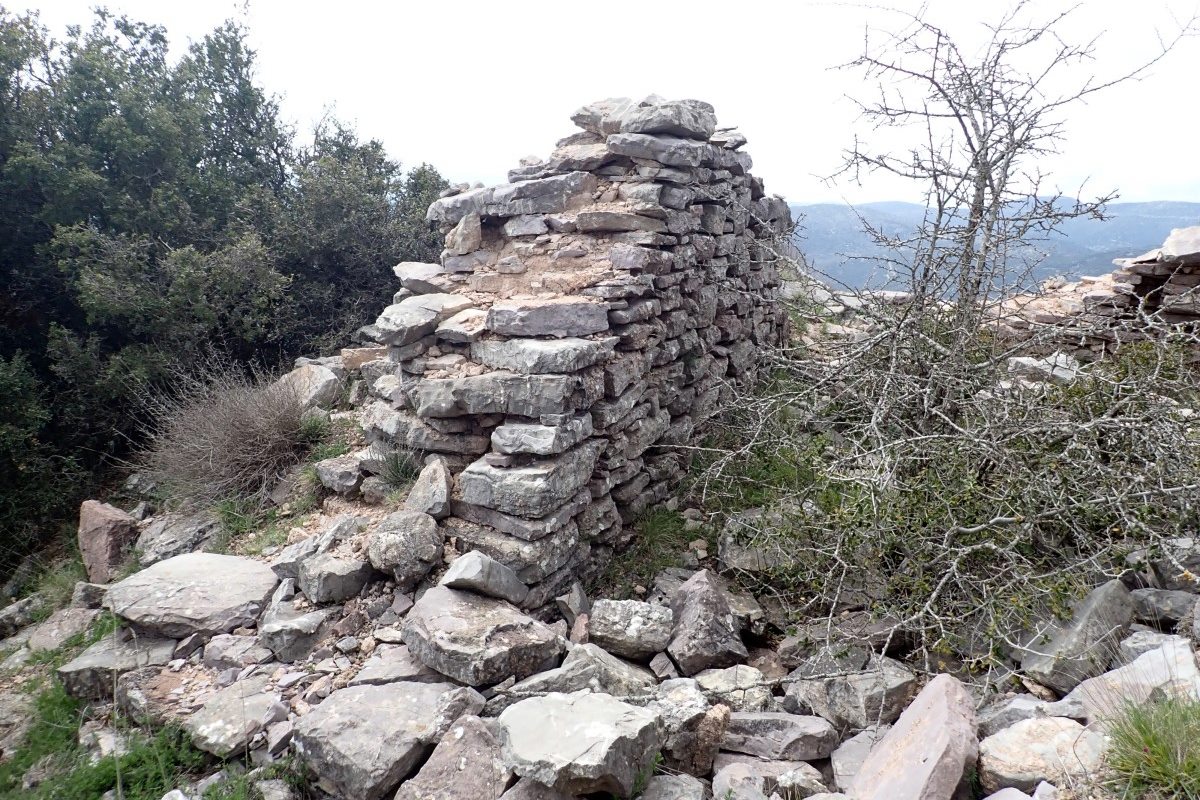
The use of mortar in the construction of the tower indicates that the castle is medieval. It is possible that it was a fortress from the Middle Byzantine Period, but not many castles from that period have been found in the wider area. Thus, it is most likely that it was built by the Franks.
It is possible that the castle was the Beaufort castle (meaning beautiful castle), which we know was built by the Prince of Achaea Florent de Hainaut in 1296 or 1297.
The historical context is as follows:
Florent de Hainaut, who had become prince of Achaia after his marriage to the heiress of the principality Isabella de Villehardouin, built in 1290 a castle at Ai-Giorgis of Skorta, NE of the present village Ano Karyes, 4 km SE from the castle on this page.
In 1296, the castle at Ai-Giorgis was captured by the Greeks after a night attack. That episode ended a 7-year period of peace between the Franks and the Byzantines. Prince Florent rushed with his army to take back the castle but did not succeed immediately, and began to besiege it. To isolate the besieged, he quickly built another castle in the area, Beaufort. Florent was never able to recover Ai-Giorgis because he died suddenly the following year.
It is therefore possible that the castle of Patalos was the Beaufort built by the prince of Achaea Florent in 1296 or 1297. The small size of the castle, its careless construction and its proximity to Ai-Giorgis all support this hypothesis.
However, we cannot be categorical about this identification, on the one hand because there are at least 2-3 other fortifications in Lykaion and in Neda valley that could be the Beaufort (not yet in Kastrologos) and on the other hand because even the location of the medieval castle of Ai-Giorgis is not certain. Some scholars place it not in Ano Karyes, but in the acropolis of Lykosoura. In this case, the issue of identifying Beaufort is further complicated because Beaufort could be the present-day Ai-Georgis.
Despite all these reservations and uncertainties, we believe that the castle of Patalos has a good chance of being the Beaufort castle of 1296.
Structure, Fortification & Buildings
This is a small fortress that covers an area of no more than 1000 sq.m.
Its layout is elongated on the North-South axis. The maximum length of the fortification is approximately 40m. (N-S) and the maximum width is 18m. (E-W).
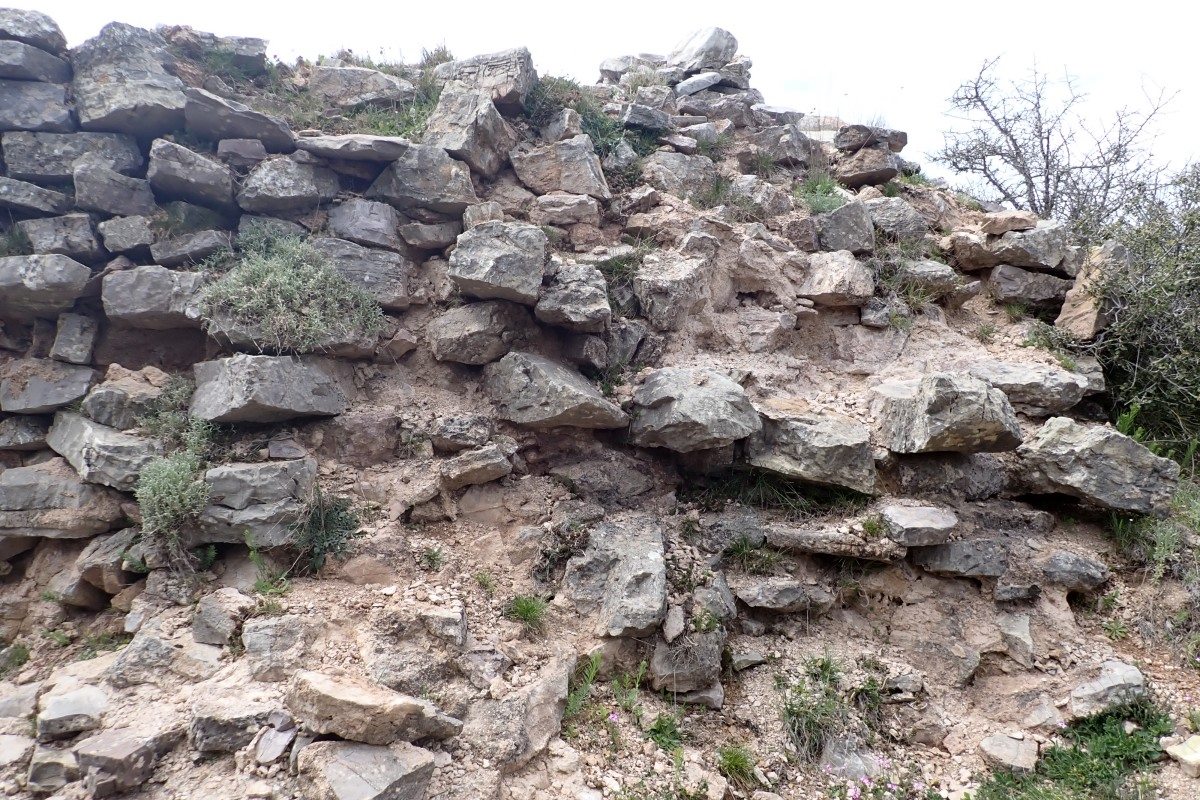
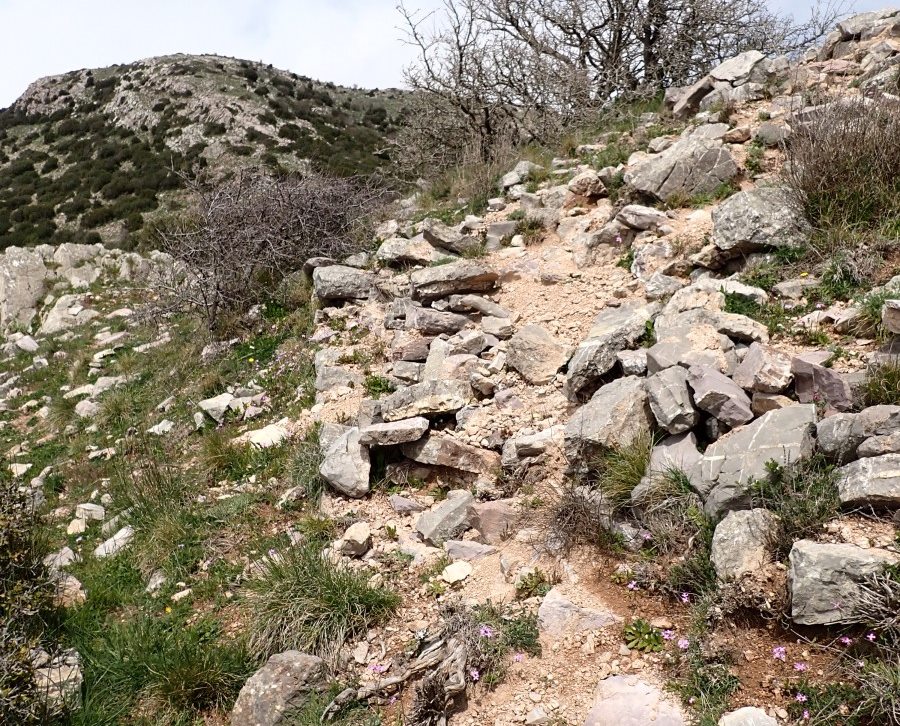
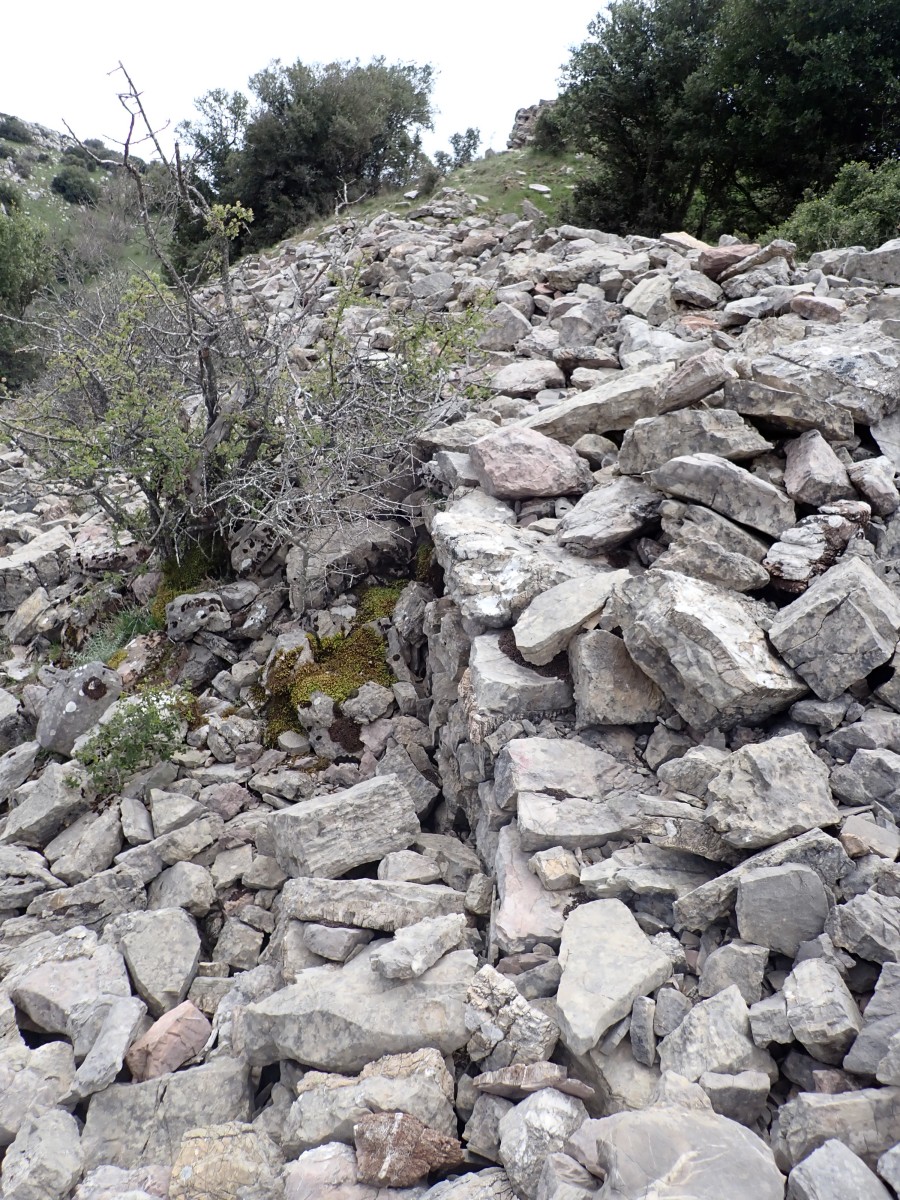
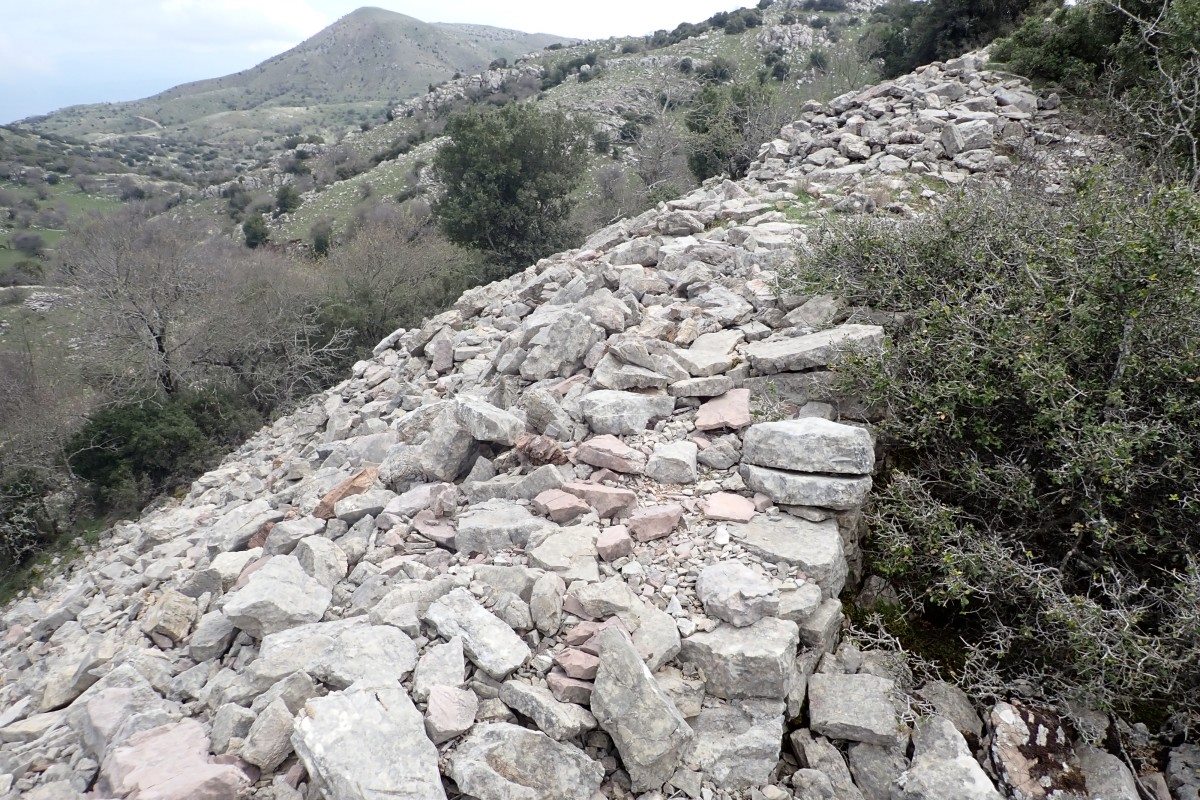
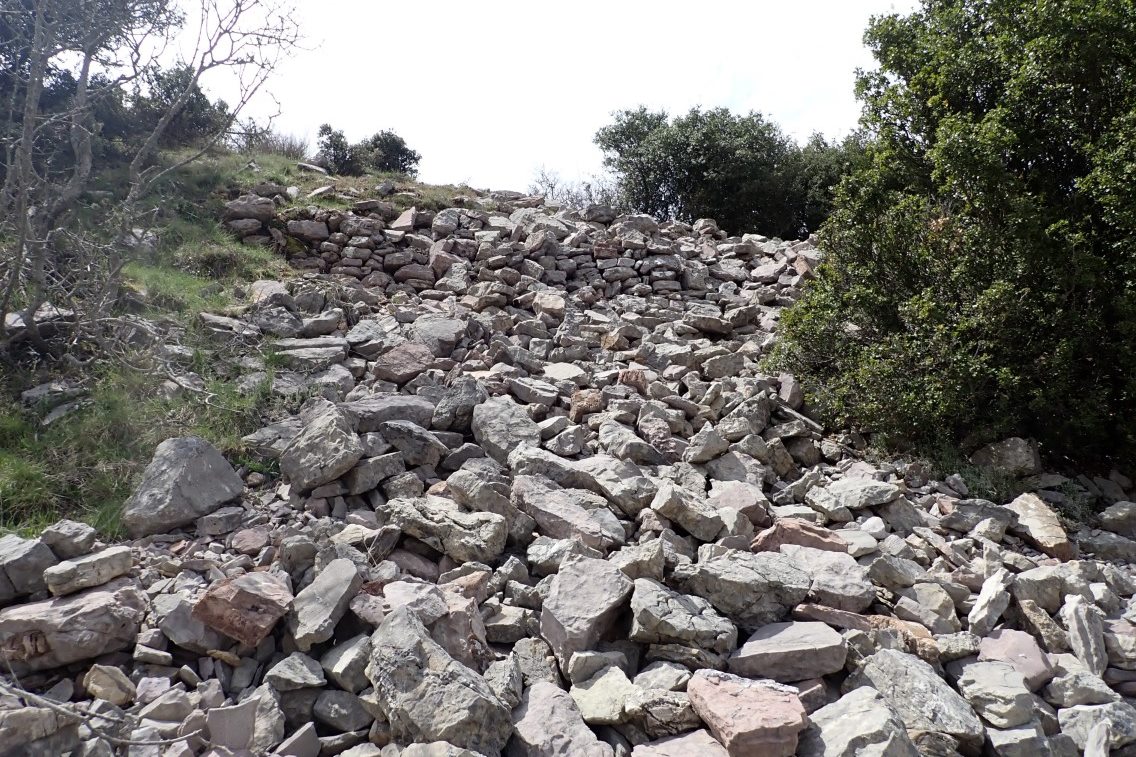
The wall of the fortification enclosure was 2.5m thick and it seems that no mortar was used for its construction. Most of it lies on piles of stones, mainly on the eastern side. On the western side, at first glance, there is no wall but it seems that the wall on this side has collapsed lower, on the slope. Which means that initially the castle must have been wider and larger than it is today.
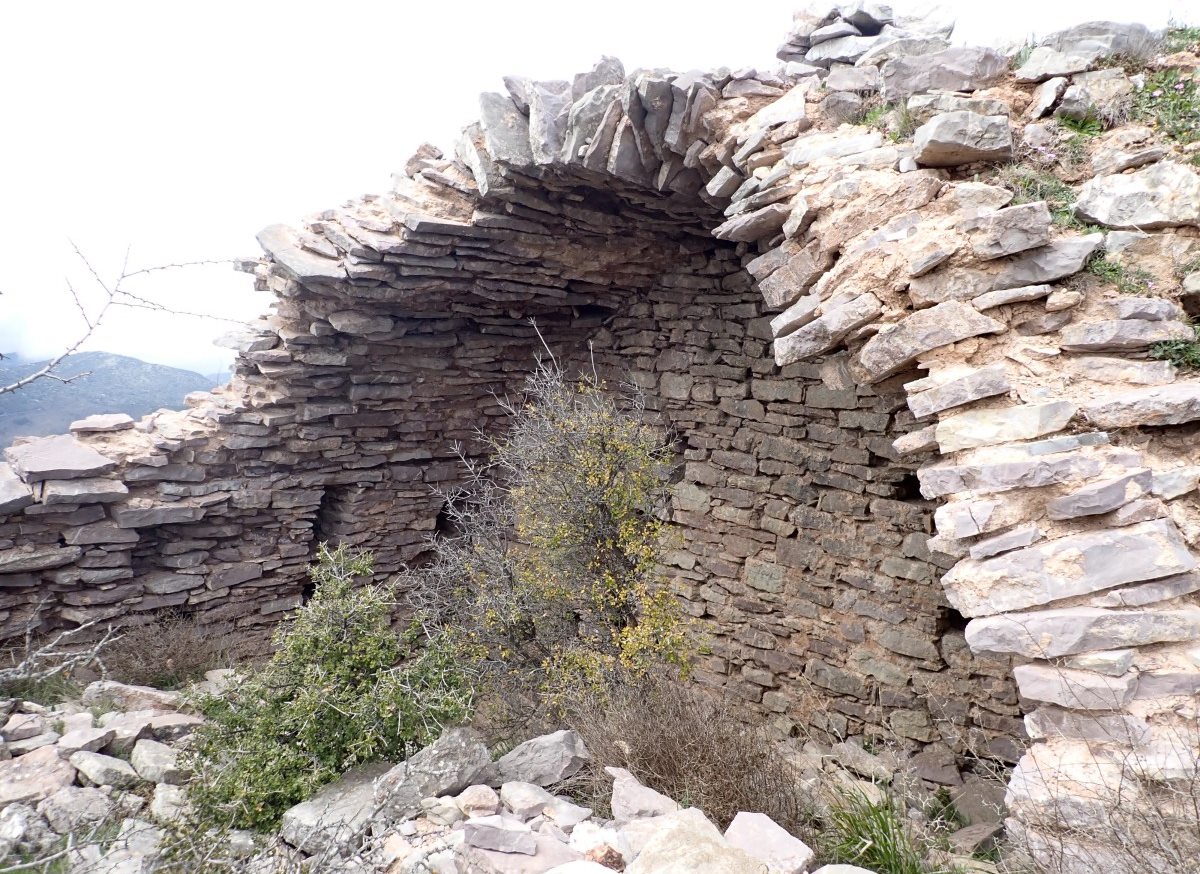
The southern side of the castle is dominated by the ruins of a tower, from which part of the ground floor and its vaulted ceiling survive. The dimensions of the tower are currently unclear, but it was at least 6m wide. Mortar was used for the construction of the tower.
Sources
- Research, info and photos by Peter Barkevics – June 2025
- Antoine Bon, 1969, “La Morée franque. Recherches historiques, topographiques et archéologiques sur la principauté d'Achaïe (1205-1430)”, Editions de Boccard, Paris, 1969, σελ.377-382
| Access |
|---|
| Entrance: |
| Free access |