Pyli, Kos, Dodecanese,South Aegean
Castle of Peripatos
| Location: |
| At the eastern edge of the village of Pyli in Kos island |
| Region > Prefecture: |  |
| South Aegean Dodecanese | |
| Municipality > Town: | |
| City of Kos • Pyli | |
| Altitude: | |
|
Elevation ≈ 85 m (Relative Height≈0 m) |
| Time of Construction | Origin | |
| perhaps 14th cent. | IOANNITE  |
|
| Castle Type | Condition | |
| Castle Ruins |
Rather Poor
|
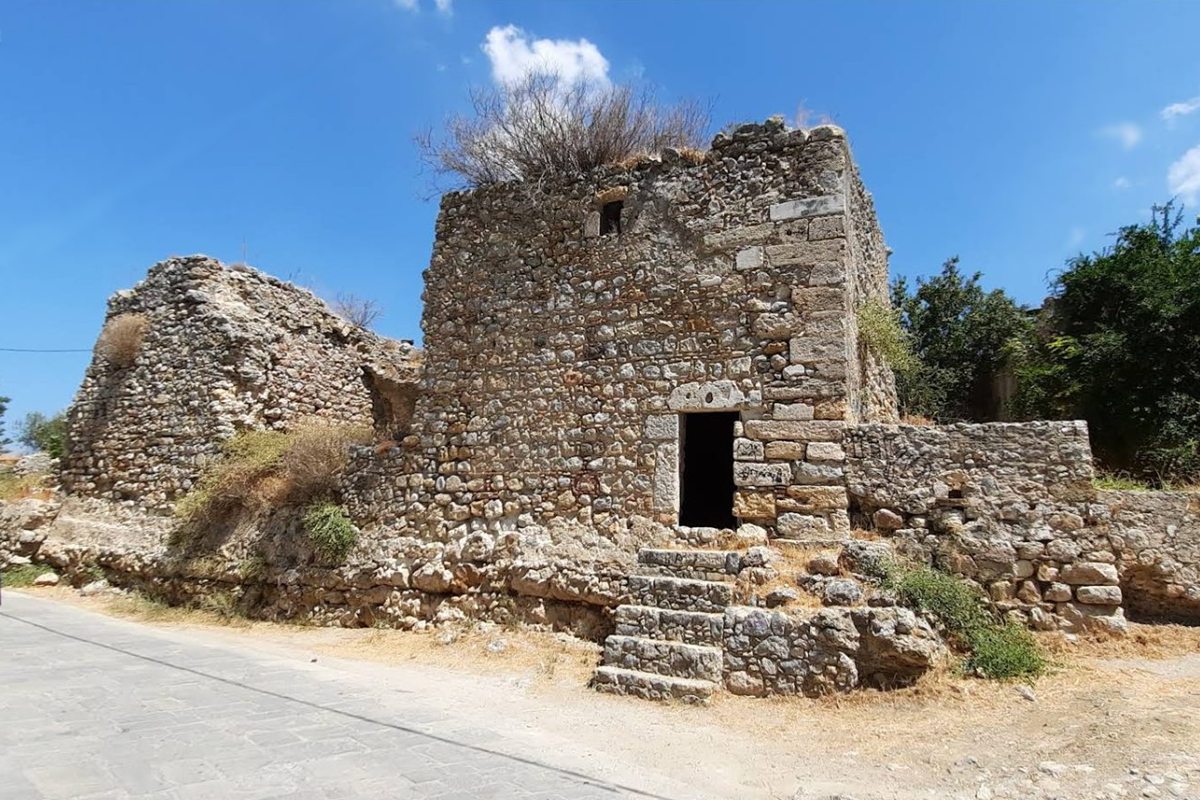
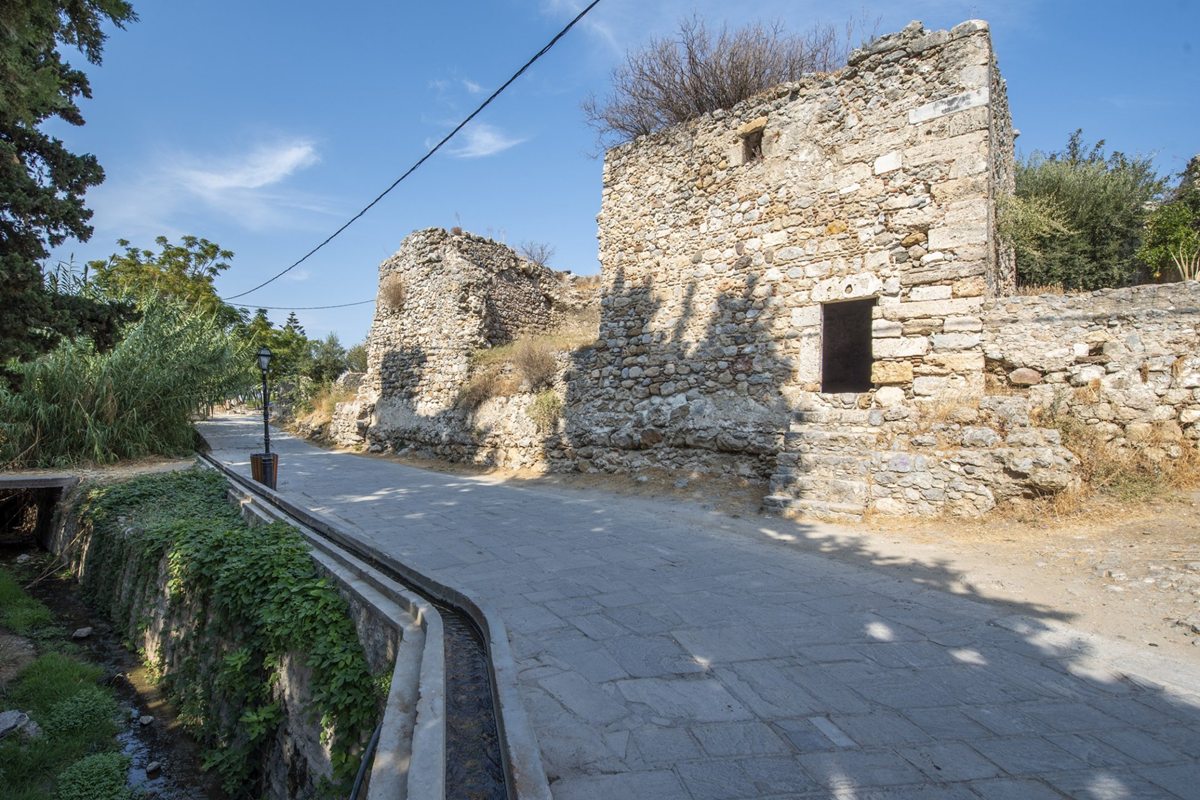
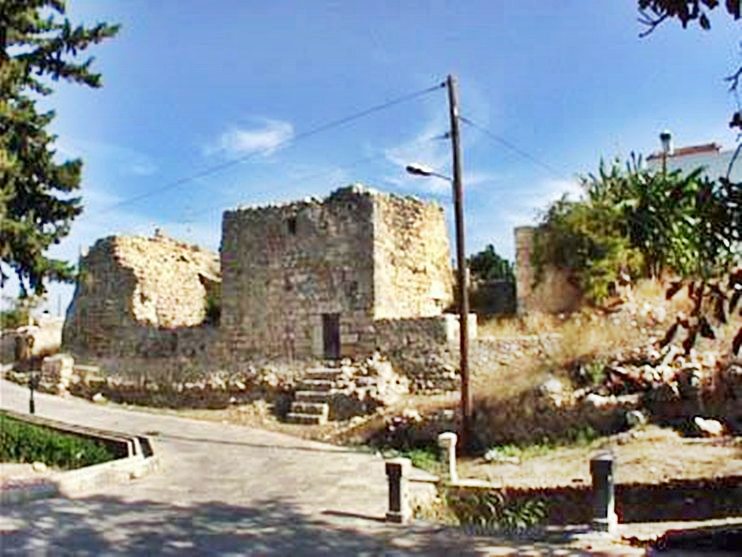
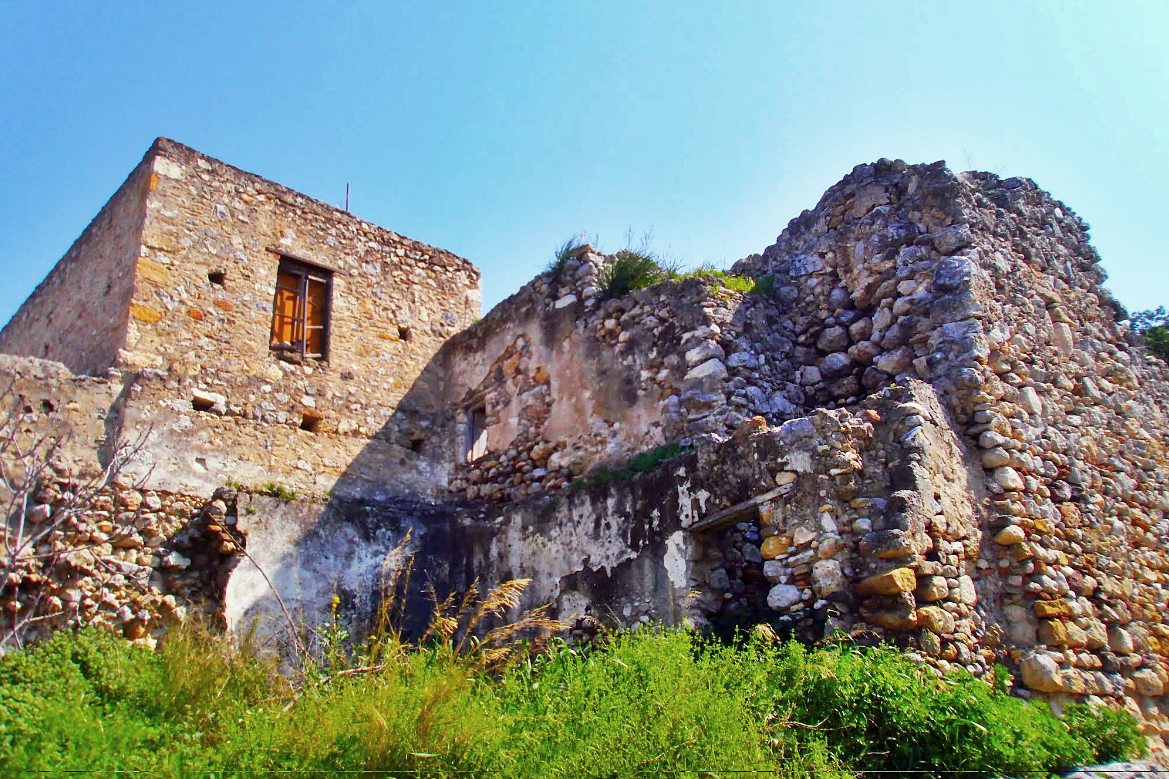
Ruined buildings that belonged to a medieval castle, on the eastern edge of the town of Pyli, Kos.
History
The castle must never have been particularly strong. Perhaps it was simply a compound with fortification elements. The Knights Hospitaller had described it as a fortified settlement.
For a period, at least, it was part of a monastic complex. It is certain that a part of the castle has been demolished or covered for the creation of the modern settlement of (New) Pyli. New Pyli was created after 1830, when the Old Pyli (i.e., Pyli Castle) was abandoned because of a plague.
We have references to the castle of Peripatos from historical sources:
From the late 11th century, in the Codicil of the Testament of Saint Christodoulos (March 10, 1093), as well as in documents from the 13th and 14th centuries of the monastery of Saint John of Patmos, Peripatos is mentioned as a metochi of the monastery of Panagia of Kastriani (in the old Pyli castle).
The castle is also mentioned in documents from the archives of the Knights of St. John dated 1449, 1451 and 1457. (It should be noted that the Knights‘ archives are kept in Malta.)
Furthermore, the Florentine monk and geographer Cristoforo Buondelmonti (c. 1385-1430) confirms that the castle existed in the early 15th century, in his work “Liber Insularum Archipelagi” (1420).
In the 1457 document is reported that the Turks captured the deserted castle of Peripatos and burned it down.
We do not know whether the Byzantine reference from the 11th century refers to a normal castle or just to a monastic property. It is not clear. What is certain is that the castle existed at the beginning of the 15th century.
There is also a hypothesis that the name “Peripatos” is an indication that the castle is Byzantine, because peripatos in Byzantine fortresses was the parapet on the ramparts. However, this is not enough to adopt this dating. It is most likely that it is a Knights Hospitaller castle that was created on the land of the old metochi in the 14th century.
The current appearance of the castle buildings shows that they have been maintained and have undergone later modifications. Therefore, they must have been in use for many centuries. According to local testimonies (Heslop, 2014), the roof of the castle collapsed in the 1950s and only then did it stop being used as a stable.
Sources
- Michael Heslop (2014), “The Search for the Defensive System of the Knights in the Dodecanese”, in Archaeology and Architecture of the Military Orders: New Studies edited by Mathias Piana–Christer Carlsson , Farnham. σ. 51-52
- Website ΟΔΥΣΣΕΥΣ of the Greek Ninistry of Culture - Κάστρο Περιπάτου
| Access |
|---|
| Entrance: |
| Free access to the surrounding area. |