Sistrouni, Dodoni, Ioannina,West Greece
Castle of Sistrouni
| Location: |
| On a hill 1 km northwest of the village Sistrouni in Epirus |
| Region > Prefecture: |  |
| West Greece Ioannina | |
| Municipality > Town: | |
| City of Dodoni • Sistrouni | |
| Altitude: | |
|
Elevation ≈ 505 m (Relative Height≈80 m) |
| Time of Construction | Origin | |
| Various periods | ANCIENT  |
|
| Castle Type | Condition | |
| Castle Ruins |
Rather Poor
|
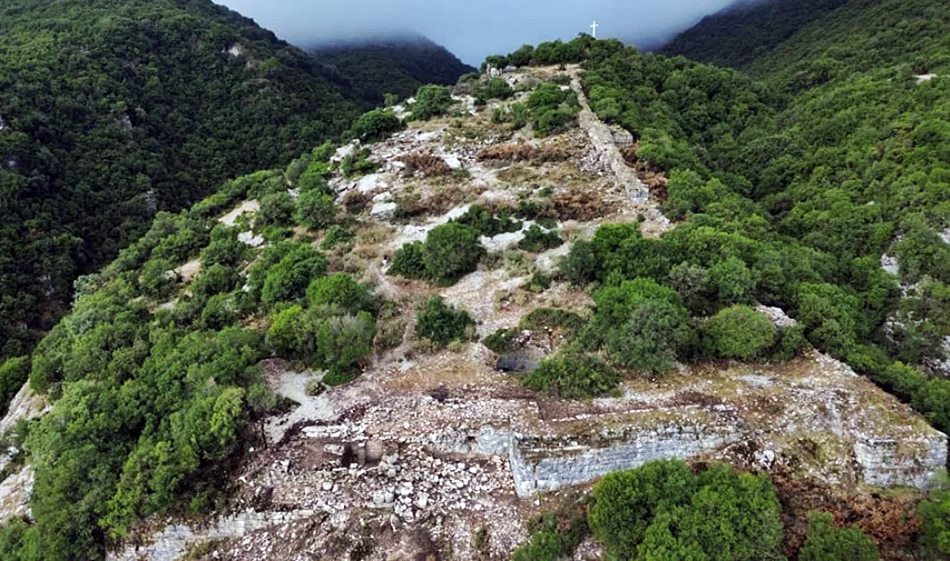
Ancient castle with a newer construction phase at the location “Agios Ioannis”, on a hill northwest of the village Sistrouni, Ioannina prefecture.
History
Judging from the type of the structure, the castle was built during the Hellenistic Period, around the 4th century BC. It seems that it is not one of the castles that the Romans destroyed when they conquered Epirus, as many parts of the ancient walls survive.
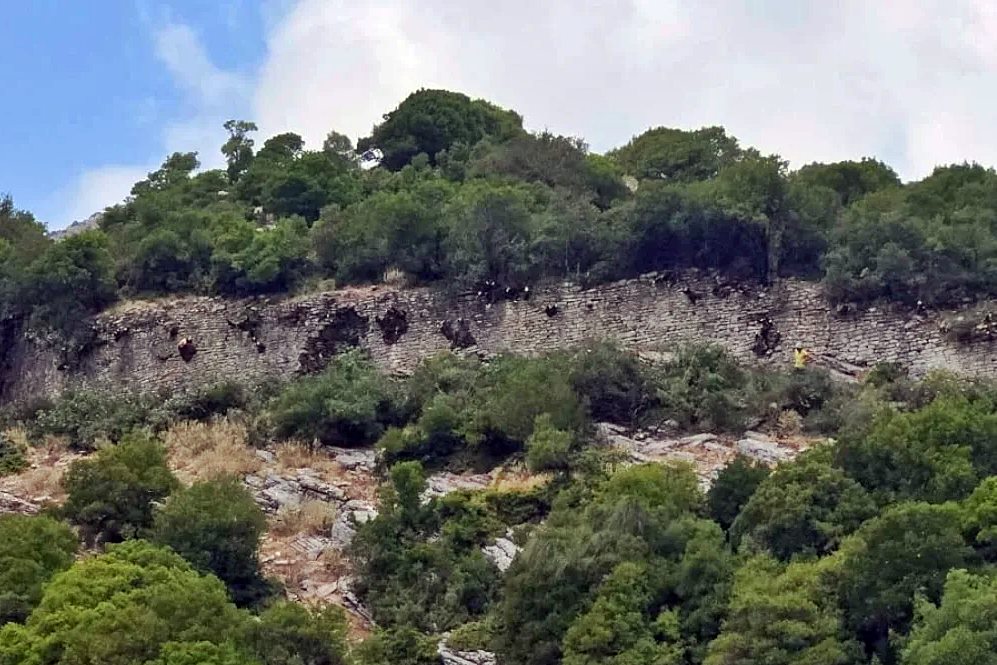
The castle was later used by the Byzantines, as evidenced by the fact that there are significant medieval additions to the fortification using smaller rough stones, material from ancient buildings (spolia) and binding mortar.
However, we have no mention of the castle from historical sources.
It is unknown when the castle was abandoned. This probably happened in the early 7th century when Avars and Slavs invaded from the north.
The castle of Sistrouni, according to local tradition, was also used by the people of Souli during the time they fought against Ali Pasha (early 19th cent.).
Since 2024, excavations have been conducted at the site by the Ephorate of Antiquities of Ioannina in collaboration with the Università degli studi Catania in Sicily and with the participation of students from the Polytechnic School of Bari.
Structure, Fortification & Buildings
The perimeter of the fortification was approximately 330 meters, enclosing an area of 6,000 sq.m..
The hill is a narrow, elongated ridge on the East-West axis. It is protected by deep ravines on the north and south sides.
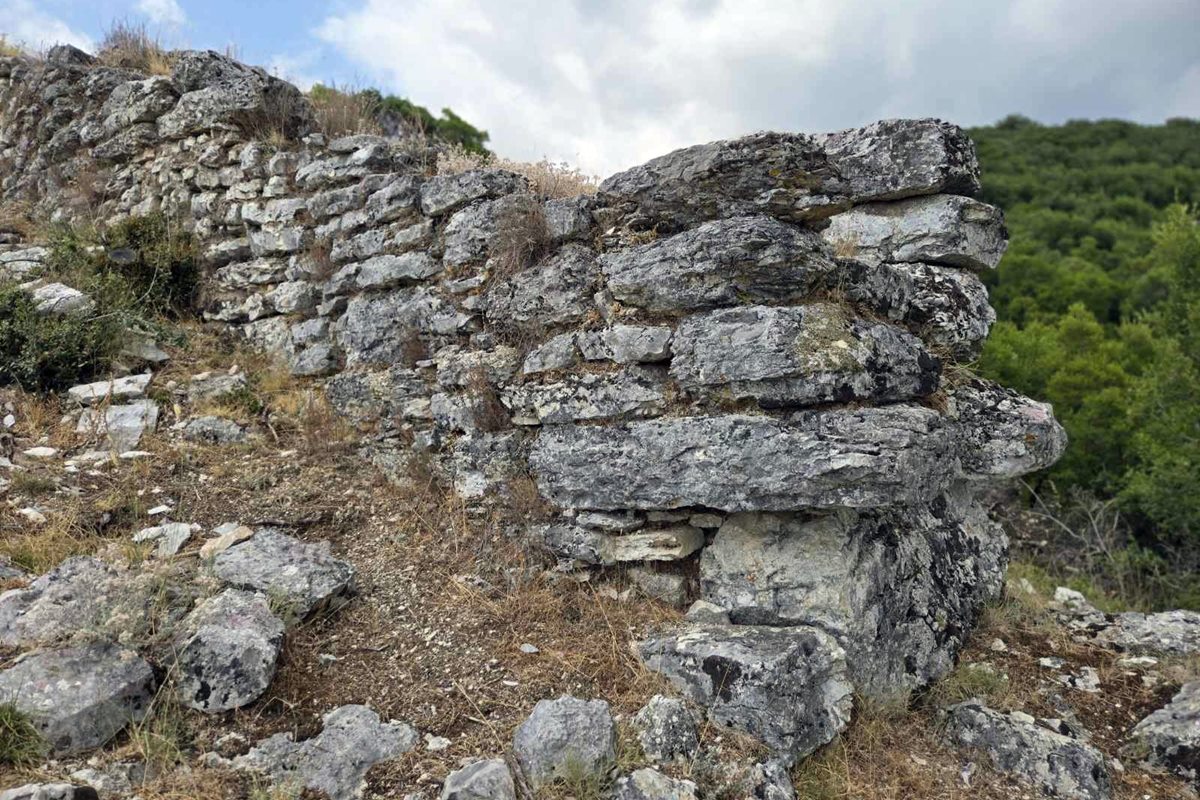
The walls are meticulous stonework according to the so-called isodomic system (processed rectangular stones in parallel layers of equal height). As mentioned above, there are later Byzantine additions to the fortification in some places using semi-finished stones and mortar.
The ancient wall dominates the eastern side (the one shown in photo 1), while the medieval additions are mainly located on the western side, where the impression of a medieval castle is given (photo 2).
On the northern side of the fortification, ancient square towers can be seen. At least one of the towers had a floor with a vaulted roof (which indicates Byzantine construction or modification). On the eastern side, a cistern (water tank) with a vaulted roof survives.
Outside the castle, near the village, the ruins of an early Christian basilica with a mosaic floor were found.
Sources
- William A.R. Bowden, Gazetteer of sites in Late Antique Epirus Vetus, pp 109
- Website epiruspost.gr – Αρχαιολογικές ανασκαφές στη Λάκκα Σουλίου: Στο φως η οχύρωση του Σιστρουνίου. (27 Αυγούστου 2025)
- Νίκος Χοϊνάς (2021), ΟΧΥΡΕΣ ΘΕΣΕΙΣ ΚΑΙ ΑΚΡΟΠΟΛΕΙΣ ΤΗΣ ΜΟΛΟΣΣΙΑΣ, Μεταπτυχιακή εργασία, Πανεπιστήμιο Ιωαννίνων, Φιλοσοφική Σχολή, Ιωάννινα. σελ. 136
- Info by Charalampos Papadopoulos
| Access |
|---|
| Entrance: |
| Free access |
| Other castles around |
|---|
| Castle of Agios Donatos |
| Castle of Eleftherohori |
| Kougki |
| Koulia Tower |
| Acropolis of Ancient Pandosia |
| Castle at Pente Pigadia |
| Castle of Souli |