Distomo, Distomo-Arachova-Antikyra, Boeotia,Central Greece
Castle of Distomo
| Location: |
| On a low hill at the northwestern side of Distomo. |
| Region > Prefecture: |  |
| Central Greece Boeotia | |
| Municipality > Town: | |
| City of Distomo-Arachova-Antikyra • Distomo | |
| Altitude: | |
|
Elevation ≈ 508 m (Relative Height≈40 m) |
| Time of Construction | Origin | |
| Various periods | ANCIENT  |
|
| Castle Type | Condition | |
| Castle Ruins |
In Ruins
|
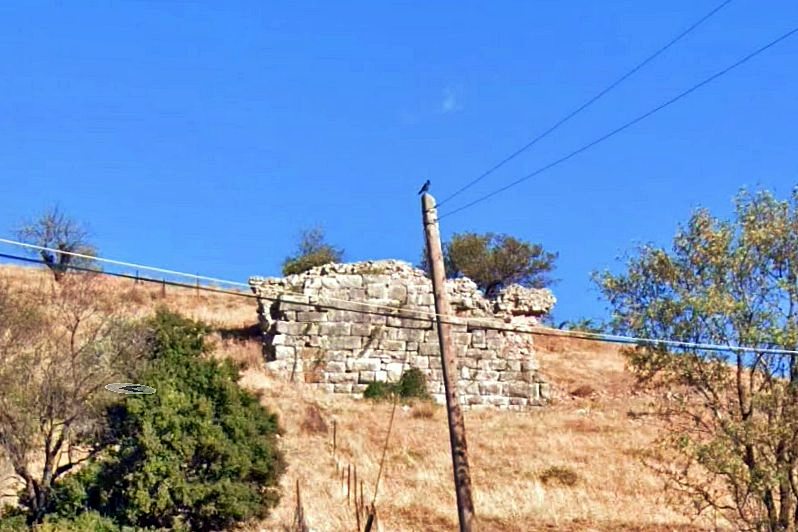
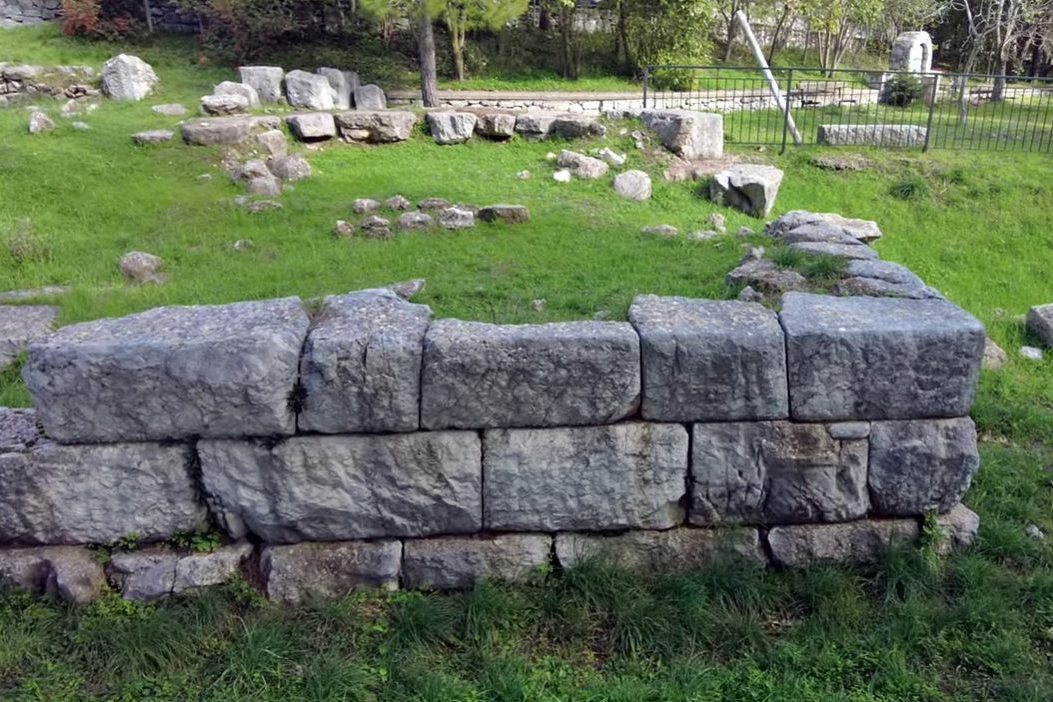
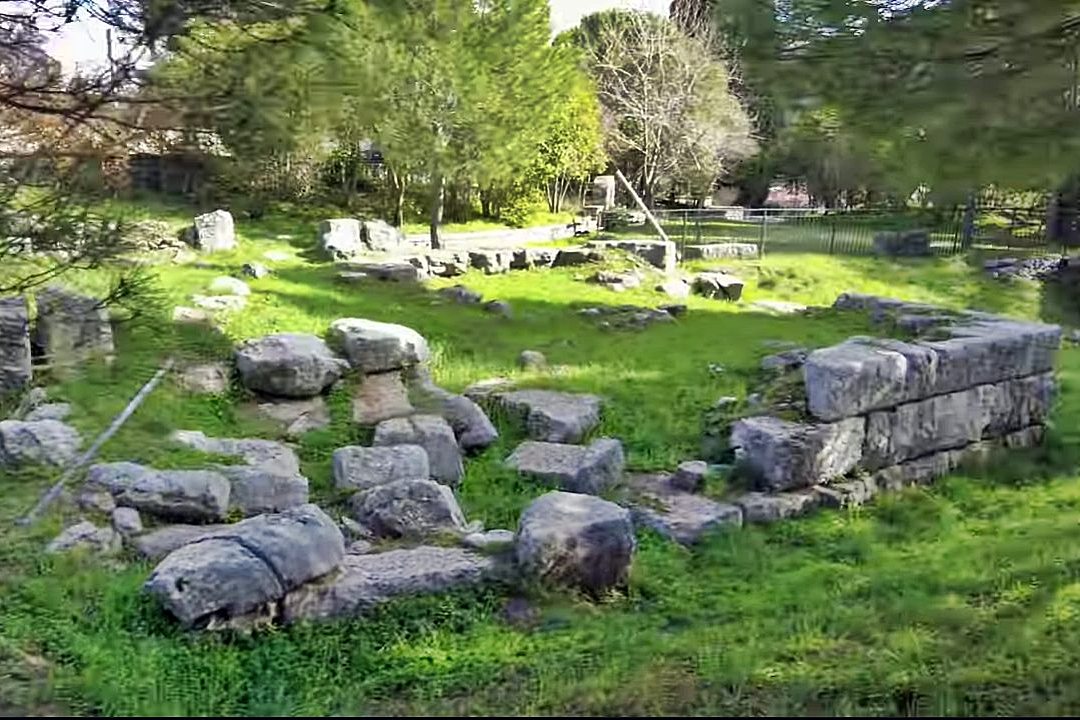
Remains of an ancient acropolis fortification on a hill on the western outskirts of the town of Distomo. Traces of the ancient fortification, at a low height, have also come to light within Distomo, on at least 6 plots around the central square and the church of Agios Nikolaos.
The remains on the hill show newer additions, which leads to the conclusion that the fortification was also used during medieval times.
Location & Strategic Scope
Ambrossos (or Ambrysus) was built in a small, fertile valley with many vineyards, formed between the mountains of Parnassus, Kirphe, and Helicon.
The Schiste Odos (Split Road) passed through the city, leading toward the sacred city of Delphi. Ambrossos controlled the passes of this road, as well as the route toward the Corinthian Gulf.
The Schiste Odos ascended parallel to the Platania stream, and at one point the three-way junction of Panopeas–Ambrossos–Delphi was formed, where, according to tradition, the fateful meeting of Oedipus with his father Laius took place.
History
In Αntiquity, Ambrossos was considered a Phocean city, although it is now part of Boeotia. It was a member of the Phocean League.
The city was destroyed by Xerxes during the Persian Wars (in 480 BC).
The Phocean League found itself at the center of the Third Sacred War (356-346 BC), when the Phoceans’ capture of Delphi led to conflict with the Delphic Amphictyony, a pan-Hellenic coalition led by Thebes – initially. Despite the Phoceans’ ten-year resistance, the intervention of Philip II of Macedon led to their defeat, marking the first substantial involvement of the Macedonians in the affairs of southern Greece.
Subsequently, as the Macedonian threat became visible, the Thebans helped the inhabitants of Ambrosos strengthen their defenses. Around 340 BC, on the eve of the Battle of Chaeronea, a strong double wall (as Pausanias mentioned) was built, which was an extension of an earlier fortification. Pausanias also reports that the walls of Ambrossos was one of the best in the Greek world.
It is striking that, despite the existence of such a strong fortification, the sources are silent about the historical course of the city. The same lack of information characterizes the Medieval Period. Although there are indications of later additions to the walls, there is no evidence of the existence of any significant castle during the Byzantine era, the Frankish rule or the Catalan rule.
It seems that during the Middle Ages there was only a rudimentary fortification that made use of the ancient ruins to some extent.
In more recent times, Distomo emerged as a strategic point during the Greek Revolution. In January 1827, a multi-day battle was fought in the area, with sources mentioning Greek fortification works in Distomo. However, it remains unclear to what extent the fighters of the Revolution made use of the surviving parts of the ancient or medieval walls.
Structure, Fortification & Buildings
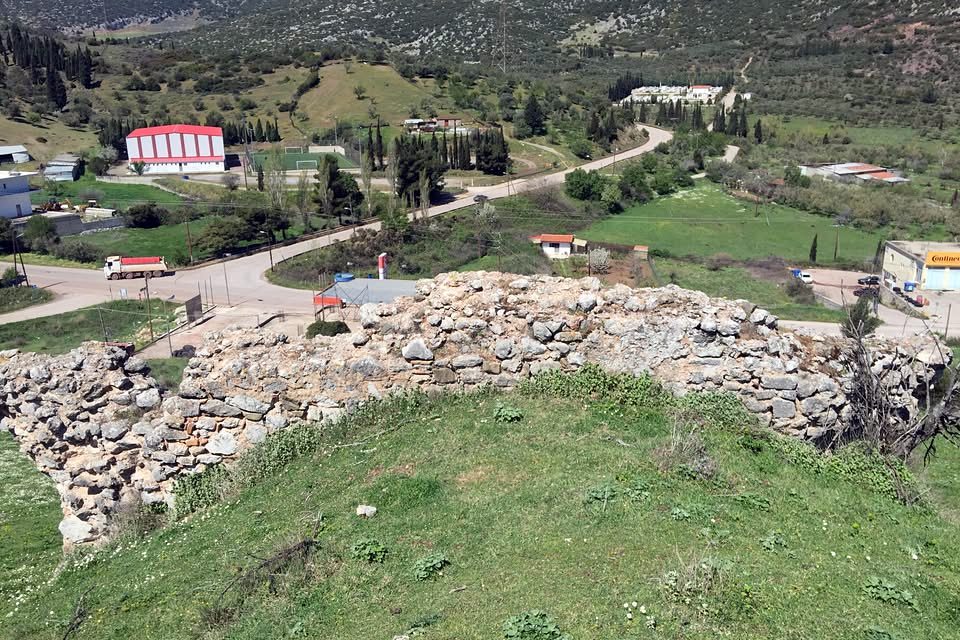
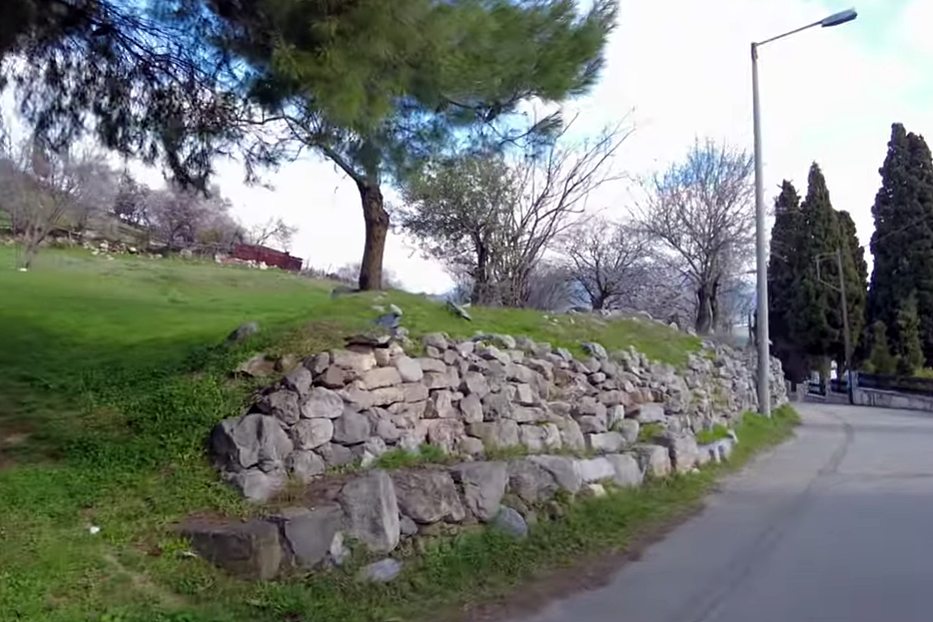
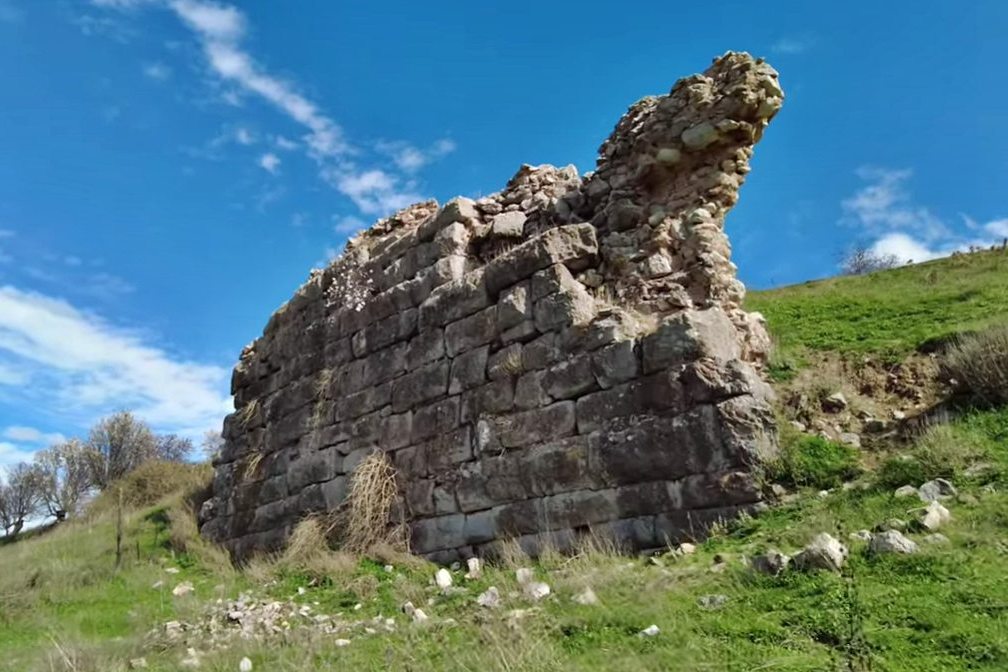
On the acropolis hill, northwest of the town, sections of the wall on the eastern and western slopes are preserved.
The reuse of the fortification in later periods is observed in the surviving sections of the wall (photo 3,6): the mixing of old bricks with mortar and smaller stones, either on old foundations or along a new cut of the acropolis rim (photo 1), testifies to successive phases of repair and reconstruction.
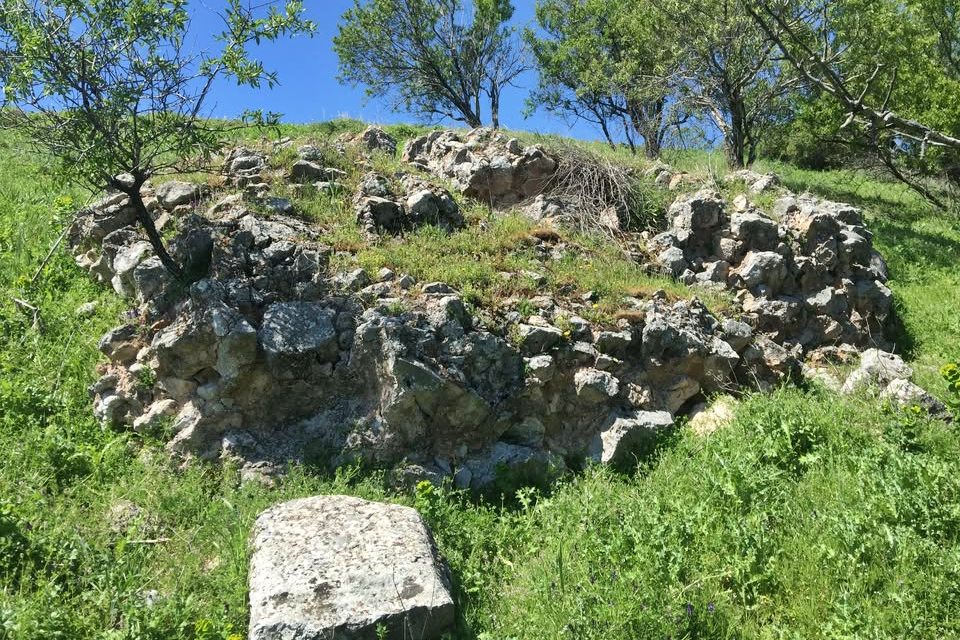
At the eastern foot of the hill, near a playground, remarkable ancient remains have been preserved: the foundations of two strong Hellenistic towers and remains of Roman buildings (photos 4,7).
As mentioned above, towards the center of the town and east of the hill, sporadic remains of the ancient wall have been spotted. However, the existence of a double wall has not been confirmed.
On a hill 2 km north of Distomo is another fortification, known in the literature as “Kastri of Distomo”. It is an extensive oval-shaped enclosure, built of unprocessed stones. This castle is likely to have been a Pelasgian acropolis, which underwent small-scale modifications during the Hellenistic Period.
A little further north, at a distance of 4–5 km from Distomo, there are ruins of another Hellenistic fortification, belonging to the ancient Phokicon — the city that served, in a way, as the seat of the Phocian League.
Sources
- Φώτης Ντάσιος (2004), Αρχαίοι Οικισμοί στην Κοιλάδα του Φωκικού Οικισμού. σελ. 272-275
- Info and photo by Dimitrios Delidimitriou
- Αρχαιολογικόν Δελτίον τεύχος 56-59/Β2 – 2001-2004. σελ. 409
- Desktop research: Charalampos Papadopoulos
- Video by the user No Limits Crew Αρχαία Άμβροσσος – Η Κρυφή Πόλη της Φωκίδας με Θέα στον Παρνασσό (2025)
| Access |
|---|
| Entrance: |
| Free access. |