Steiri, Distomo-Arachova-Antikyra, Boeotia,Central Greece
Castle of Steiri
or Acropolis of Steiris
1
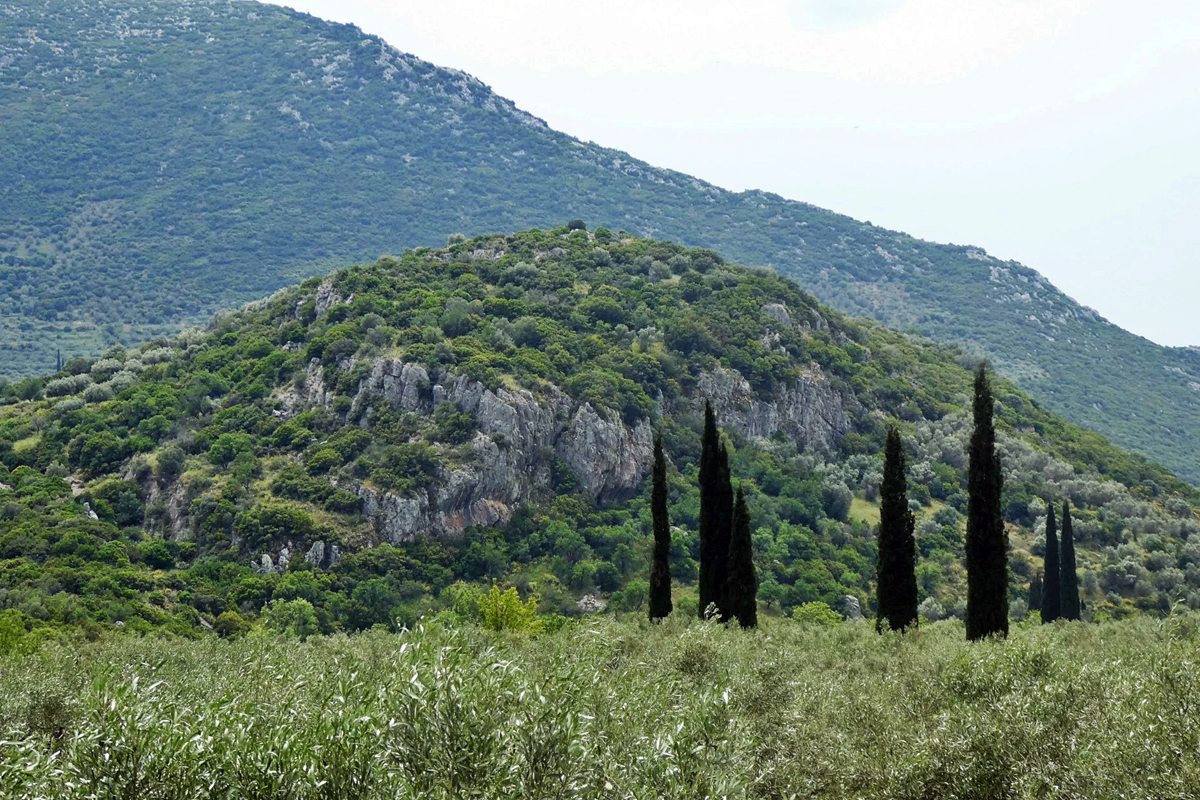
2 / 14
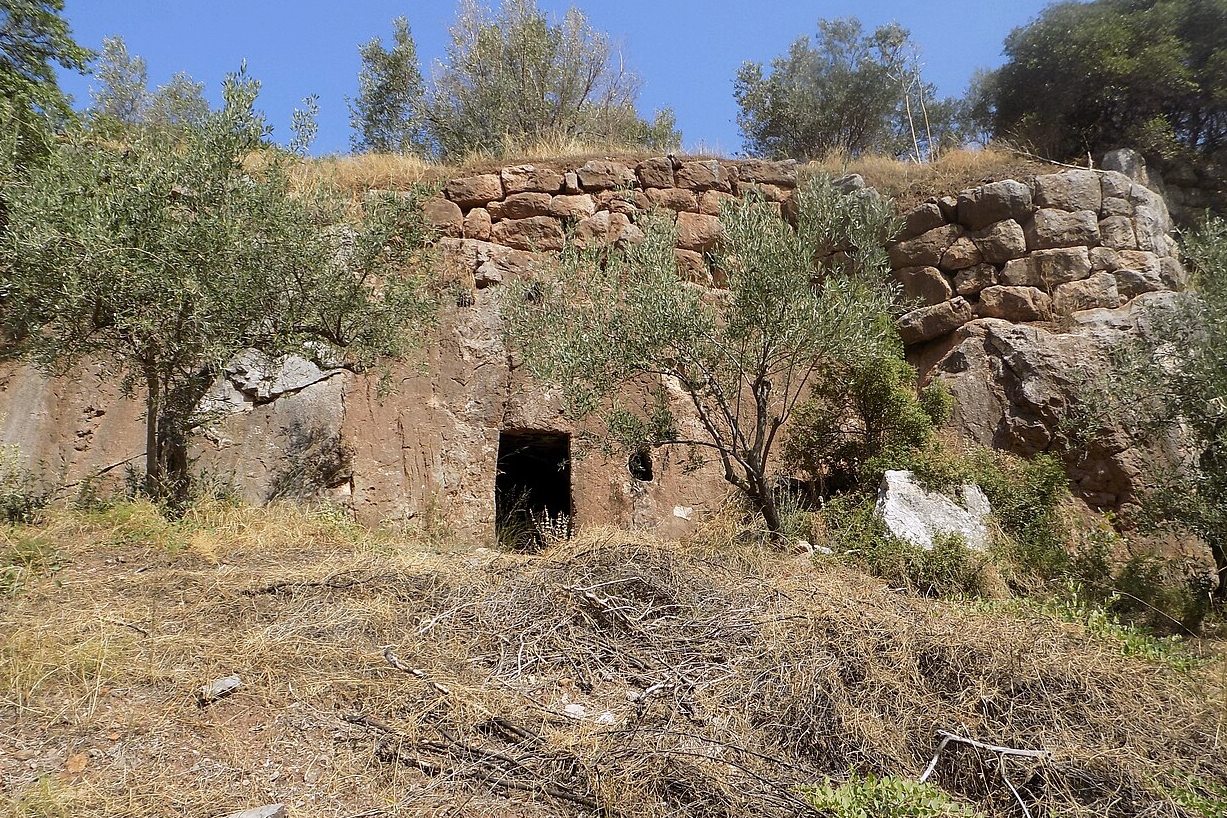
royal tοmb
3 / 14
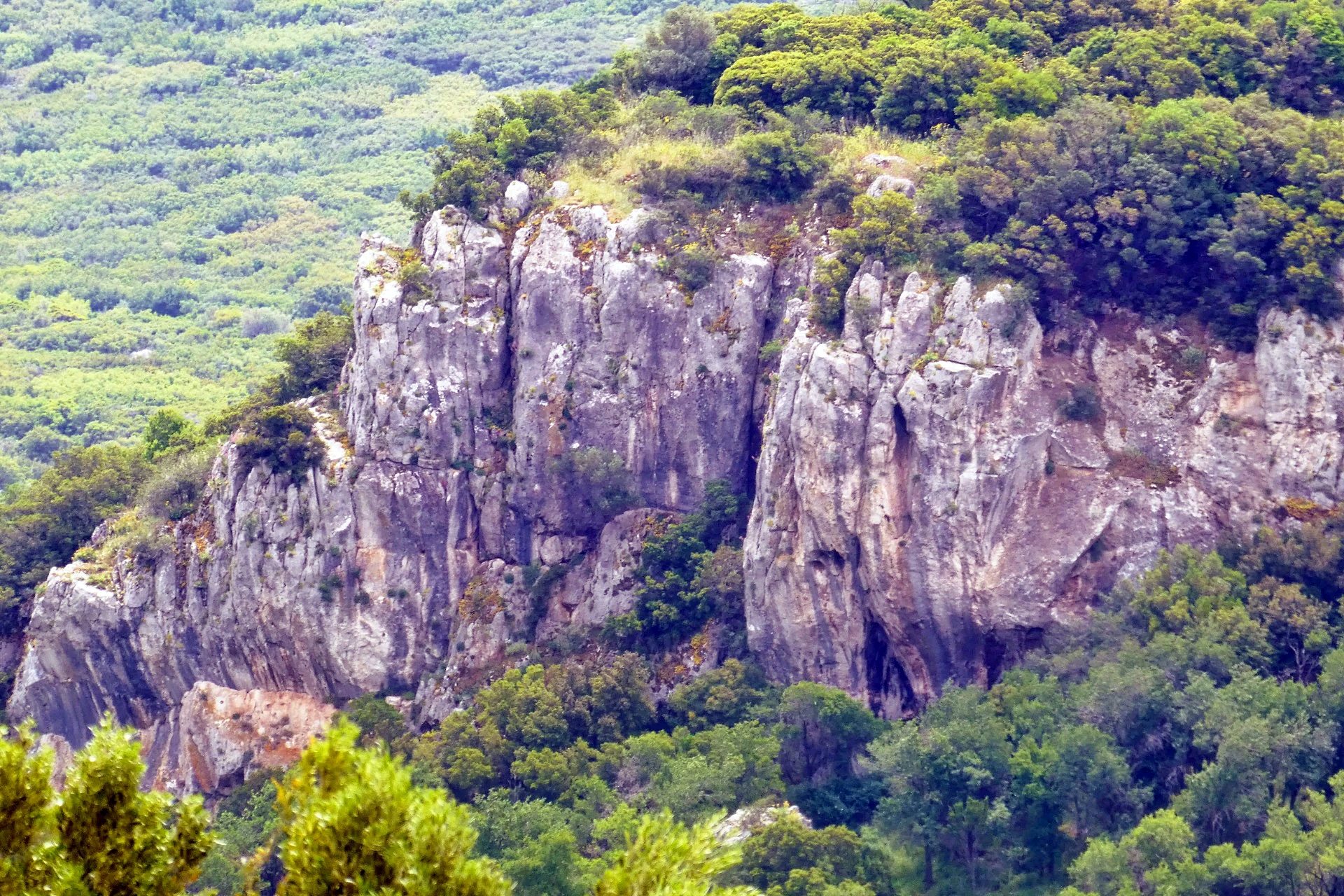
the northeastern rocks
4 / 14
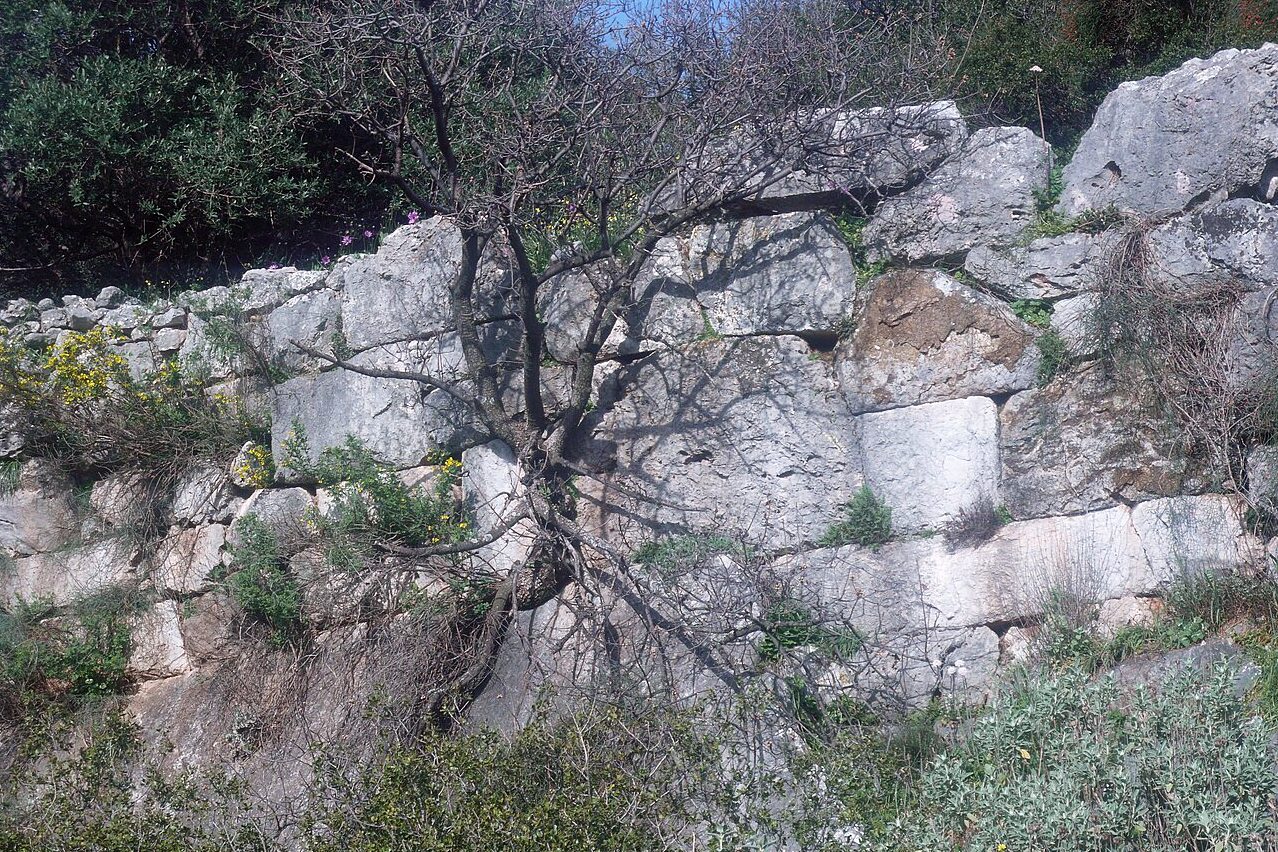
5 / 14
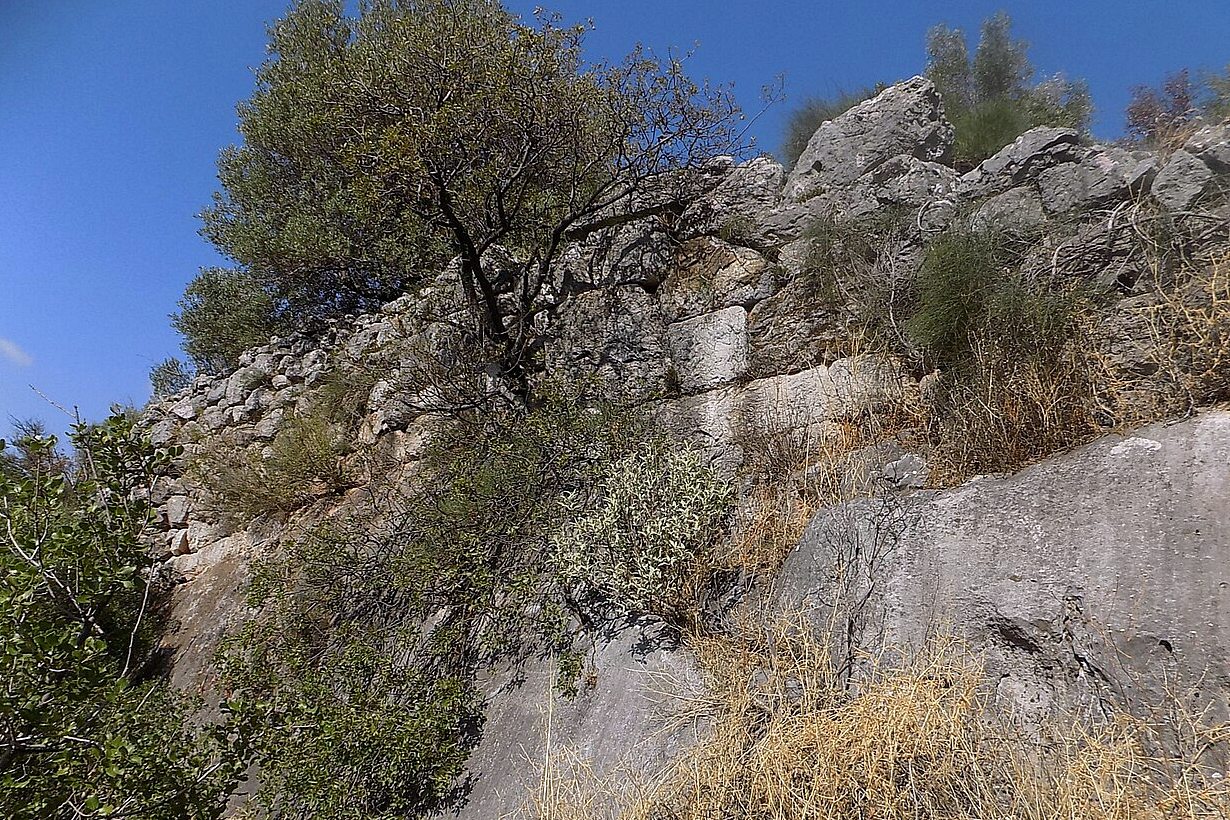
remains of walls at the eastern side
6 / 14
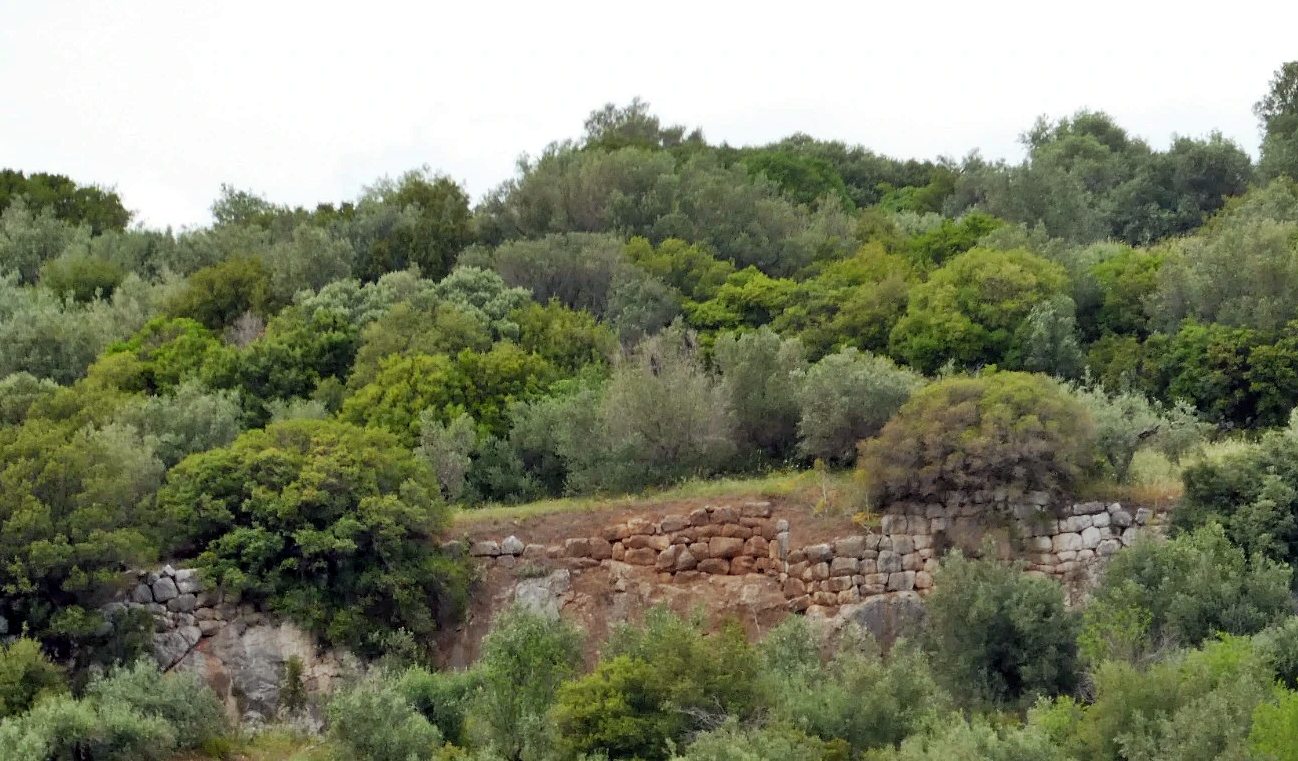
remains of walls at the eastern side
7 / 14
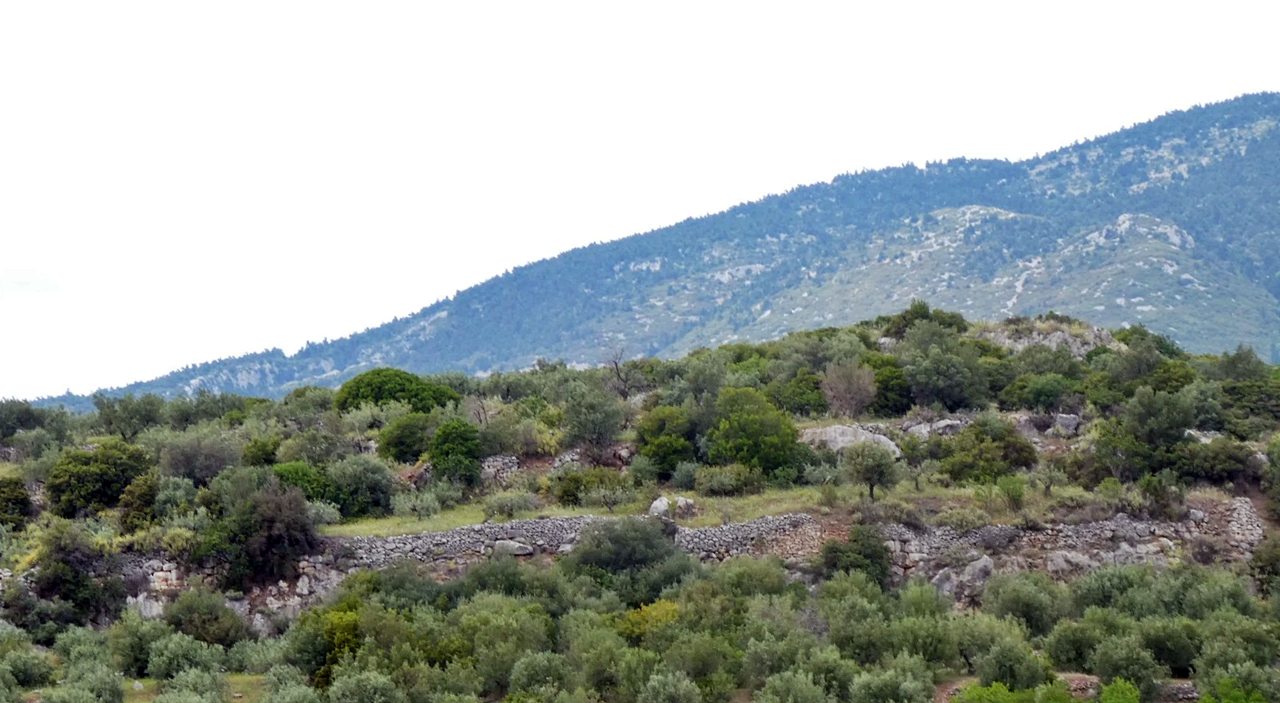
remains of walls at the eastern side
8 / 14
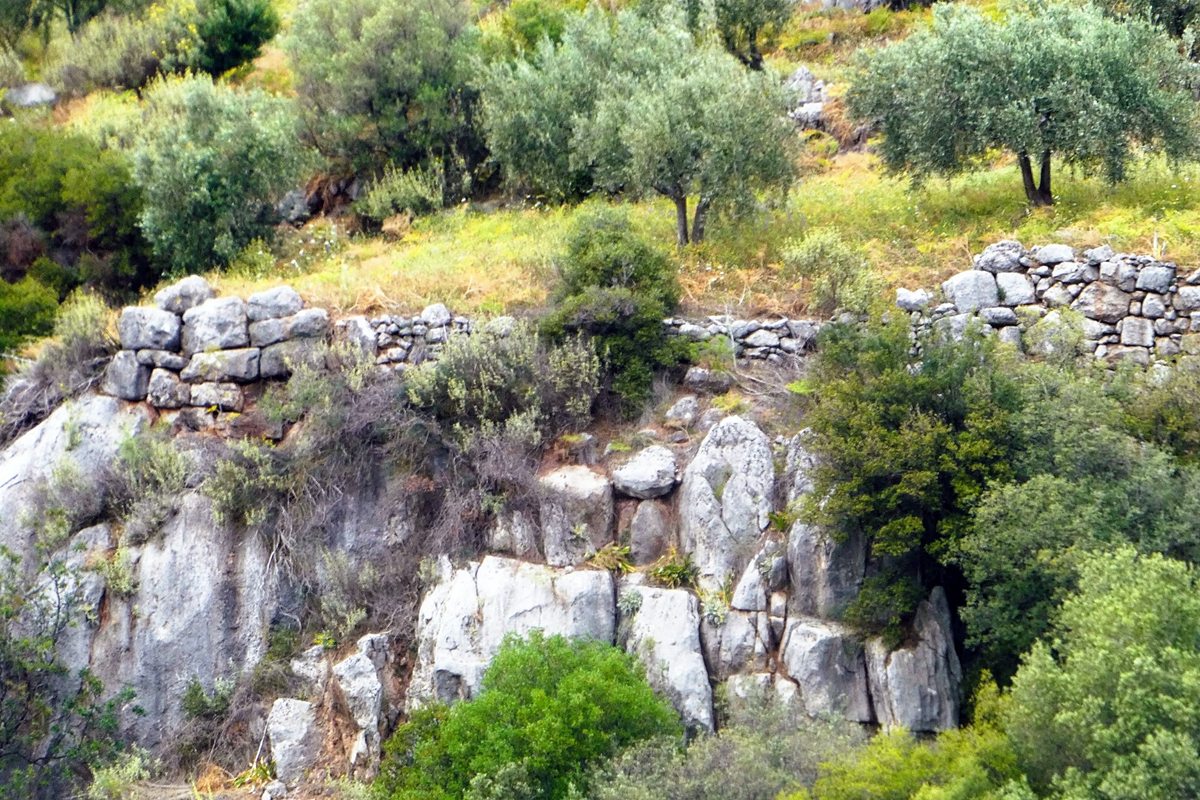
remains of walls at the eastern side
9 / 14
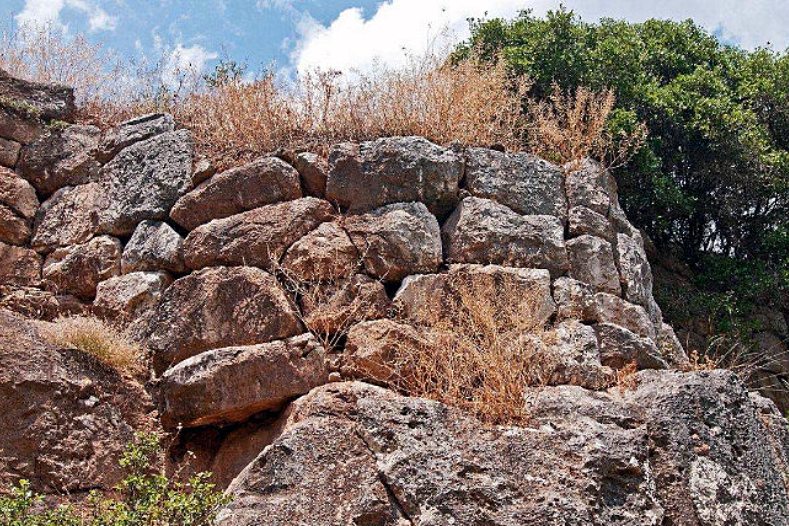
round tower above the tomb
10 / 14
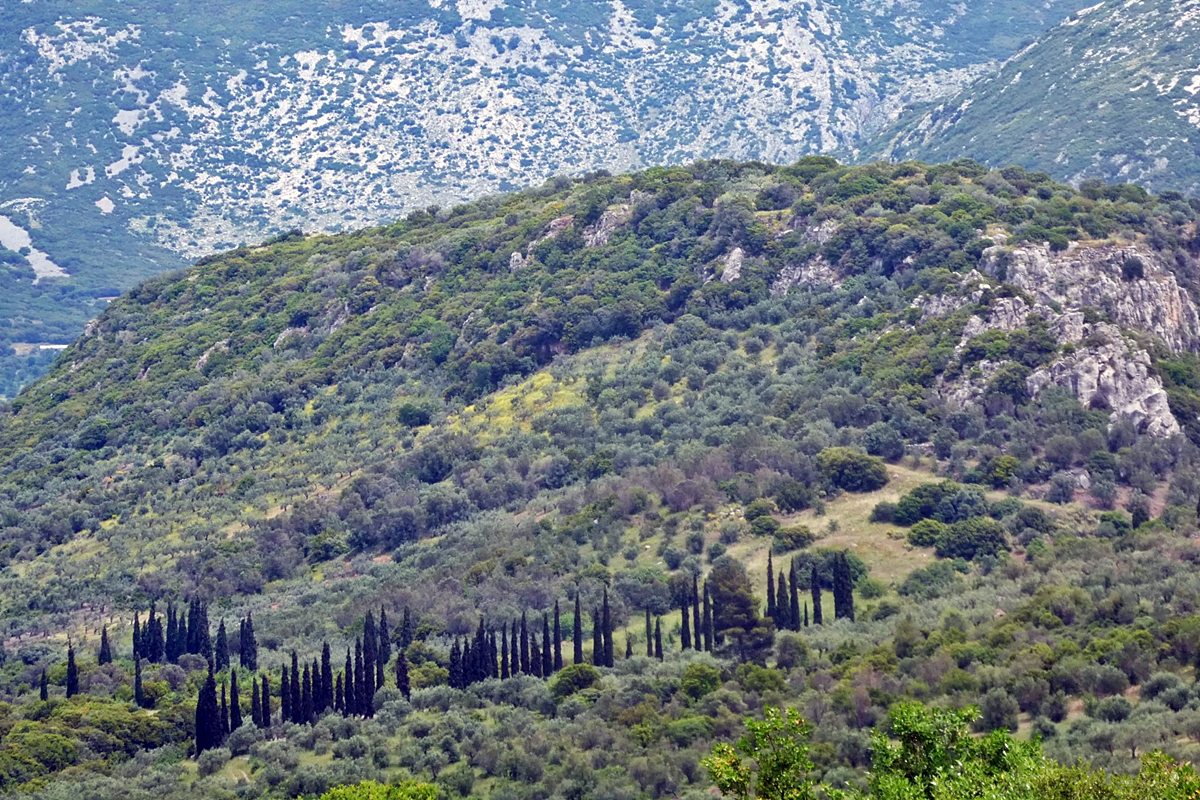
11 / 14
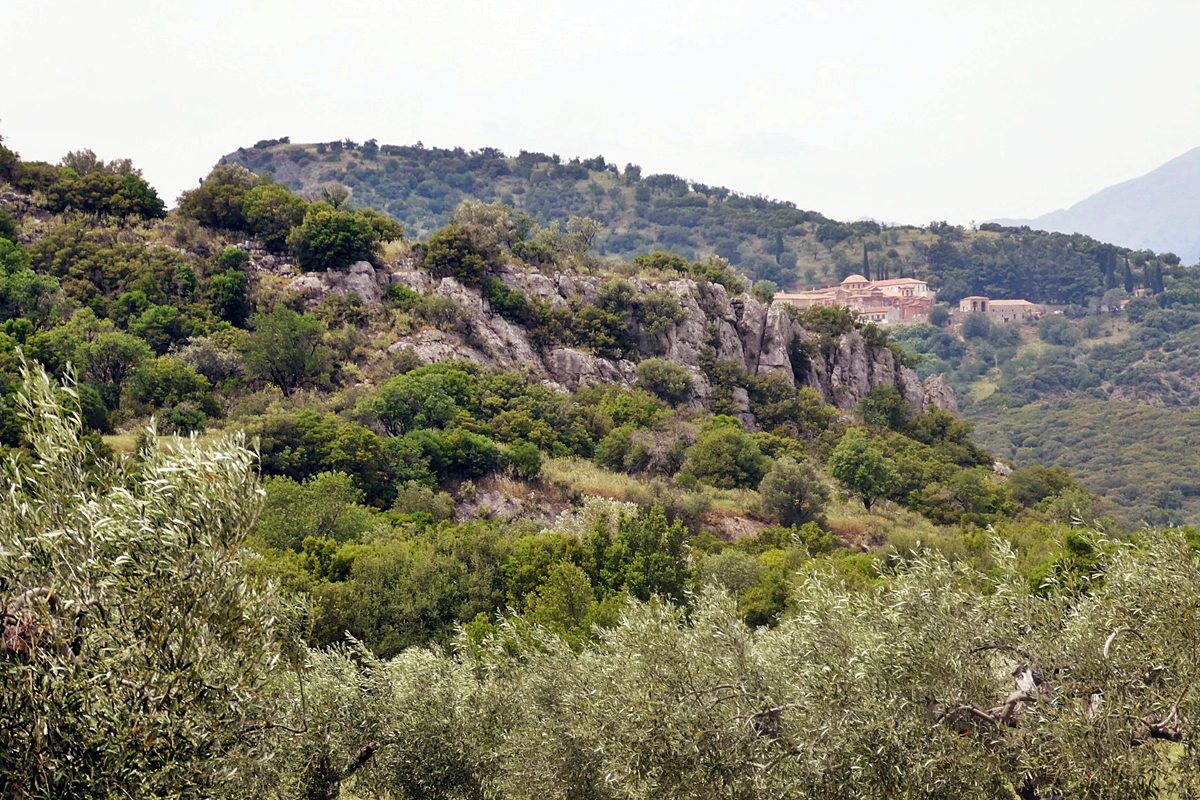
the NE side of the hill, the monastery in the background
12 / 14
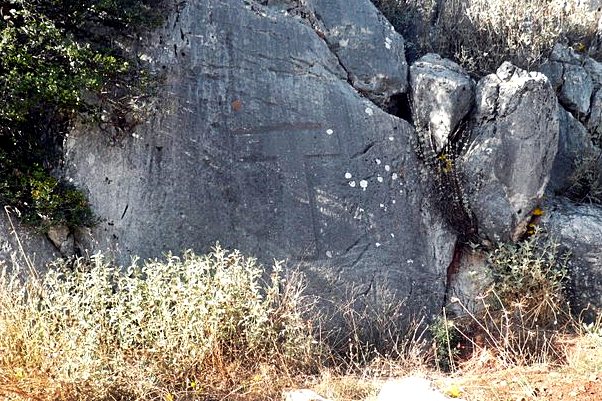
the letter T, symbol of Steiris, engraved on the rock
13 / 14
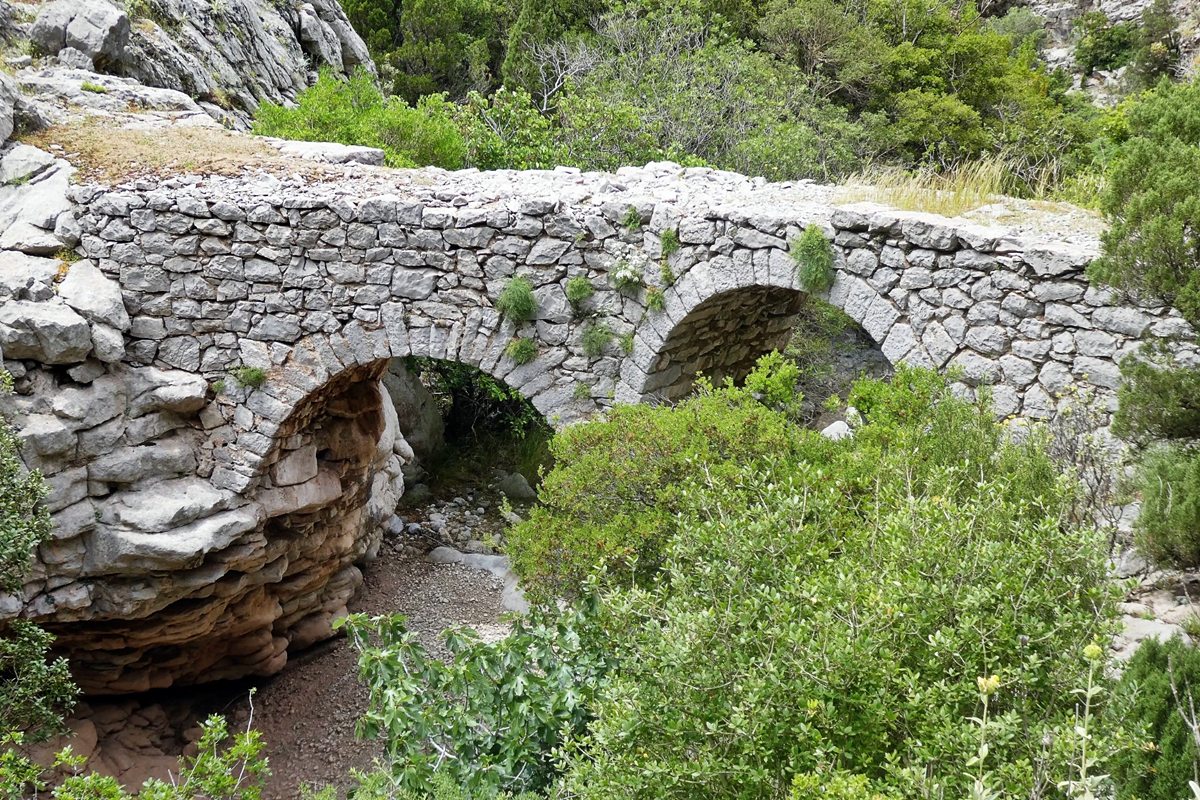
the bridge of monk Leontios on the path of the passage to the sea
14 / 14
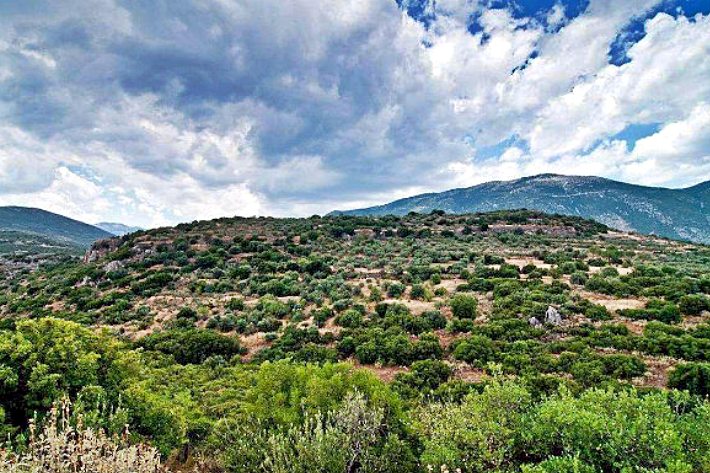
THE END
| Location: |
| On a rocky hill 5 km SE of the village Steiri and 1.5 km SE of the monastery of Osios Loukas in Boeotia |
| Region > Prefecture: |  |
| Central Greece Boeotia | |
| Municipality > Town: | |
| City of Distomo-Arachova-Antikyra • Steiri | |
| Altitude: | |
|
Elevation ≈ 390 m (Relative Height≈80 m) |
| Time of Construction | Origin | |
| Various periods | ANCIENT  |
|
| Castle Type | Condition | |
| Castle Ruins |
In Ruins
|
Few ruins from the acropolis of the ancient city of Steiris which evolved into a medieval castle, on a hill southeast of the Monastery of Saint Luke in Boeotia, near the modern village of Steiri (5 km southeast of it).
The name of the hill today is “Boulios” or “Agios Nikolaos” hill.
History
Steiris or (in modern Greek) Steirida or Stirida was an ancient city located at the site of Paliochori, on the western slopes of Mount Helicon. The castle on this page was not exactly at the location of the ancient city, but a little further southeast, where the acropolis of Steiris was.
Although the location today belongs to Boeotia, in Antiquity Steiris was a Phocian city, and a member of the League of Phocians.
From mythological tradition and ancient writers we learn that the founder of the city was the Athenian Peteos, who was descended from Erechtheus and found himself in the valley of Mount Helicon when he was expelled from Athens, along with his followers, by the king of Athens Aegeas.
The Athenian origin of Steiris is also confirmed by Pausanias, who notes that most of the cities of Phocis are Doric with a few exceptions, one of which was Steiris.
It is speculated that the name of the city may come from Steiria, which was an ancient demos of Athens, approximately in present-day Porto Rafti.
Historically, the participation of the Steiris army in important events is recorded, such as in 338 BC in the Battle of Chaeronea, in 323 BC in the Battle of Krannona during the Lamian War, and in 279 BC in the repulsion of the Gauls of Brennus when the Oracle of Delphi was in danger.
The city of Steiris, although it suffered at least 3 major disasters, by Xerxes in 480 BC, by Philip II in 346 BC in the third Sacred War and in 147 BC by the Romans, was rebuilt, and continued to exist during the Roman and Early Byzantine Period.
Steiris is mentioned in the Synecdemos of Hierocleus (a list of cities in the mid-6th century AD) where it is mentioned as “Stiris”, one of the 79 cities of the “Province of Hellas” under Justinian.
In other words, Steirida still survives in the 6th century, as is the case with the other neighboring Phocian cities, Ambrosos (Distomo), Amfissa, Delphi, etc. Material from the ancient city was used in the construction of an early Christian basilica that was built near the castle, south of the chapel of Agios Georgios.
The last Byzantine reference to Steirida is found in Notitia Episcopatuum 3 of the Paris Grec codex 1555A (8th century AD), where reference is made to a diocese of Stipis (meaning Stiris) under the Metropolis of Athens.
Steirida reappeared in historical sources much later, in the 14th century, when the area was occupied (after the Battle of Kifissus in 1311) by the Catalans of the Duchy of Athens. Its name at that time was lu Estiru or el Estir. From this period, we have several references about the ownership of the fief:
According to Catalan documents from 1367, the castle belonged until then to Armengol de Novelles, who mortgaged it to the Theban Bernard Desvilar for 8000 gold hyperpyras. The latter was killed by Roger de Lluria in Thebes and demanded from Bernard Ballester, who married Desvilar s widow, Beatrice, that Steiri be handed over to him for 2000 hyperpyras, which were never paid.
In 1366 the castle was given by the Aragonese king of Sicily, Frederick III, to Guillem Frederich d’Aragó, an act that was never implemented, since in 1367 the same monarch confirmed the possession of Steiri to Lluria.
In two later documents in the Aragonese archives (dated 31 April and 18 September 1380), King Peter thanked the Greeks Dimitri and Mitro, castellans of Salona, for saving the castle of Estir from the Navarrese (i.e. the mercenary company of Navarrese who operated in Central Greece on behalf of Nerio Acciaiuoli).
A little later, however, around 1385, the castle was lost for ever for the Catalans, as their power in the Duchy of Athens was abolished by the Florentine Nerio Acciaiuoli.
The history of the castle since then is unknown. It was probably captured by the Turks after the end of the Frankish Duchy of Athens in 1460. It must have been abandoned at the beginning of the Tourkokratia.
Structure, Fortification & Buildings
Part of the fortification has been preserved from ancient Steiris. There is no fortification on the western and northeastern sides of the hill, as the cliffs provide sufficient protection. (photo 1,3,11)
On the eastern side, an artificial fortification of a loosely structured circular wall of rough stones, approximately 1m high, has been preserved (photos 5-8). On the same side, several towers can also be seen, mainly
square and semicircular.
At least 4 building phases can be distinguished in the fortification: Mycenaean, Classical, early Christian/Byzantine and medieval (Catalan era).
Inside the acropolis, cisterns, stone troughs, various residential remains, arcosolia, tombs, surface finds, residential and laboratory remains, as well as the ruins of the church of Agios Nikolaos, are preserved. An interesting finding is the monogram T, which was a symbol of the ancient Phocis, and which is engraved on the natural rock, at least in two places (photo 12).
The temple of Agios Nikolaos, at the top of the acropolis, has been built mainly from ancient material in second use (spolia). Among the ancient building material of the church, an inscription was discovered with a dedication to the god Asclepius, which means that there was an Asclepeion (healing house) nearby.
The most impressive point on the hill is the royal tomb, which is carved into the rock, with a rectangular entrance opening (photo 2). According to local tradition, Saint Luke practiced asceticism there, which is why this place is called Askitario.
The ancient city held an important position in the valley, since it controlled the roads leading from the coast to the interior as well as a large area of the border with Boeotia. To the southwest, it communicated with the Phocian coast and the ancient city Medeon through the 6km long Kleisoura gorge, on the western side of which there was an ancient path, which until the 1950s, was the main route of communication between the people of Steiri and the monastery of Saint Luke with the Gulf of Corinth. At some point on this path there is the stone “bridge of the monk Leontios” (photo 13).
Around the hill, in the wider area, there are remains of other towers and small castles (mainly ancient) that protected the various passes of the mountain and the passage to the sea.
A little further south of the hill, in the bay of Agios Nikolaos, the fortified acropolis of Medeon is preserved above a natural port that is today part of the facilities of “Aluminium of Greece”. It is worth noting that around 200 BC the ancient city of Medeon joined in sympoliteia with Steiris
Sources
- Φώτης Ντάσιος (1992), «Συμβολή στην τοπογραφία της Αρχαίας Φωκίδας», Φωκικά Χρονικά, τεύχος 4. 72-73.
- Kenneth M. Setton (1975), Catalan domination of Athens, 1311-1388, Vitorium, London.
- Εύη Τσώτα (2013), Αρχαία Στείριδα. Μία αρχαία Φωκική πόλη μέσα στο χρόνο.
- Ιστοσελίδα taxidiotiko-photologio (2023), Αρχαία Στείριδα. Μία αρχαία Φωκική πόλη μέσα στο χρόνο
- Ρουβιό υ Λιούκ Α. (RUBIO-I-LLUCH ANTONIO - 1912). Περί των Καταλανικών Φρουρίων της Ηπειρωτικής Ελλάδος (µτφρ. Μαυράκη Γ.Ν.). Αθήνα: Κουλτούρα [1991].
| Access |
|---|
| Entrance: |
| Free access. |