Razata, Argostoli, Cephalonia,Ionian islands
Acropolis of Ancient Krani
or Kastelli of Coutavos
1
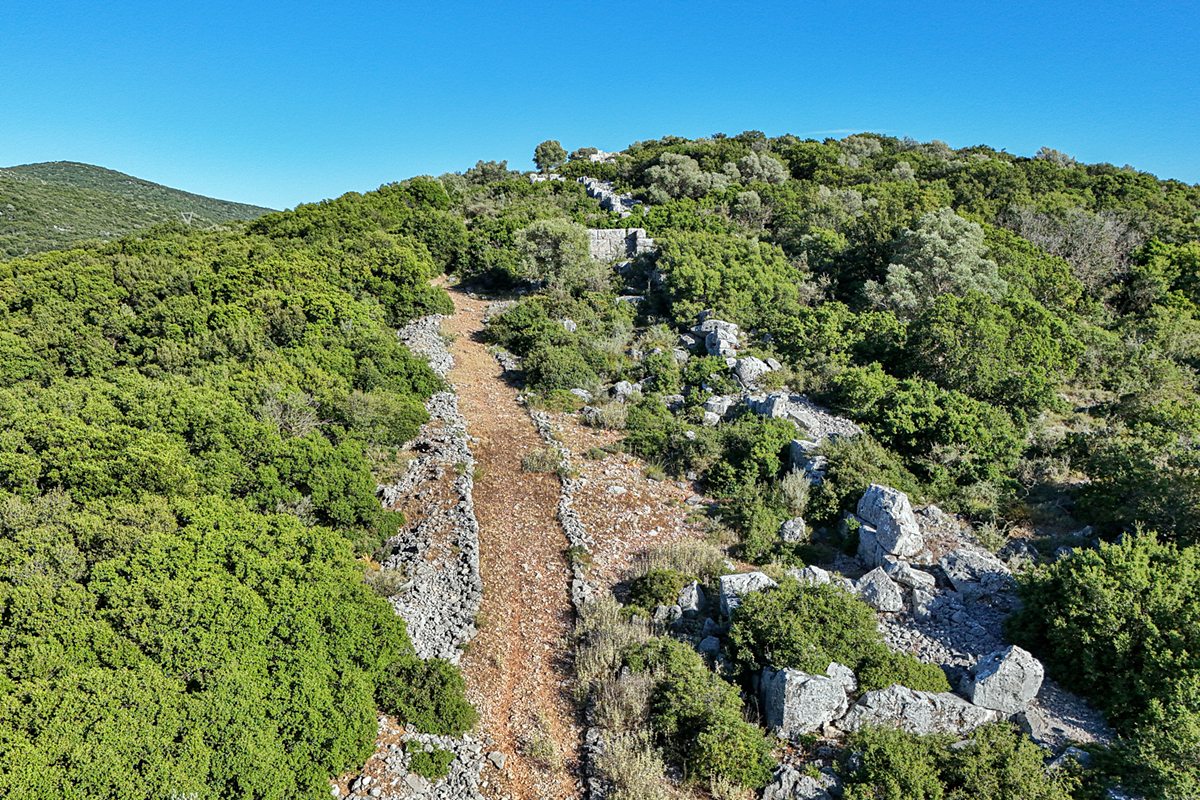
2 / 13
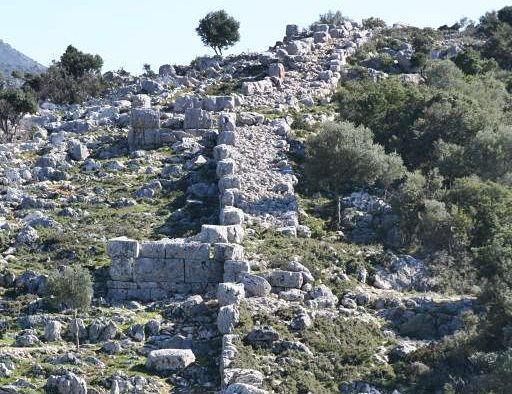
northeasterm wall
3 / 13
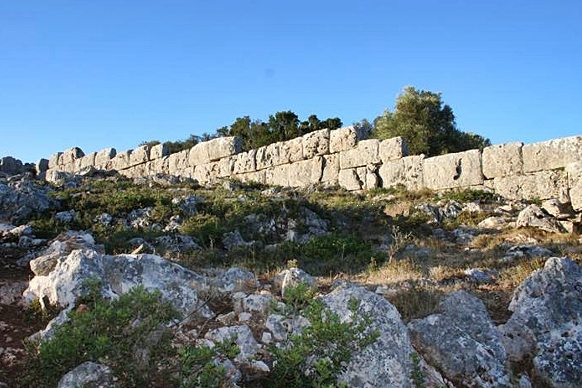
northeasterm wall
4 / 13
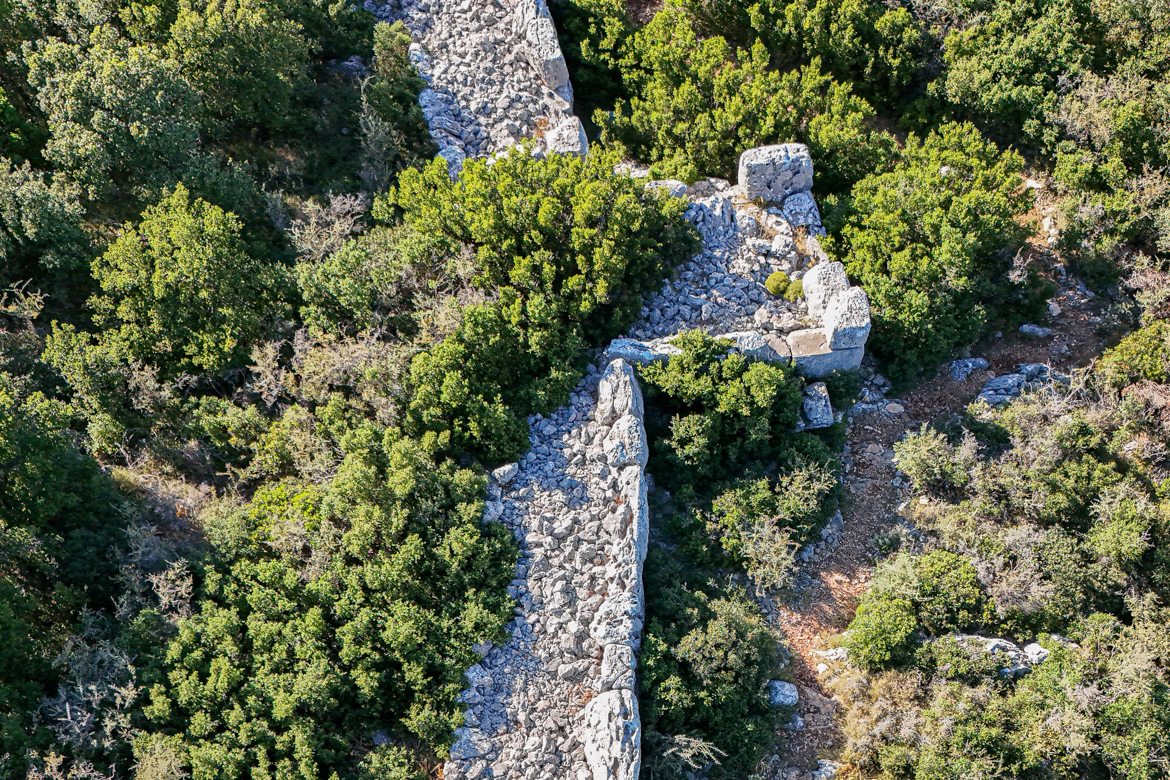
northeasterm wall
5 / 13
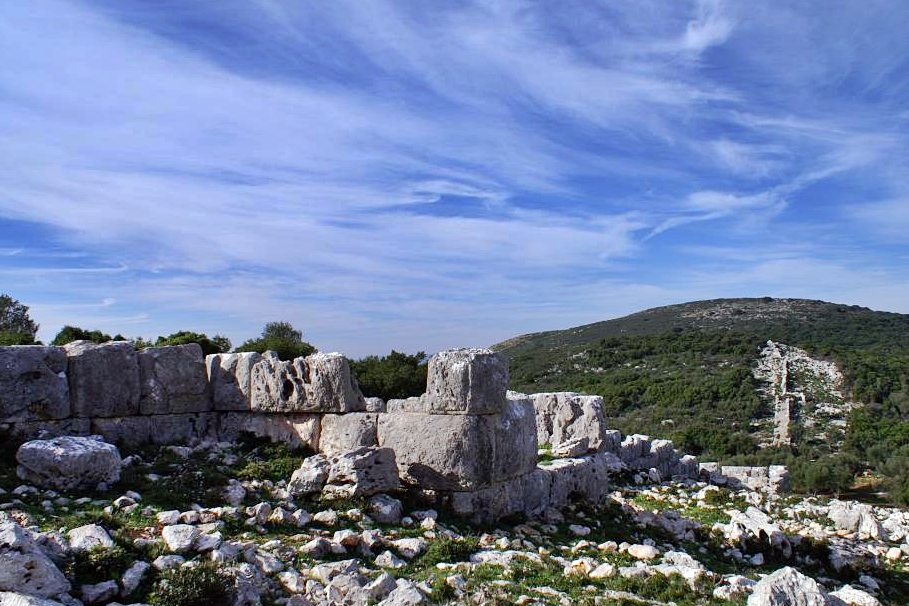
SE wall, and also the NE wall in the background
6 / 13
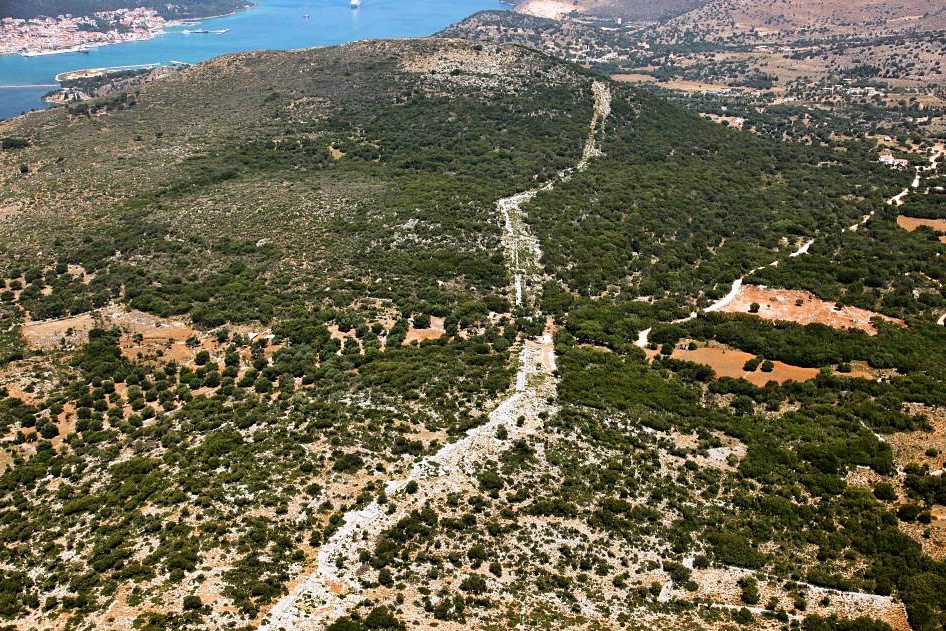
7 / 13
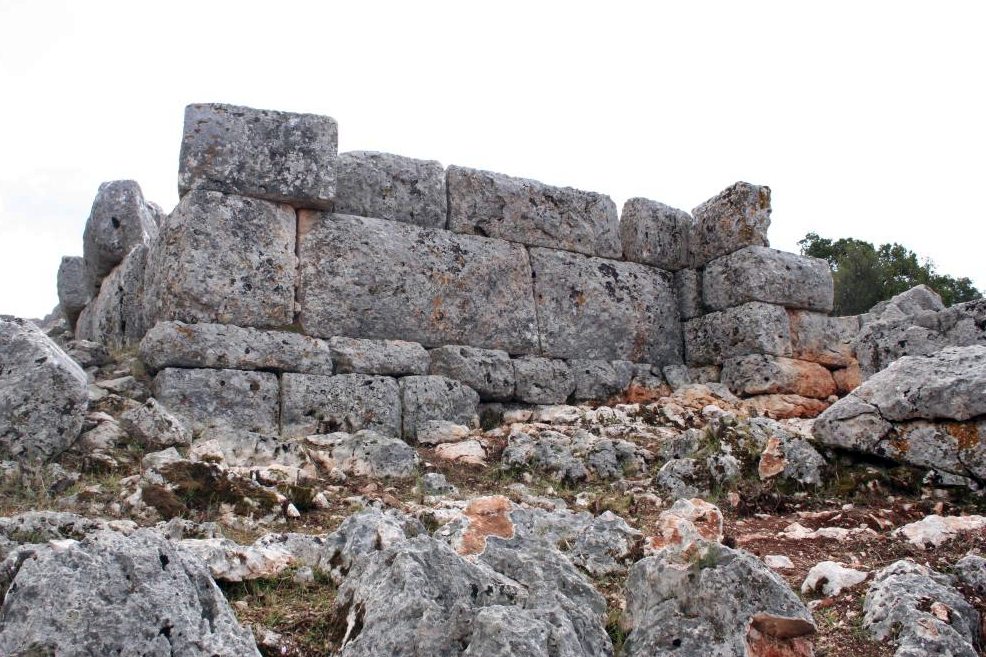
a tower protecting a double gate at the eastern side
8 / 13
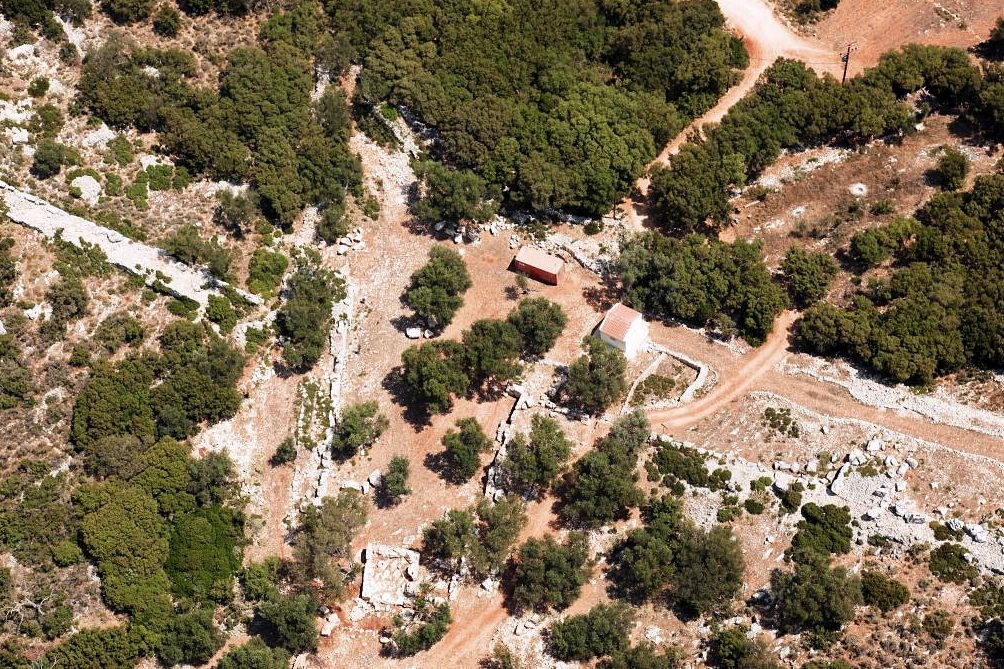
the part with the tower and the double gate at the eastern side
9 / 13
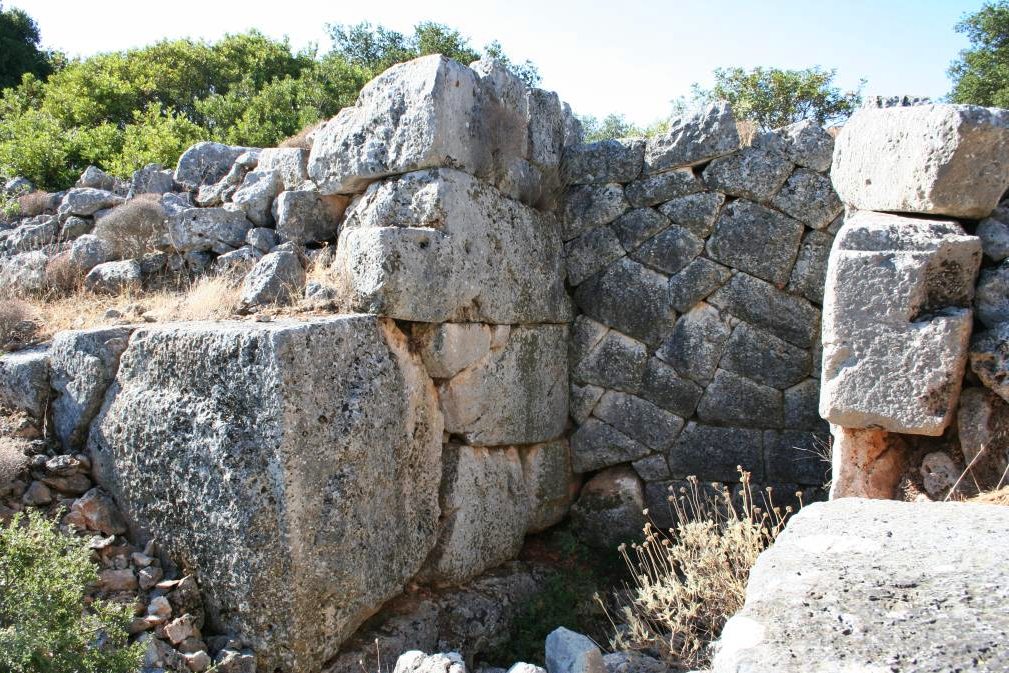
a gate closed with stones
10 / 13
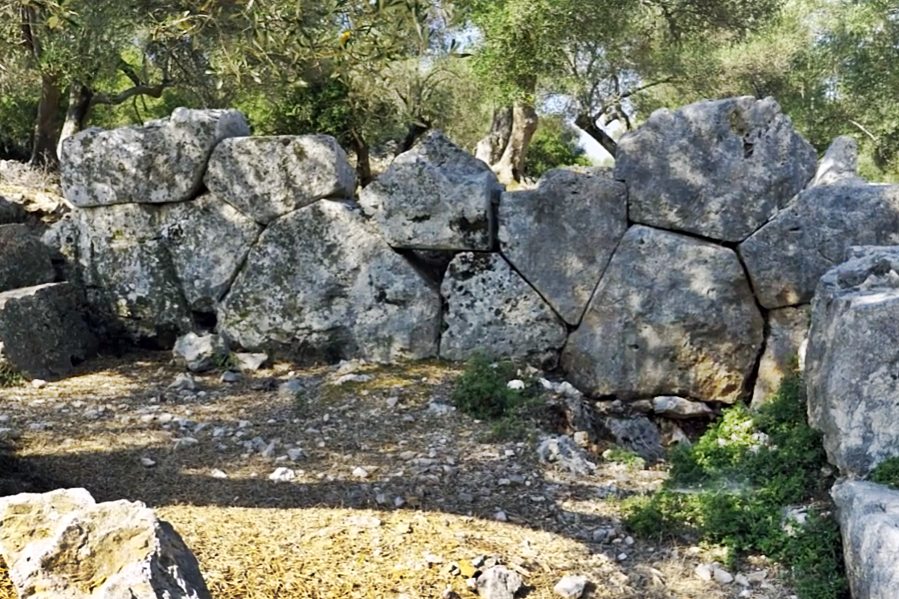
polygonic ancient wall
11 / 13
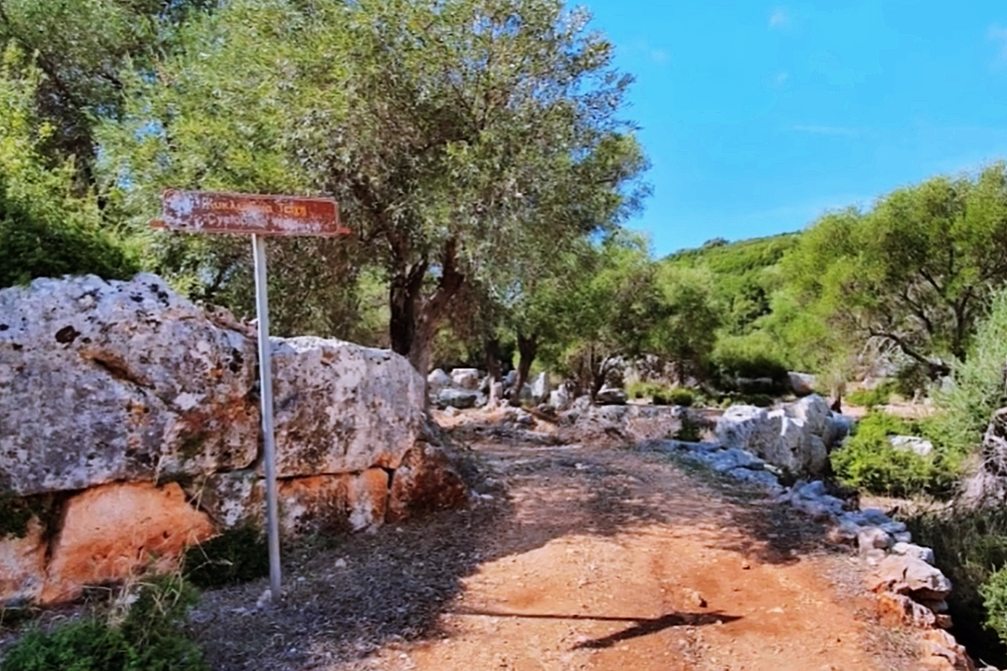
12 / 13
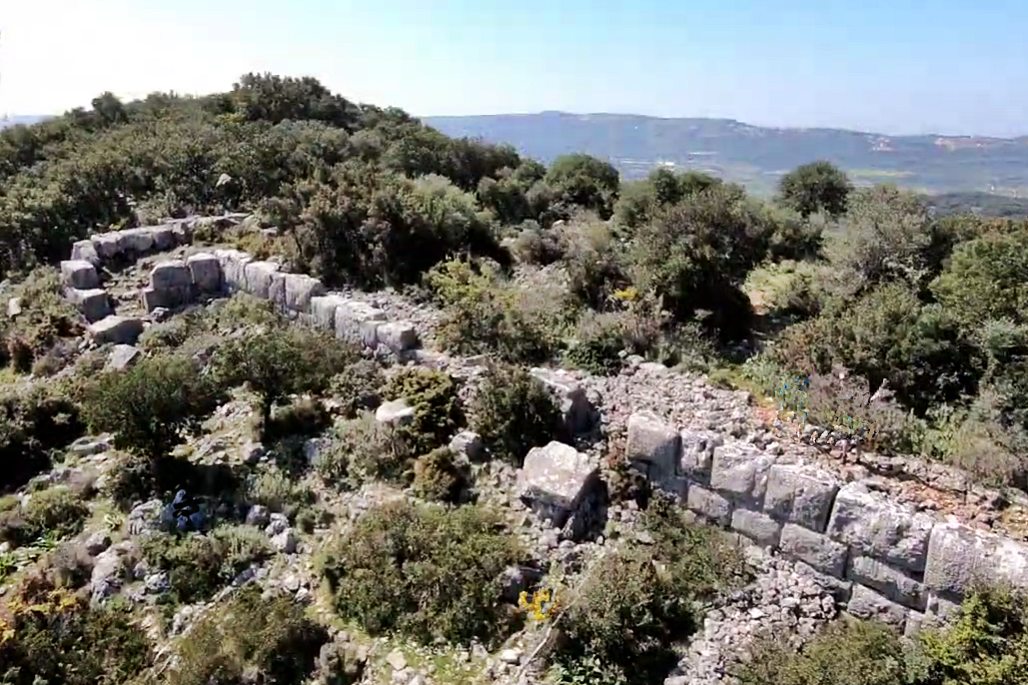
13 / 13
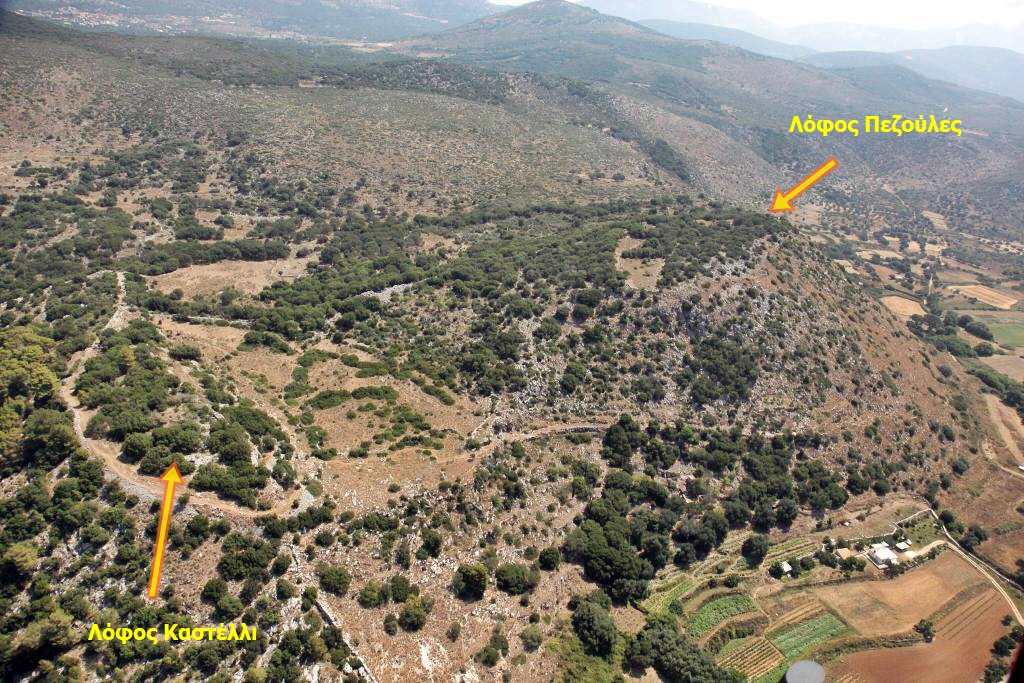
the two hills of the acropolis from SW
THE END
| Location: |
| On a hill at the SE shore of Coutavos lagoon near Argostoli and SW of village Razata in Cephalonia |
| Region > Prefecture: | 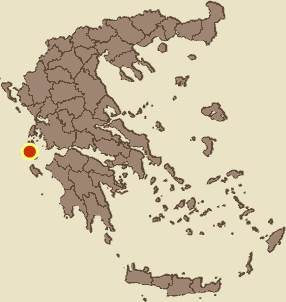 |
| Ionian islands Cephalonia | |
| Municipality > Town: | |
| City of Argostoli • Razata | |
| Altitude: | |
| Elevation ≈ 107 m |
| Time of Construction | Origin | |
| Various periods | ANCIENT  |
|
| Castle Type | Condition | |
| Ancient City |
In Ruins
|
Acropolis of an ancient city, part of the fortification of which was used later, during the Middle Ages.
Location & Strategic Scope
The ancient citadel of Krani extended over two hills above the southeastern edge of the lagoon “Cutavos”, a little outside (to the east) of Argostoli. The eastern hill (with an altitude of 107m) is today called “Pezoules”, while the western, slightly lower, is called “Kastelli” (see LAYOUT, above).
On both hills there are ruins of the ancient acropolis. On the Kastelli hill there are, in addition, traces of medieval fortifications.
The ancient city spread south from the acropolis. There are remains of it amphitheatrically on the southern and western slopes of the hills, and it probably extended even lower, in the valley of Krani, as far as Coutavos.
The hilly area north of the citadel was uninhabited. However, it seems that at some point during the Roman Period, plans were made about creating a new city in this area north of the acropolis. Today, few traces of the layout of this new city survive. But the new city was never finished and was apparently never inhabited. What remains of the abandoned expansion attempt is a long wall northeast of the acropolis towards the village of Razata. This wall – of high standards but unfinished – with a length of over 1 kilometer (!) seems purposeless, as it does not adequately protect anything, but the explanation for its existence is that it was intended to protect a city that was never built.
Another remarkable thing about the location of the ancient acropolis is that the walls on the hill of Kastelli descend low to almost the foot of the hill to protect a spring that supplied the ancient city and which also supplies fresh water to Coutavos, while to this day it belongs to the water supply system of Argostoli. From this important krini (fountain) the ancient city of Krani took its name.
History
During Antiquity, Krani was one of the 4 city-states of Cephalonia, mentioned by Thucydides.
The city was important and had a considerable fleet and its own coin. It seems to have reached its population peak during the Hellenistic Period, around the 3rd century BC, when the aforementioned attempt to expand to the northern heights was made. At that time (from 220 BC) it was a member of the Aetolian League.
Previously, scholars of Ancient Krani had dated the initial habitation on the Krani hills to the Late Bronze Age (1600-1100 BC), in other words to the Mycenaean Period. However, there seems to be no strong evidence for this hypothesis except from the existence of cyclopean walls, which are a feature of Mycenaean fortifications, but, in the case of Krani, they are more likely Hellenistic walls.
After the Roman conquest in 189 BC, Cephalonia became part of the province of Achaia. During the Byzantine Period, from the 8th century, the Thema of Cephalonia was created and in the 12th century the island was conquered by the Normans and became subject to the Kingdom of Sicily as part of the County Palatine of Cephalonia & Zakynthos.
It is not clear what the fate of Krani was in the midst of these developments. It probably declined and was abandoned during Late Antiquity. However, a part of the acropolis on one of the two hills, at Kastelli, was preserved and underwent repairs and additions (on the SE side) during the Middle Ages.
It is also known that, during the Middle Ages, a port existed in the Coutavos lagoon, which was one of the most important anchorages of the Byzantine fleet in the Ionian Sea. It is obvious that the primary purpose of the medieval fortification at Kastelli was to protect the port and the fleet.
However, it is unknown when exactly during the Byzantine Period this Kastelli was formed. And we have no references from historical sources.
The Venetians became rulers of Cephalonia after 1500 (and until 1797), and they also used Coutavos as a port under the name Porto de la Zephalonia or Porto de l’ Arsenal. During that period and at least until the mid-18th century when Argostoli developed from a fishing village to become the capital of the island, Kastelli must have been in use by the Venetians. However, it must be said that there is no evidence of Venetian use of the castle. If the Venetians did use it, they must not have made any serious interventions.
Structure, Fortification & Buildings
The two hills of the acropolis of ancient Krani are surrounded by a wall that is preserved in fragments. In addition, there is a wall between the two hills.
From the acropolis, three branches of the fortification wall, to the north, south and east, descend towards the foot of the hills. These additional sections would have no meaning if they did not end in a common outer wall that must have surrounded the hills below, but which does not survive today.
The most impressive part of the fortification is the independent, in a way, northeastern wall, which, as has been said, was built around the 3rd BC century to protect the expansion of the city that did not materialize. This NE wall is reinforced with 21 towers, has a length of 1090m, a width of 3.5m and a maximum height of 2.5m.
In this section, two gates survive, one of which is the central gate which is similar to the double gate of Athens (Dipylon), while the other has been blocked since Roman times.
The NW part of this long wall is built according to the straight polygonal style, while the SE part is built in in the trapezoidal, pseudo-isodomic style. This means that these two sections were built in different construction phases (that were not too far apart).
In the section with the pseudo-isodomic structure, unusually large blocks have been used and for this reason these Hellenistic walls have been characterized as “cyclopean”, although this specific characterization generally refers to Mycenaean or Pelasgian fortifications.
At the SE end of the acropolis, the foundations of an unidentified temple are preserved and immediately south of the temple, the remains of a Roman portico and retaining wall. On the southern and western slopes of the hills, the ancient city of Krani develops amphitheatrically, while on the northern slopes of the Kastelli hill, ruins of a sanctuary dedicated to Demeter and Persephone were discovered.
Sources
- Αρχαιολογικό Κτηματολόγιο Αρχαία Κράνη, Κεφαλονιά
- Website Kefalonia Heaven - Cyclopean walls of ancient Krani
- Ιστοσελίδα ΟΔΥΣΣΕΥΣ - Υπουργείου Πολιτισμού – Αρχαιολογικός χώρος Κράνης
- Andreas Sotiriou,“ Excavations at Kefalonia during 2005-2013”. 24-29
| Access |
|---|
| Entrance: |
| Free access |