Vathy, Troizinia - Methana, Piraeus & Islands,Attica
Acropolis of Methana
1
2 / 14
3 / 14
4 / 14
5 / 14
6 / 14
7 / 14
8 / 14
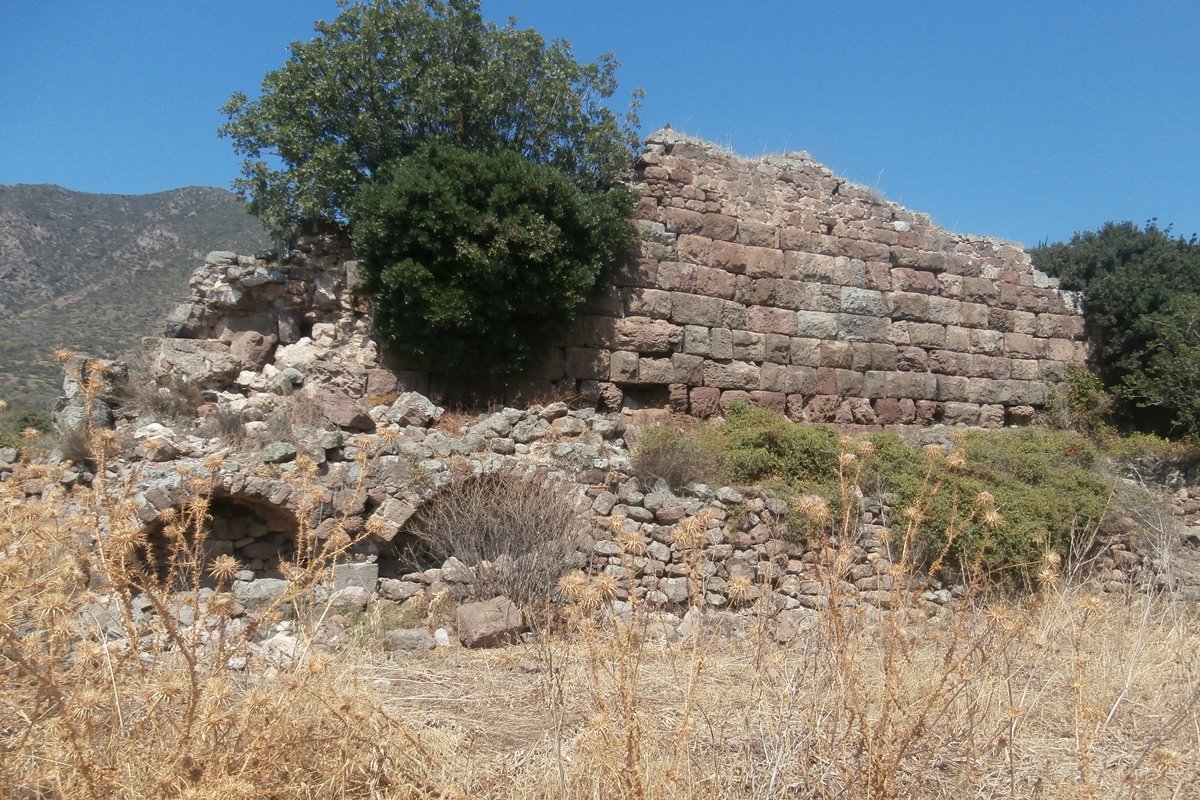
vaulted byzantine stuctures, perhaps cisterns
9 / 14
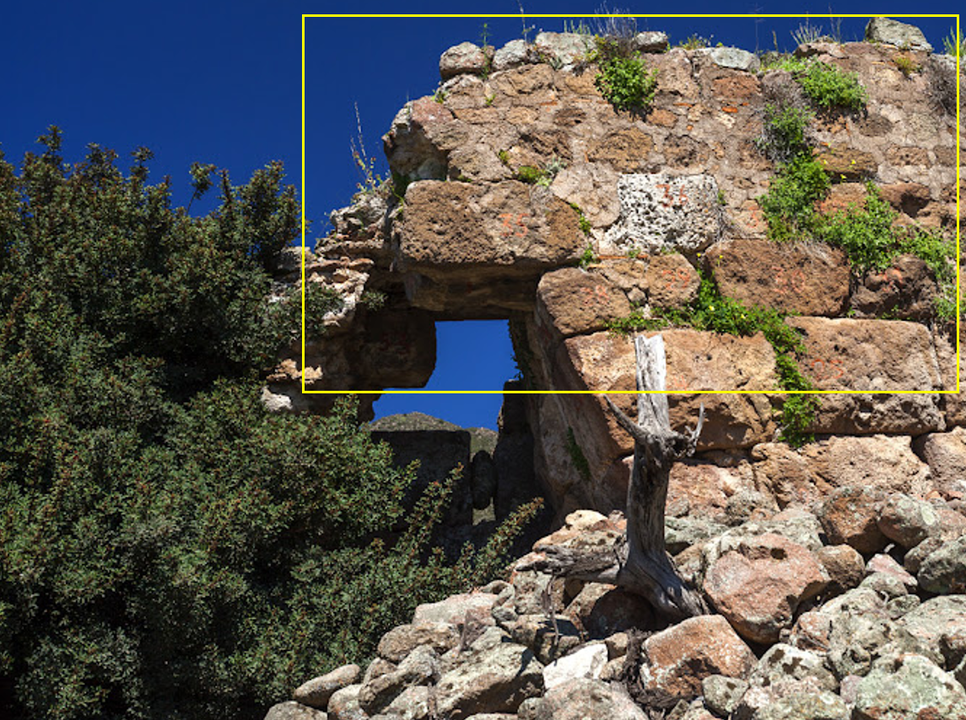
medieval additions to the ancient wall
10 / 14
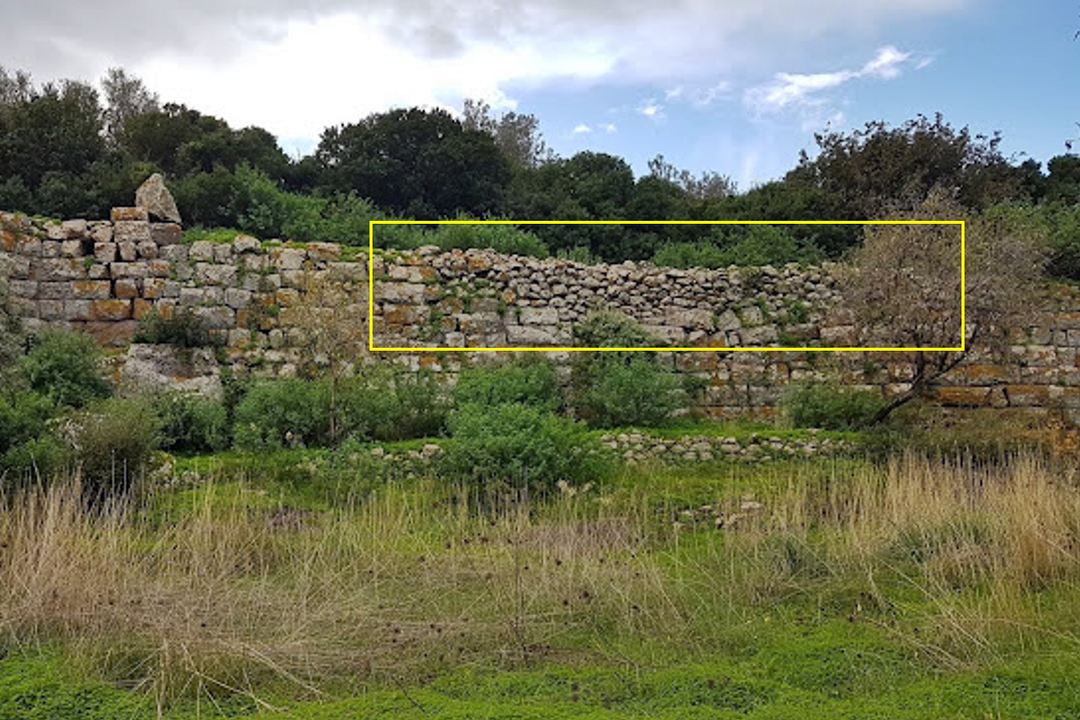
medieval additions to the ancient wall
11 / 14
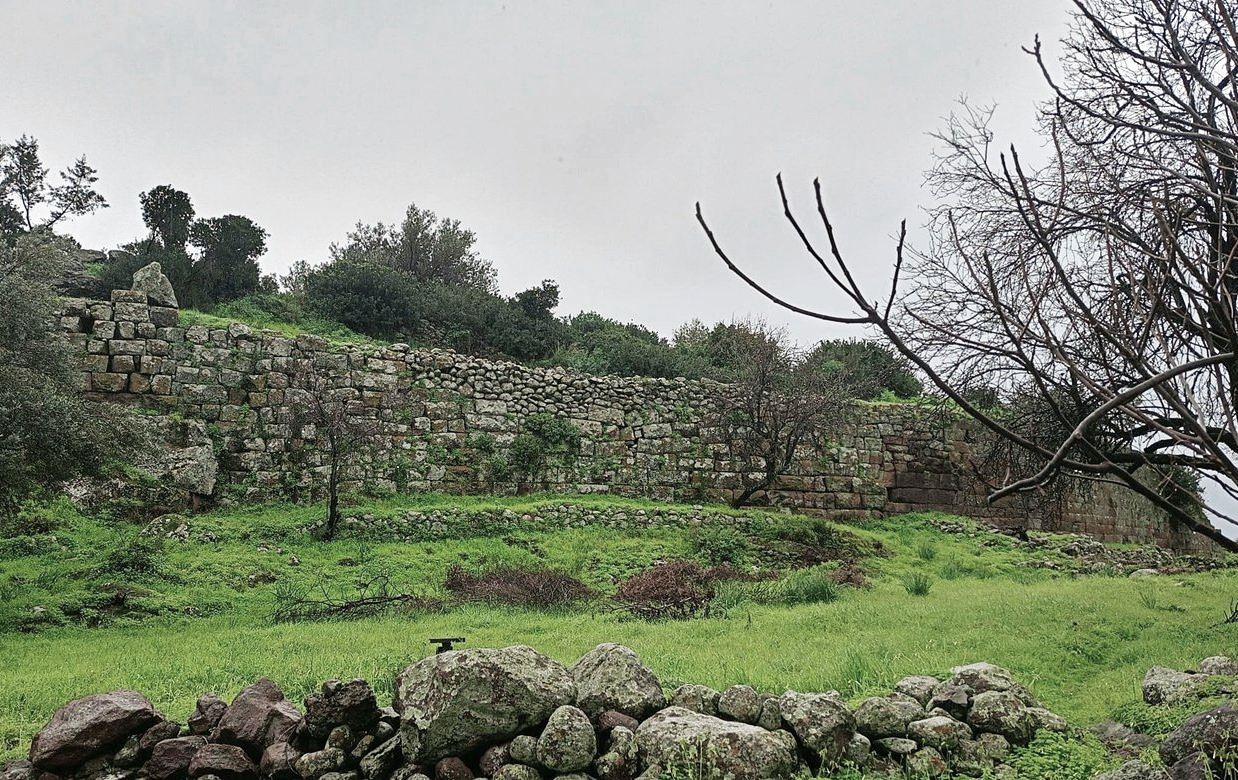
12 / 14
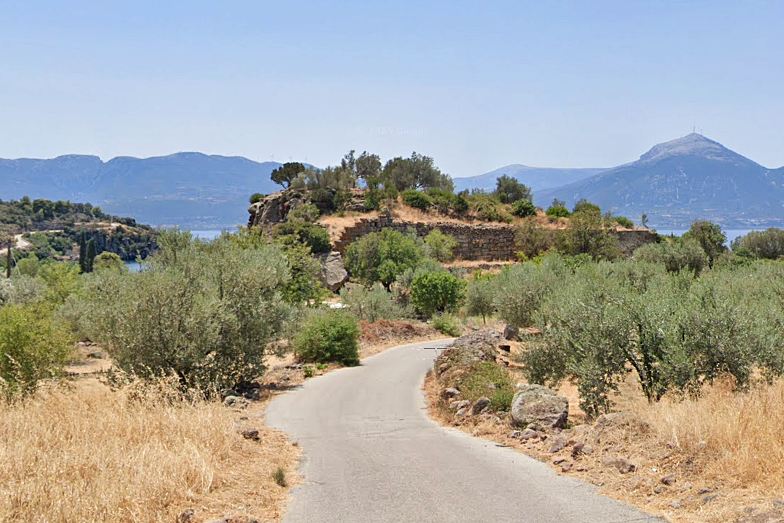
view from northeast (same spot of the 1923 photo - see ARTWORK
13 / 14
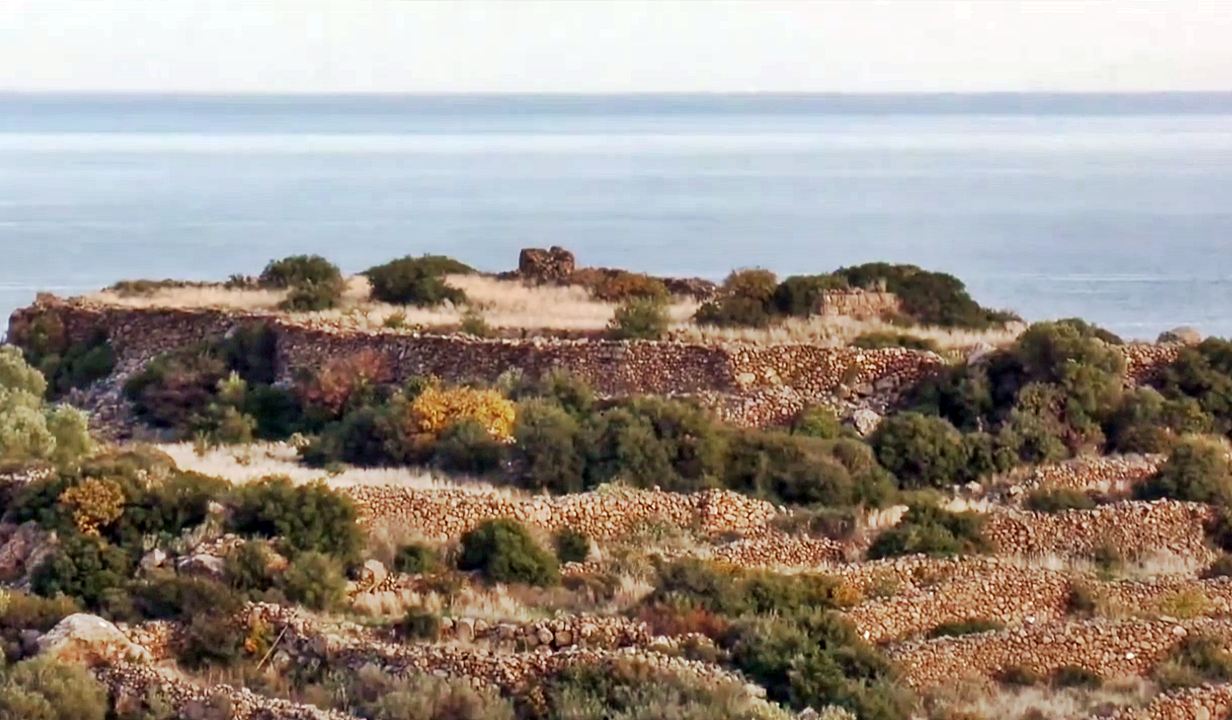
14 / 14
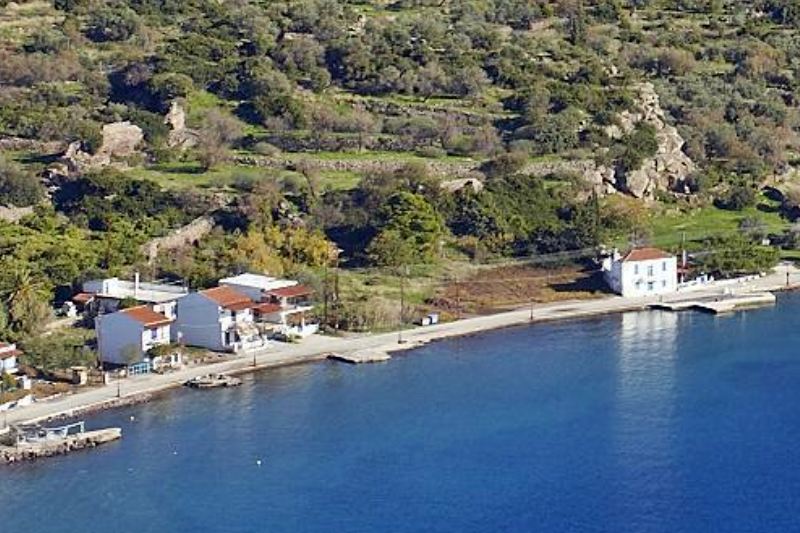
aerial view of the hill from northwest
THE END
| Location: |
| On a seaside hill on the west part of the Methana peninsula, 1 km SE of the village Vathy |
| Region > Prefecture: |  |
| Attica Piraeus & Islands | |
| Municipality > Town: | |
| City of Troizinia - Methana • Vathy | |
| Altitude: | |
| Elevation ≈ 25 m |
| Time of Construction | Origin | |
| Various periods | ANCIENT  |
|
| Castle Type | Condition | |
| Ancient City |
In Ruins
|
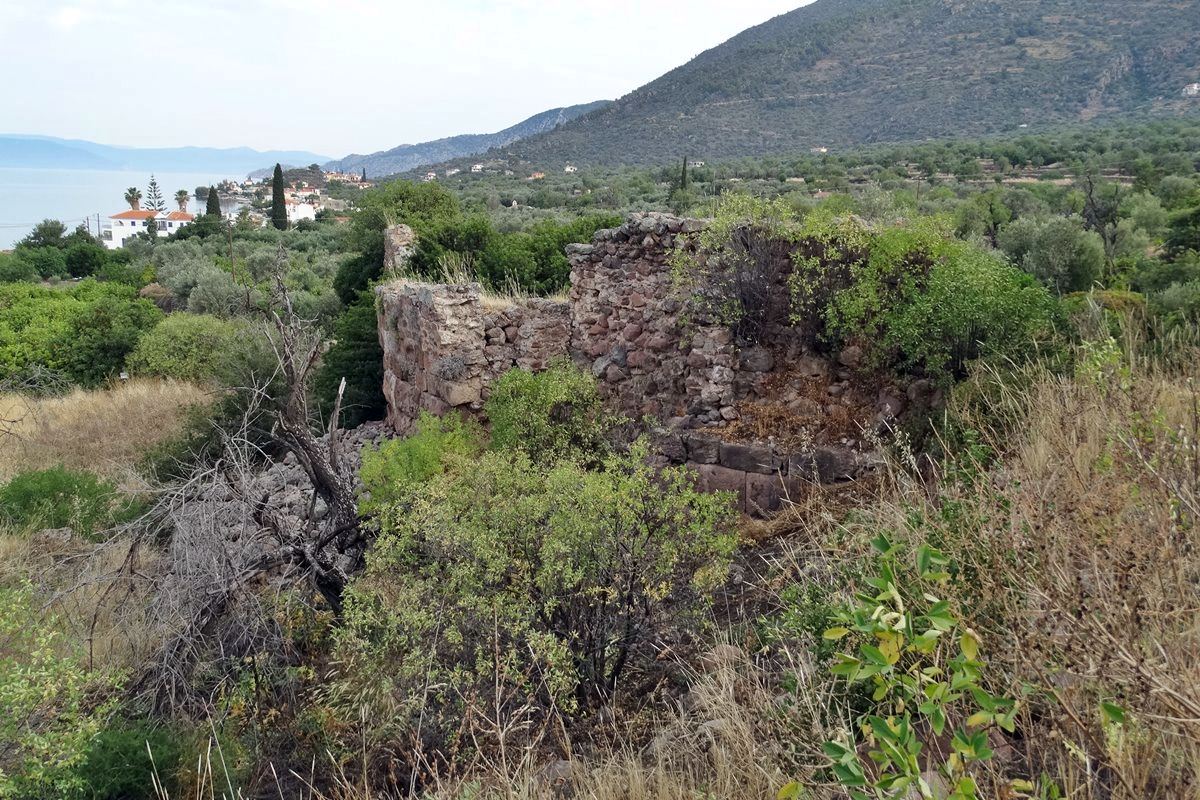
The ancient acropolis of Methana, known locally as “Palaeokastro”, is located on a hill south of the seaside village of Vathi, on the beach of Megalochori, 8 kilometers west of the modern city of Methana.
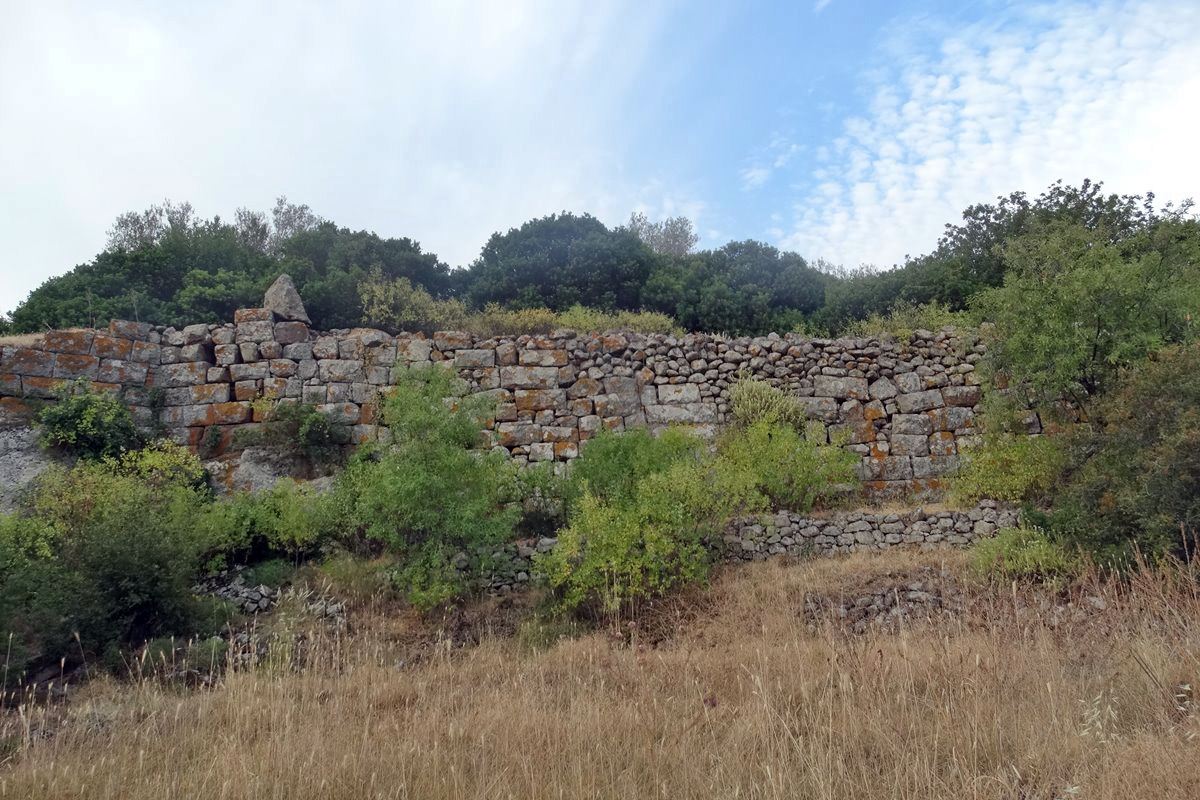
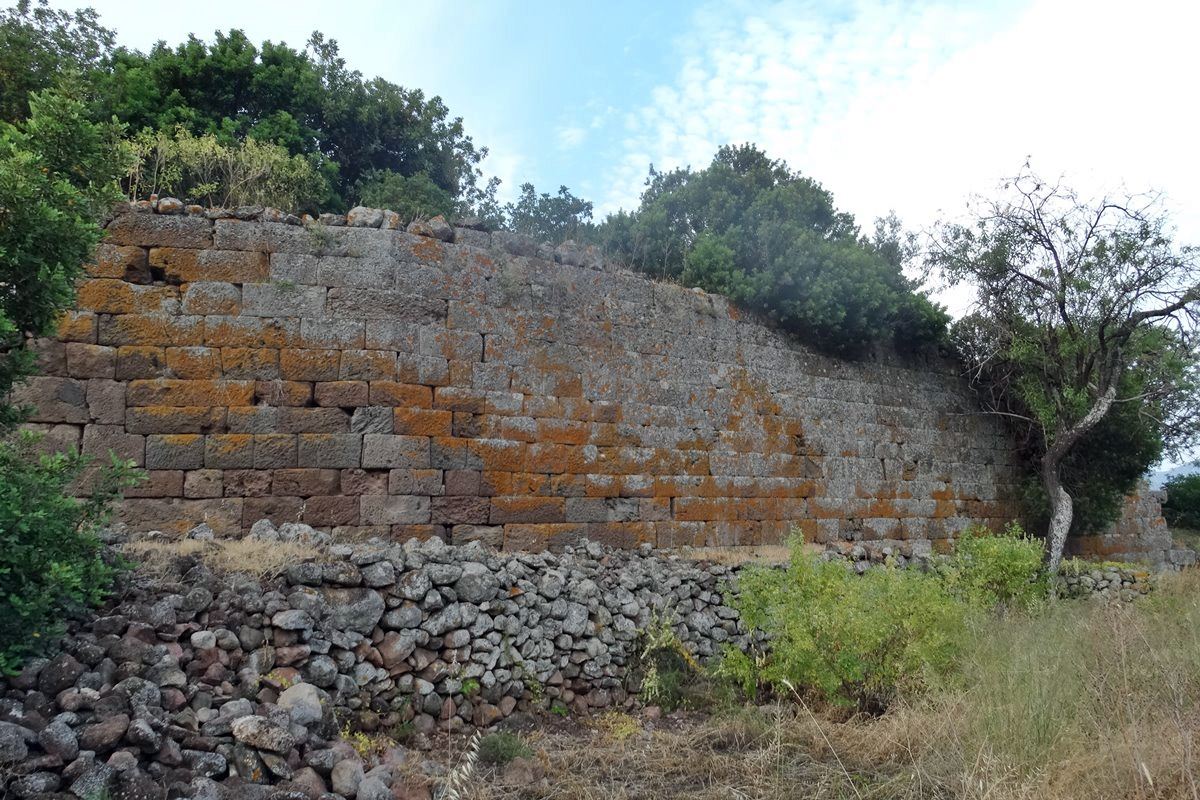
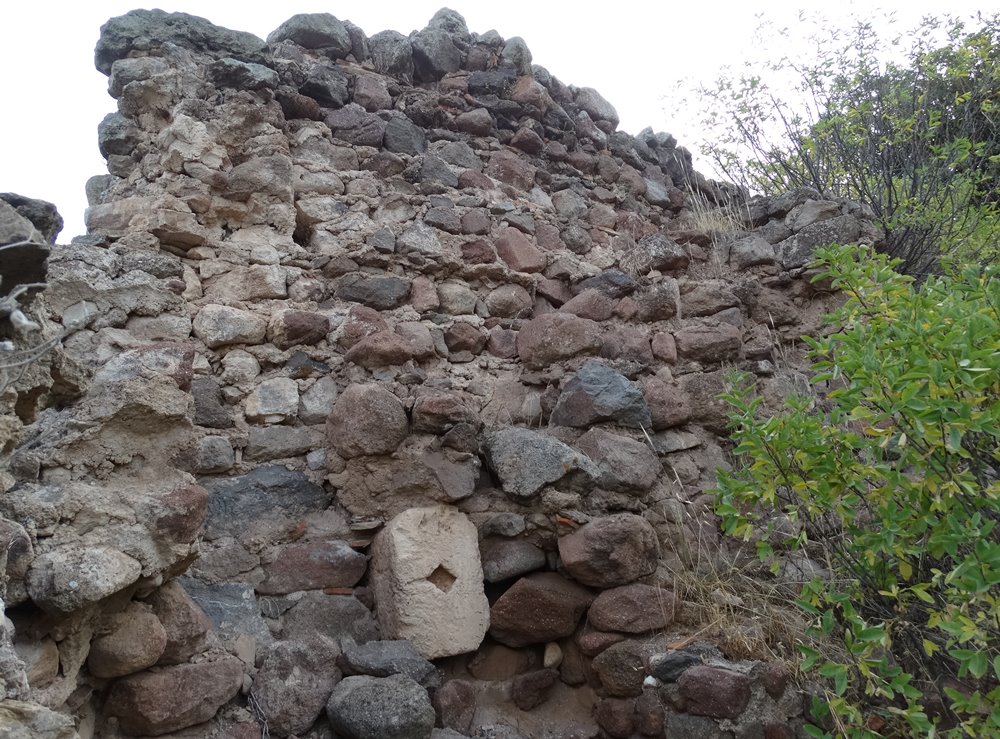
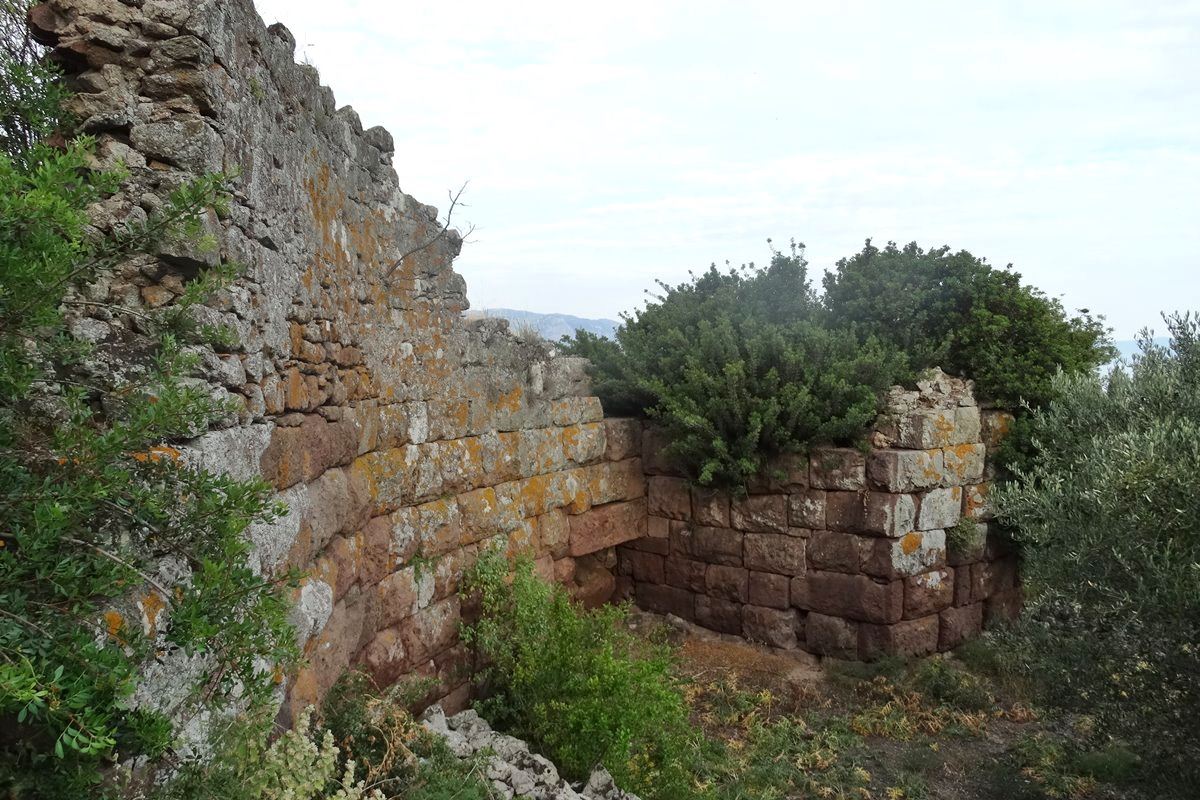
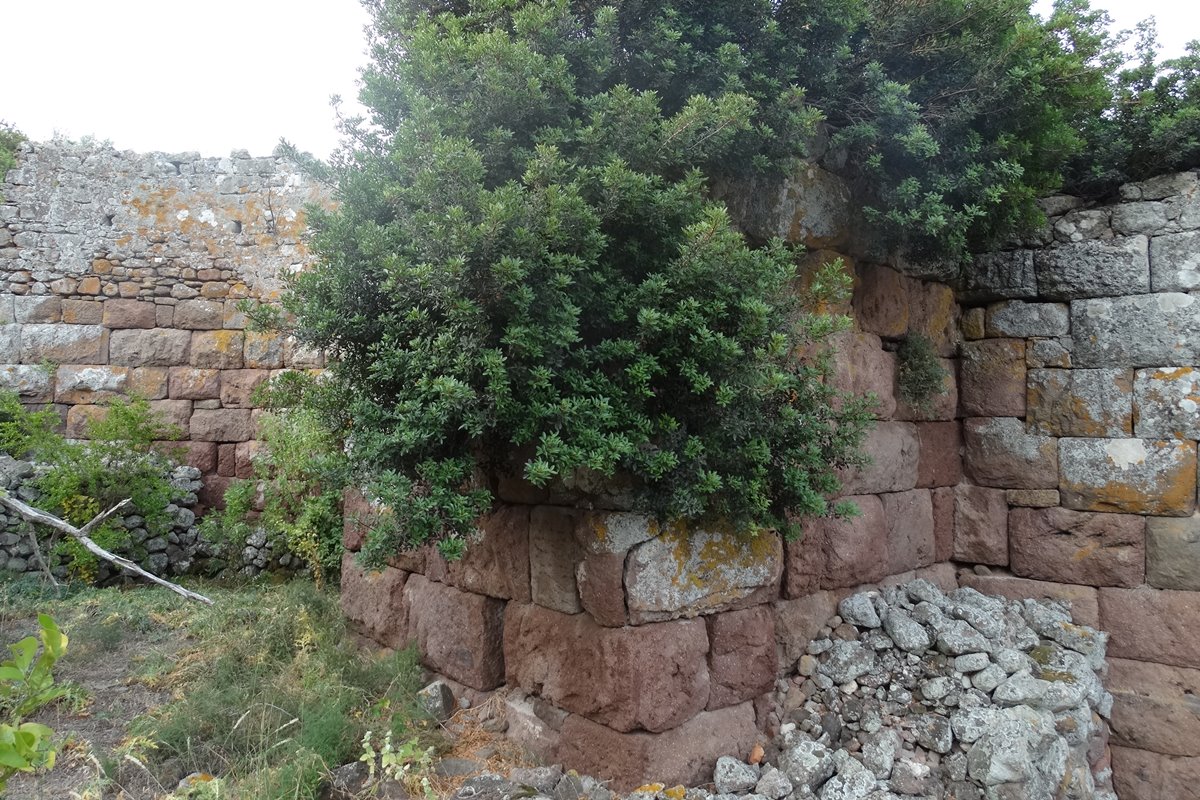
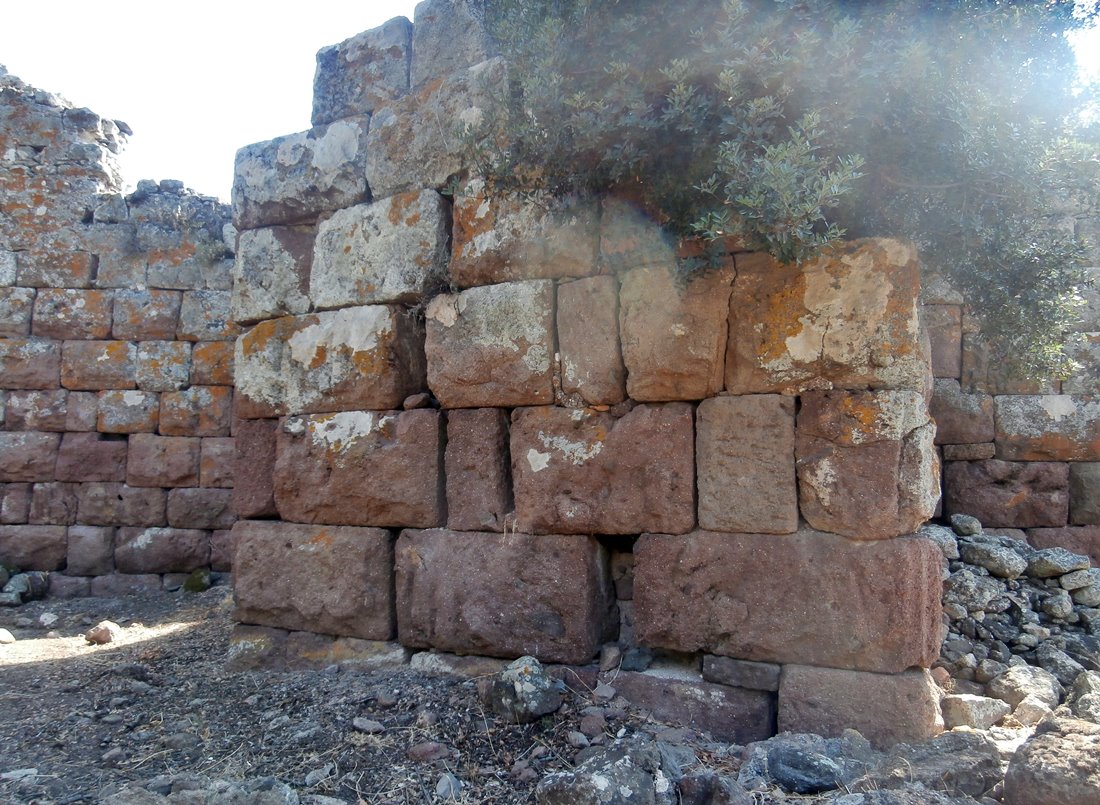
A large part of the Hellenistic fortifications has been preserved in the acropolis, where medieval additions can be seen.
History
During Antiquity, the settlement, the ruins of which are located on the hill “Paleokastro”, was the main city of the peninsula of Methana. The hill was inhabited continuously from the Neolithic era until the Tourkokratia.
There was the acropolis of Methana during the classical and Hellenistic times. And it was also the most important city of the peninsula during the Early Byzantine period.
We do not know what happened after that. It continued to be inhabited, but, apparently, in a declining course.
The construction of the acropolis dates back to the 4th-3rd century BC. Part of the walls –with later additions– built from the dark volcanic rock of the area are preserved. Around the acropolis, mainly to the northwest and south, there was the urban fabric and the market of the ancient city.
The first indications of the existence of an independent city in Paliokastro during Antiquity are the minting of coins dating from the last quarter of the 4th century BC. The coins had the head of Hephaestus on one side and, on the other, the horn of Amalthea with the letters ME. (Hephaestus was something of a local god because of the volcano).
During the period 270-145 BC, the Ptolemies of the Hellenistic kingdom of Egypt created a naval base in Methana and established a garrison. This probably happened during the Chremonid War, the conflict between the Ptolemies and the Antigonids of Macedonia, who had their naval base at Piraeus. During this almost century and a half of Ptolemaic occupation, the city was renamed Arsinoe, in honor of Arsinoe II, sister and wife of Ptolemy II Philadelphus. At that time, the peninsula seems to have experienced a particular flourishing, as evidenced by the extensive fortification works, the epigraphic evidence and the new coinage.
Around 270 BC the volcano of Methana erupted, causing great destruction and dramatically changing the morphology of the area. The acropolis of Methana must also have suffered major damage and for this reason extensive repairs were carried out under the Ptolemies.
The volcano seems to have erupted in the Middle Ages as well, although there are no relevant historical references. This conclusion arises from the existence of submerged ruins in the sea, under the acropolis – ruins that include both remains of the ancient city and Byzantine buildings, including Christian churches. Their submersion is due, in all probability, to strong geological phenomena.
In the 2nd century AD, the traveler Pausanias visited the –now Roman– city and reported that there was a sanctuary of Isis and Serapeum (probably a remnant of the Ptolemaic era), statues of Hercules and Hermes, and, on the isthmus, a temple of Athena. Strabo does not mention Methana.
During the Early Byzantine period, early Christian basilicas were built on the Methana peninsula, the construction of which dates back to the first decades of the 7th century AD. No similar activity is detected for the following centuries, as problems began with the descent of the Slavs, with Saracen raids, etc.
Especially for the acropolis of Methana, a short distance northwest of it, the remains of a three-aisled early Christian basilica are preserved, for the construction of which material from the buildings of the ancient city (spolia) was used. There are also ruins of a Christian church on the top of the hill that may have been built on the site of the temple of Isis.
The existence of ruins of early Christian temples on the acropolis and in the surrounding area, as well as the mortar-built additions to the ancient wall, attest that the acropolis of Methana continued to be inhabited during the Byzantine period, at least until the 7th century. After that, it is likely that the habitation was interrupted for a few centuries.
Methanai is completely absent from medieval historical sources and we know nothing about its history throughout the Byzantine period or during the Frankish rule. Apart from the information we derive from the architectural remains, our knowledge of Methana during the Middle Ages is almost non-existent. The only exception is the mention of the city in the Synekdemos of Hierocles – the list of Byzantine cities compiled in the mid-6th century AD, under Justinian. This fact is of particular importance, as it documents that the city remained worth-mentioning at least until the 6th century AD.
It should be noted, however, that in the text of the Synekdemos the city is recorded as “Methoni” and not as “Methana”. This discrepancy is probably due to a graphic omission or an error in the manuscript tradition, and we believe this for two reasons: firstly because it is listed next to the neighboring Troezen (“...Methoni, Troezen, Epidaurus, Ermioni, Argos...”) and secondly because the canonical Methoni in Messinia is also listed below as “Mothoni”, next to Koroni.
Between the 14th and 15th centuries, the area must have been controlled by the Venetians, who however did not leave their mark on the Methana peninsula beyond the fact that they organized a partial settlement by Arvanites.
Sources
- Φωτογραφίες 1-8 (Ιούνιος 2017) έστειλε ο Δημήτριος Περσέας Λουκίσσας και πληροφορίες από το βιβλίο του «ΑΡΓΟΛΙΔΑΣ ΚΟΡΙΝΘΙΑΣ ΠΕΡΙΗΓΗΣΙΣ - Ένα σύγχρονο οδοιπορικό στην γη των Μύθων και της Ιστορίας», Τόμος Δ’, Ανοιχτή Πόλη, Αθήνα 2024. σελ. 135-142
- Μαρία Γιαννοπούλου (2023), Ο αρχαιολογικός πλούτος των Μεθάνων, online
- Info by Charalampos Papadopoulos
| Access |
|---|
| Entrance: |
| Free access |