Kamari, Santorini, Cyclades,South Aegean
Ancient Thera
| Location: |
| On a high rocky hill of the west coast of Santorini island, 1km south of Kamari |
| Region > Prefecture: | 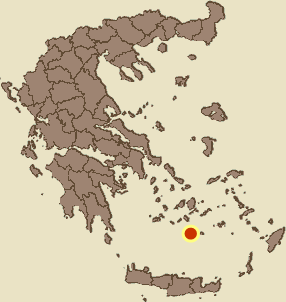 |
| South Aegean Cyclades | |
| Municipality > Town: | |
| City of Santorini • Kamari | |
| Altitude: | |
|
Elevation ≈ 369 m (Relative Height≈330 m) |
| Time of Construction | Origin | |
| 7th-8th cent. AD | BYZANTINE  |
|
| Castle Type | Condition | |
| Ancient City |
Rather Poor
|
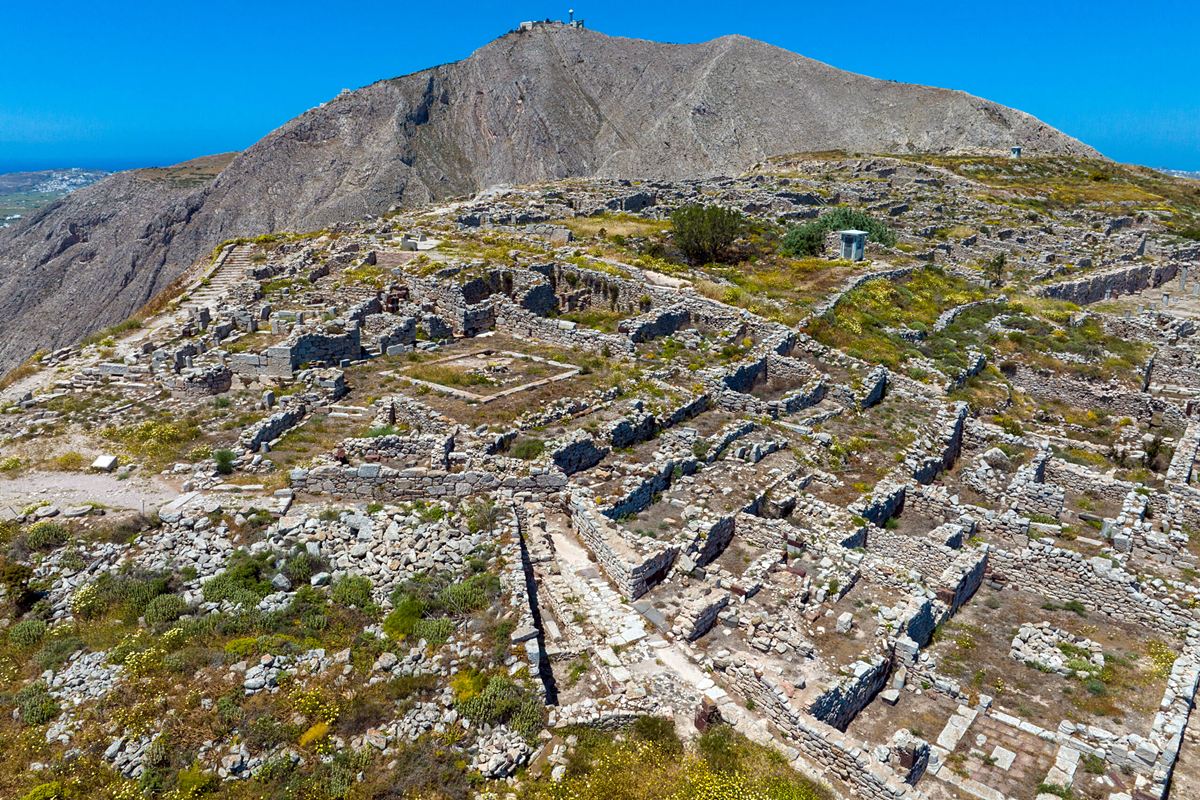
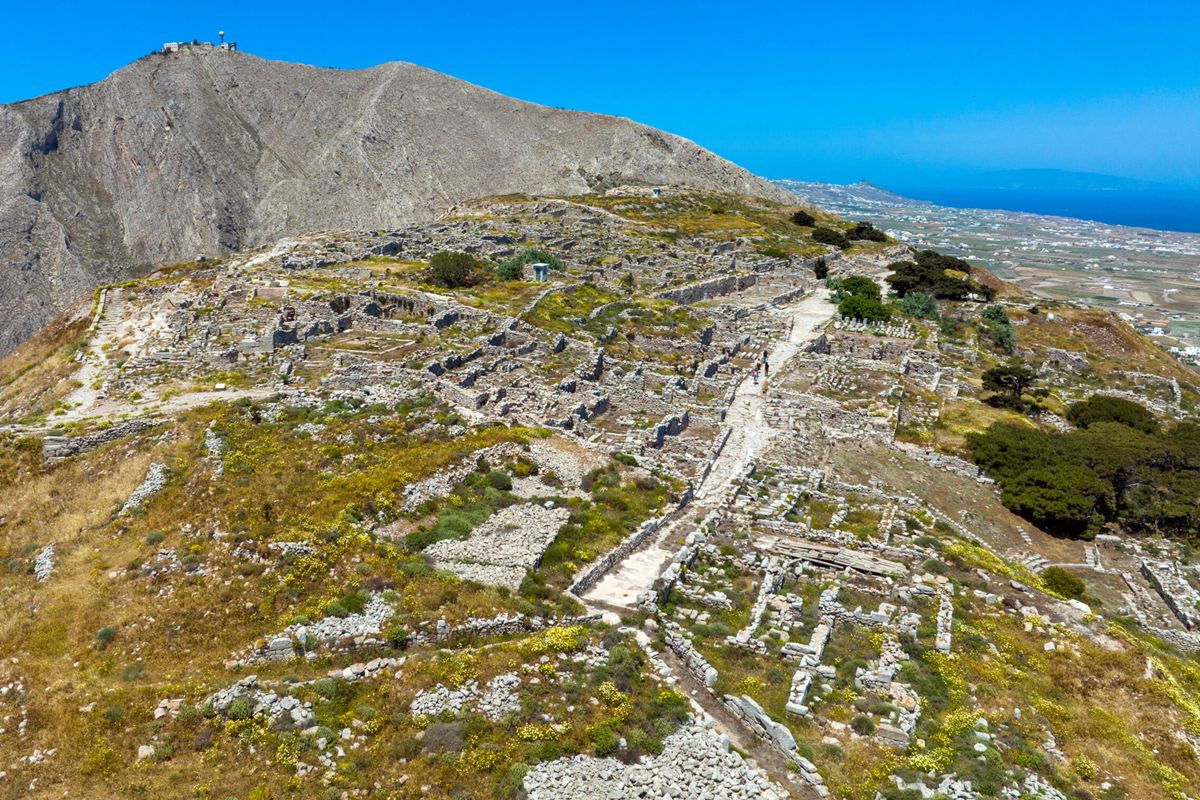
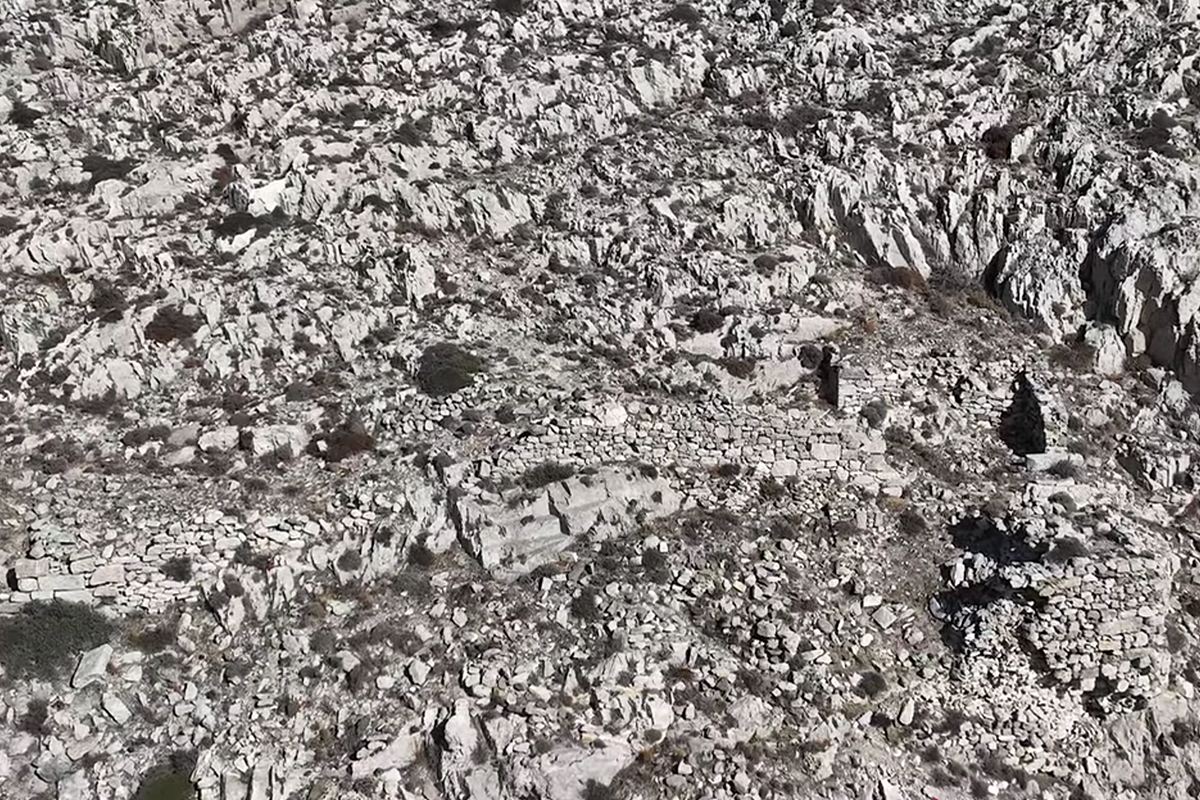
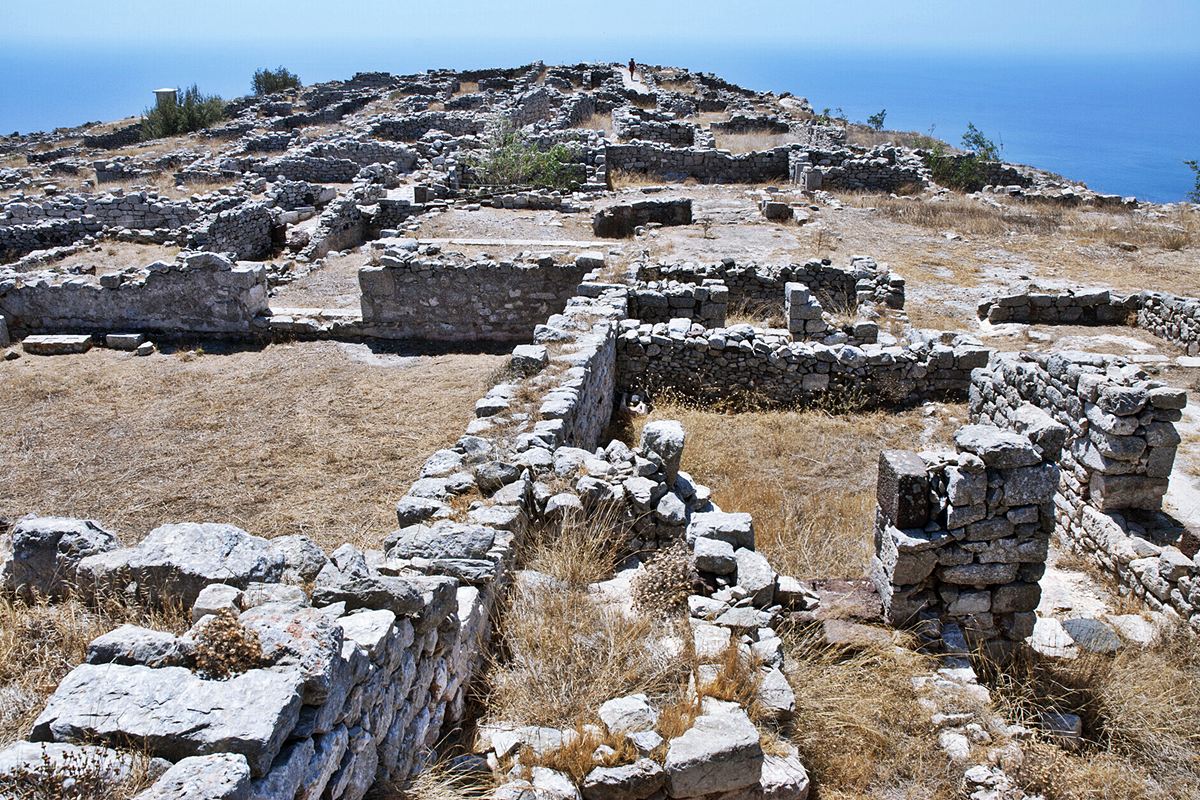
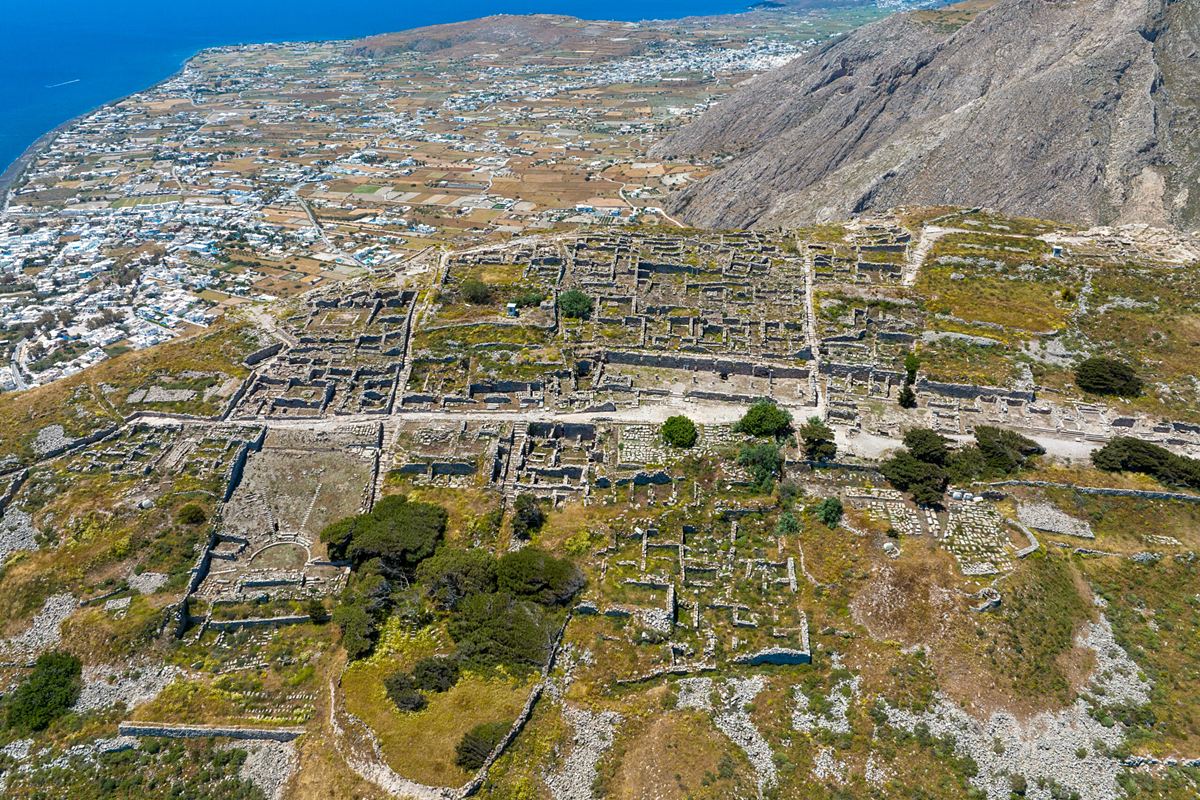
Ancient Thira is the name of the city, the extensive ruins of which are located on the top of mount Mesa Vouno, which dominates the southeastern coast of Santorini, south of Kamari.
It was an ancient city that was inhabited until the Middle Byzantine period. Its fortification was mainly Byzantine.
History
Ancient Thera was founded in the 8th century BC, which unlike other fortified cities of that period, did not have an acropolis at the highest point, as the city itself functioned as an acropolis due to its steep location. Also, initially, the city didn't have a complete defensive wall, just some fortified spots.
Human presence on the island of Thera is documented as early as the Neolithic era (mid-5th millennium BC), with the most important center being the settlement at Akrotiri, which was destroyed by the violent volcanic eruption of the 17th century BC.
After centuries of desolation, the island was systematically inhabited from the 8th century BC, when Dorian colonists from Sparta, led by Theras, founded the city at Mesa Vouno. During classical times, Thera was a member of both the First and Second Athenian Leagues, while briefly came also under the influence of Sparta.
After 288 BC, Thera came under the dominance of the Ptolemies, the Macedonian rulers of Egypt, and became an important naval base for the Hellenistic kingdom of Egypt. The Ptolemies established a garrison on the island and organized it as a strategic administrative and military center. The period of Ptolemaic rule, which lasted until 145 BC, was the time of the greatest prosperity of Ancient Thera. (It should be noted that the only other place in Greece that had a Ptolemaic base during the same period was Methana.)
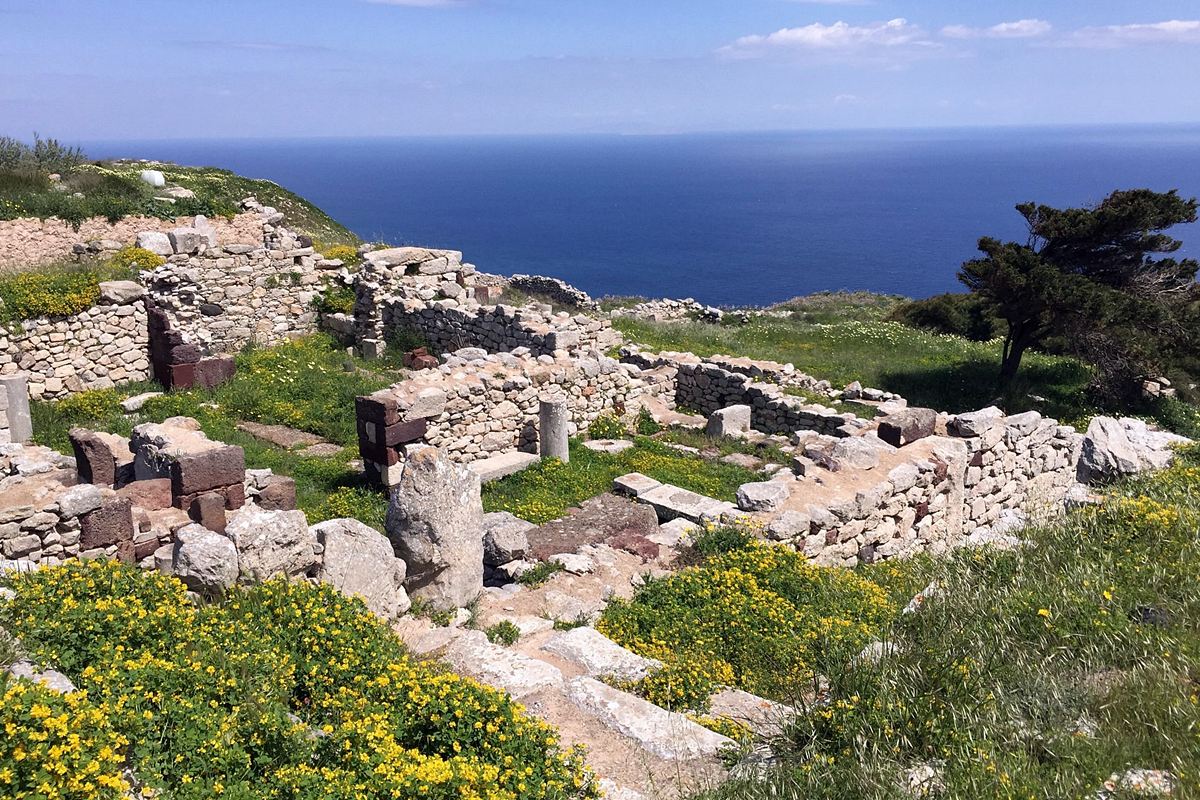
During this period the city acquired the form that it largely retains to this day (in terms of the urban fabric, not the fortifications). The intense building activity led to the formation of large building islands and the construction of the terraces that defined its urban image. Spacious residences were erected on these new terraces, often with a peristyle, while the residential area expanded beyond the original, protected zone around the Agora, even occupying the wind-exposed parts of the mountain ridge.
At the same time, the Agora was enlarged and numerous public buildings were erected. Places of worship multiplied and sanctuaries dedicated to foreign deities and the Ptolemaic kings were founded.
During the Roman period, Thera was administratively part of the province of Asia. Around the middle of the 3rd century AD, it seems to have been invaded by Gothic tribes.
In 1st-2nd century AD, building activity in Ancient Thera was significantly slowed, without however completely stopping. At the same time, other settlements developed on the island, in more accessible locations, a development made possible by the Pax Romana.
The development of other, more livable settlements and the decline in the strategic importance of Ancient Thera's location led to the gradual decline of the city from the 3rd century AD. However, it was still inhabited during the Early Byzantine period (4th-6th centuries AD), a period during which two basilicas were founded.
Furthermore, the city is also included in the Synekdemos of Hierocles (the list of all important Byzantine cities in the mid-6th century) as one of the cities of the province of the Islands.
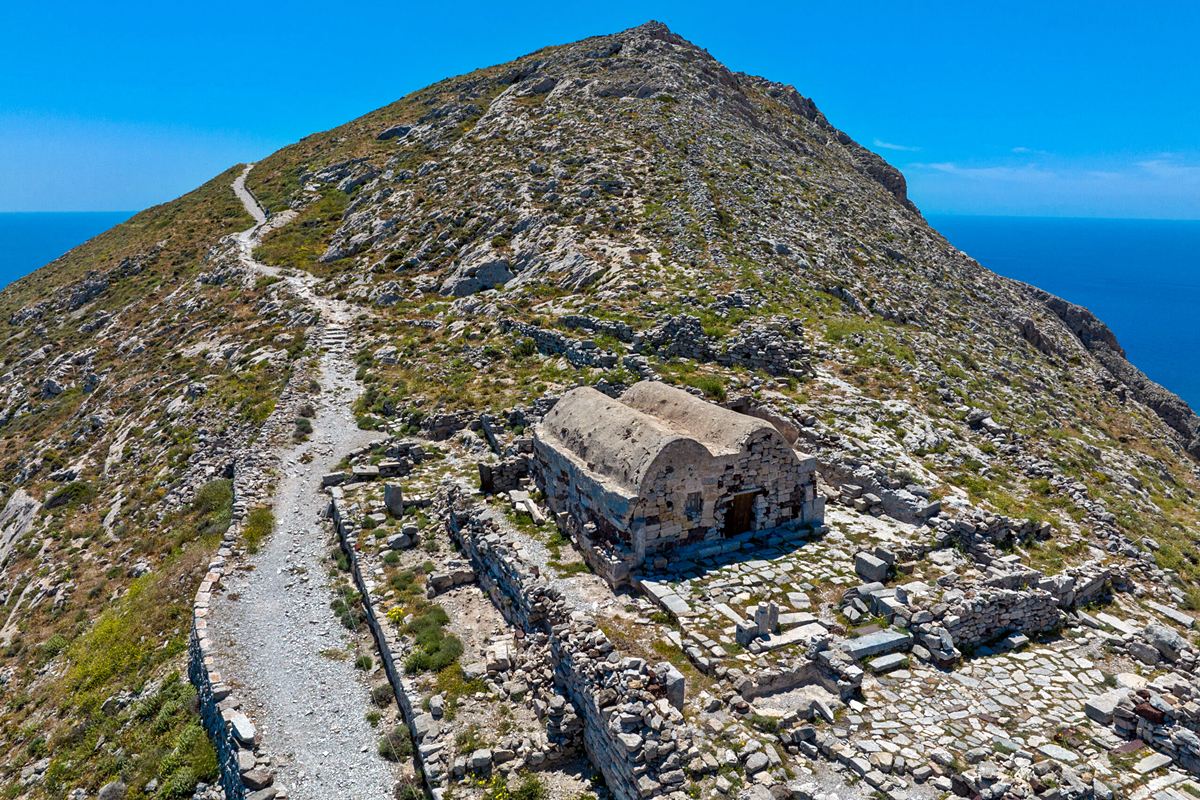
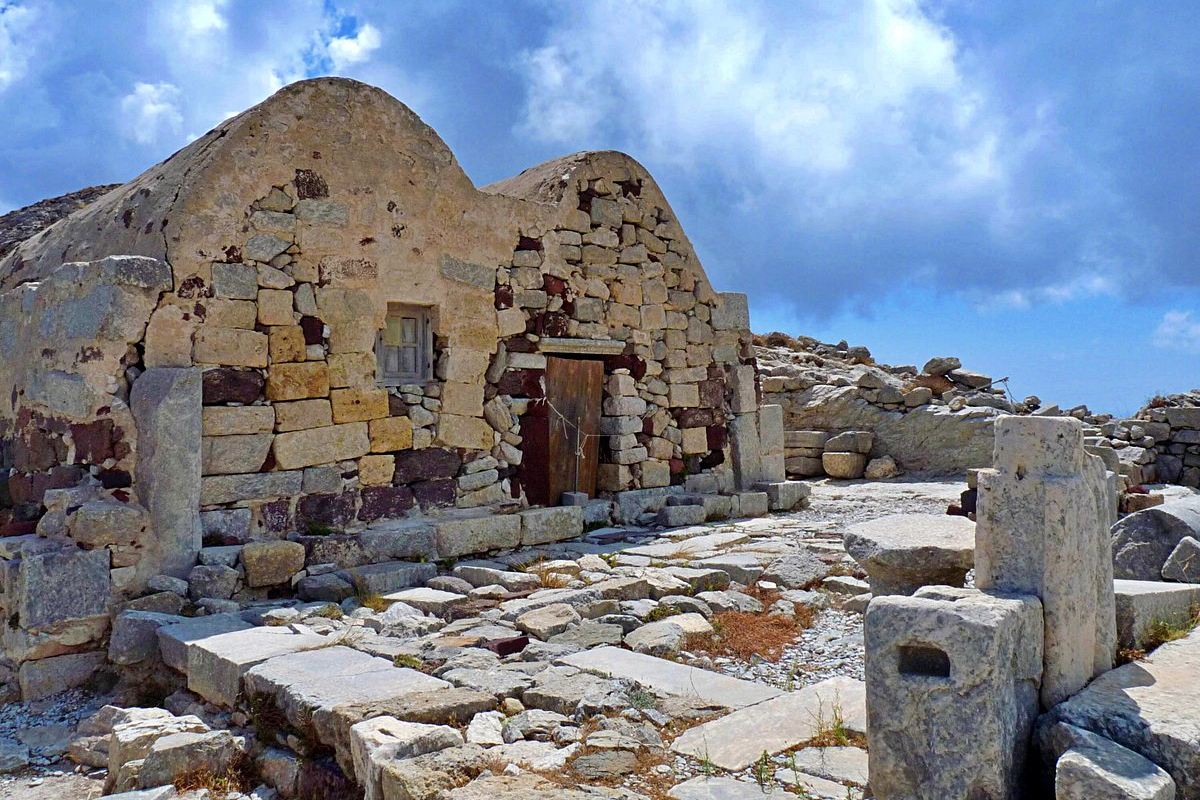
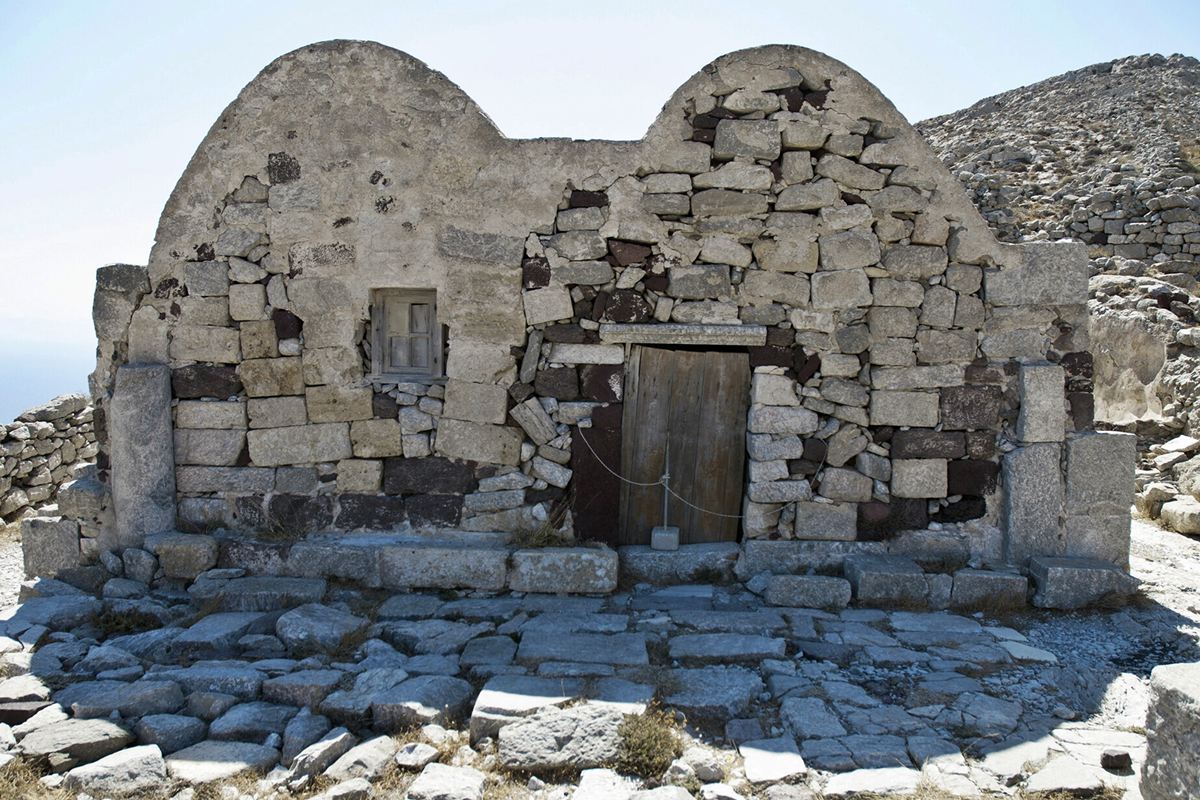
From about the middle of the 7th century, Ancient Thera, like many other coastal settlements of the Aegean and the eastern Mediterranean, was confronted with Saracen raids. The insecurity that arose seems to have led to an attempt to repopulate and reuse the old city, which could offer a naturally fortified refuge for the population. During this period, the 7th to 8th centuries AD, most of the fortifications that we see today in Ancient Thera were constructed. At the same time, the church of Agios Stefanos (photo 4,7,8) was founded on the ruins of one of the early Christian basilicas, while among the half-ruined ancient buildings, a multitude of small houses were created, constructed mainly from ancient building materials.
We emphasize that the works made at that time in the fortification were not simply “patches” and makeshift additions to the ancient walls, as happened with other ancient castles that were reused during the Byzantine period. On the contrary, it involved the construction of new walls and extensive reconstructions (low-quality, perhaps, compared to the ancient ones, but nevertheless extensive).
Ancient Thera must have been abandoned in the 8th century, after the great volcanic eruption of 726 AD, which covered the buildings with a layer of tuff. But, the dating of the final abandonment is not entirely certain, given that during the first excavations at the site, carried out by German archaeologists, a hidden treasure (!) with coins from the era of Emperor Theophilos was found. This find suggests that there was still some form of human presence in Ancient Thera, at least until the early or mid-9th century, probably of a limited and mainly military nature.
From the late 9th century onwards there is no longer any historical evidence for the habitation of ancient Thera, while archaeological data also supports the hypothesis that the city was abandoned after this period. Of course, habitation on the rest of the island continued, but in settlements in the interior and in more protected areas.
A few centuries later, during the Venetian occupation (when Santorini was part of the Venetian Duchy of the Aegean), the church of Agios Stefanos was reconstructed and a second aisle was built in the church. It was a common practice at that time, in the Venetian-held islands of the Aegean and in Crete, to build double churches so that Orthodox and Catholics could worship at the same spot separately.
In Ancient Thera, extensive excavations were carried out by the Germans under the direction (and at personal expense) of Hiller von Gaertringen at the beginning of the 20th century, which restored the fabric of the city and revealed its fortifications.
Findings from the excavations are exhibited at the Archaeological Museum in Fira.
During the years 2003-2008, the 12th Ephorate of Prehistoric-Classical Antiquities implemented the project “Development-Promotion of the Archaeological Site of Ancient Thera” (2003-2008), with a budget of 1,760,821€.
Structure, Fortification & Buildings
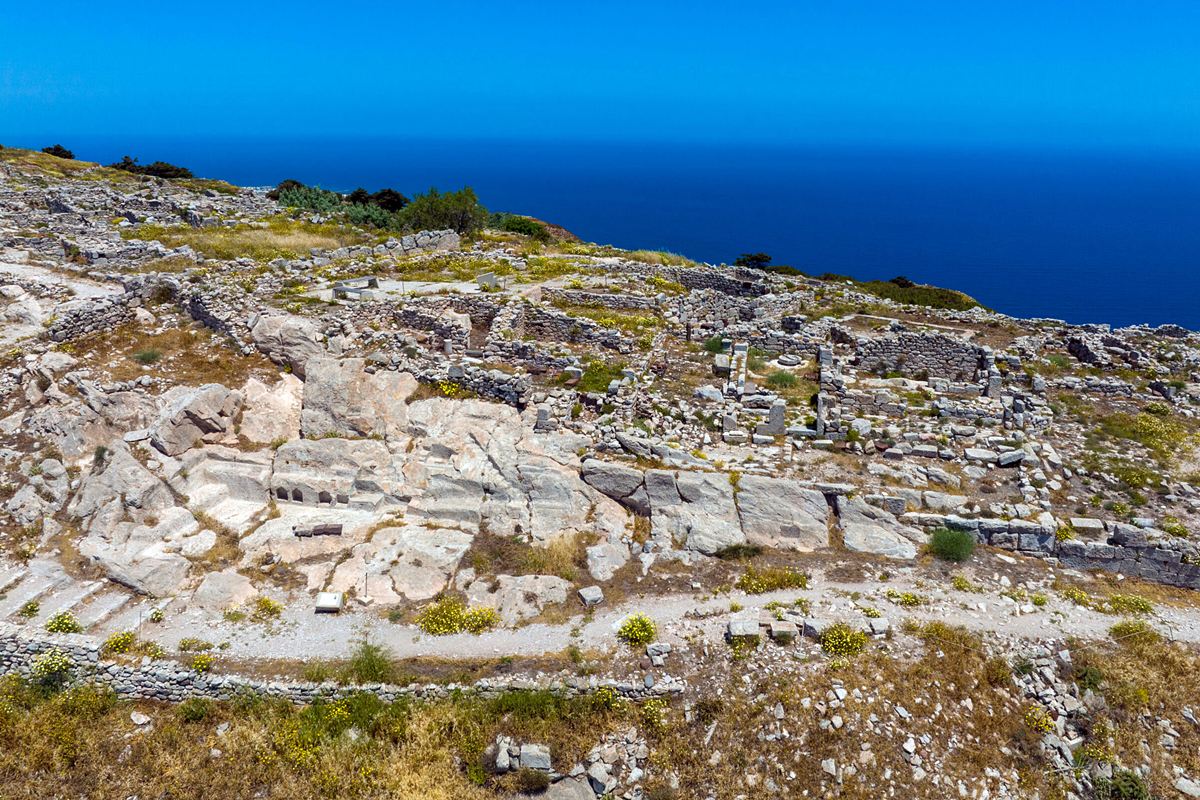
The choice of the location of Ancient Thera in Mesa Vouno, at an altitude of approximately 365-369 meters, was dictated by strategic reasons, as the site constituted an excellent observatory over the Aegean. It is a natural fortress, as the steep slopes of the mountain offered immediate protection, which initially made the construction of a strong defensive wall unnecessary.
The city extends along the elongated ridge of the hill, with a main axis a road running along its length. Its steep, narrow or wind-exposed edges host places of worship, while the residential area develops in its relatively sheltered and wider central part.
The oldest fortifications in the area are a few remains of walls and outposts on the south and southwest sides dating from the Hellenistic period and more specifically the period of the Ptolemaic occupation.
The majority of the defensive walls were added later, mainly in the 7th and 8th centuries AD. The city was originally limited to the top of Mesa Vounos, developing on a plateau approximately 810m long and 210m wide. Its Byzantine enclosure, however, surrounded the entire hill, as it also included the water sources that existed on it, so that in combination with the rainwater collection cisterns, the sufficiency of drinking water was ensured.
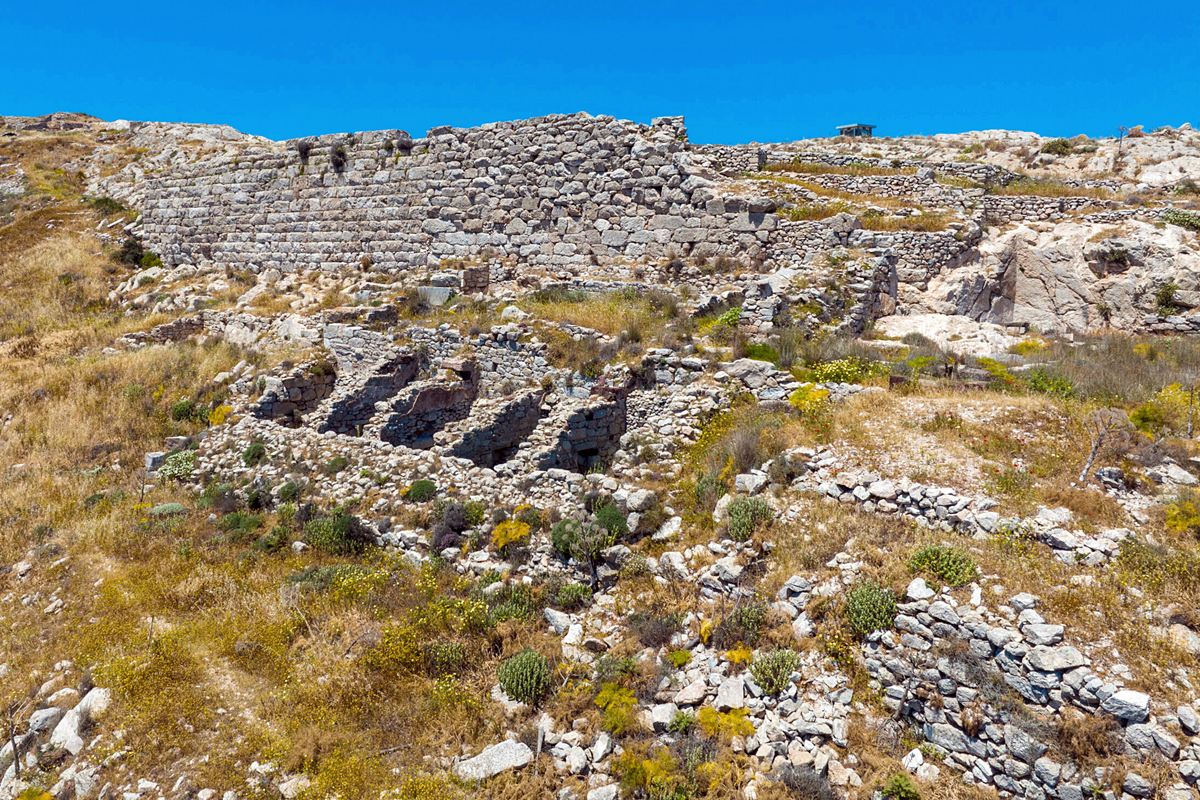
The walls, whose construction of semi-hewn stones is not of high quality, are based on the rock and their carving makes the most of the natural fortification of the location, as the walls are located between the steep slopes of the hill, making the castle inaccessible.
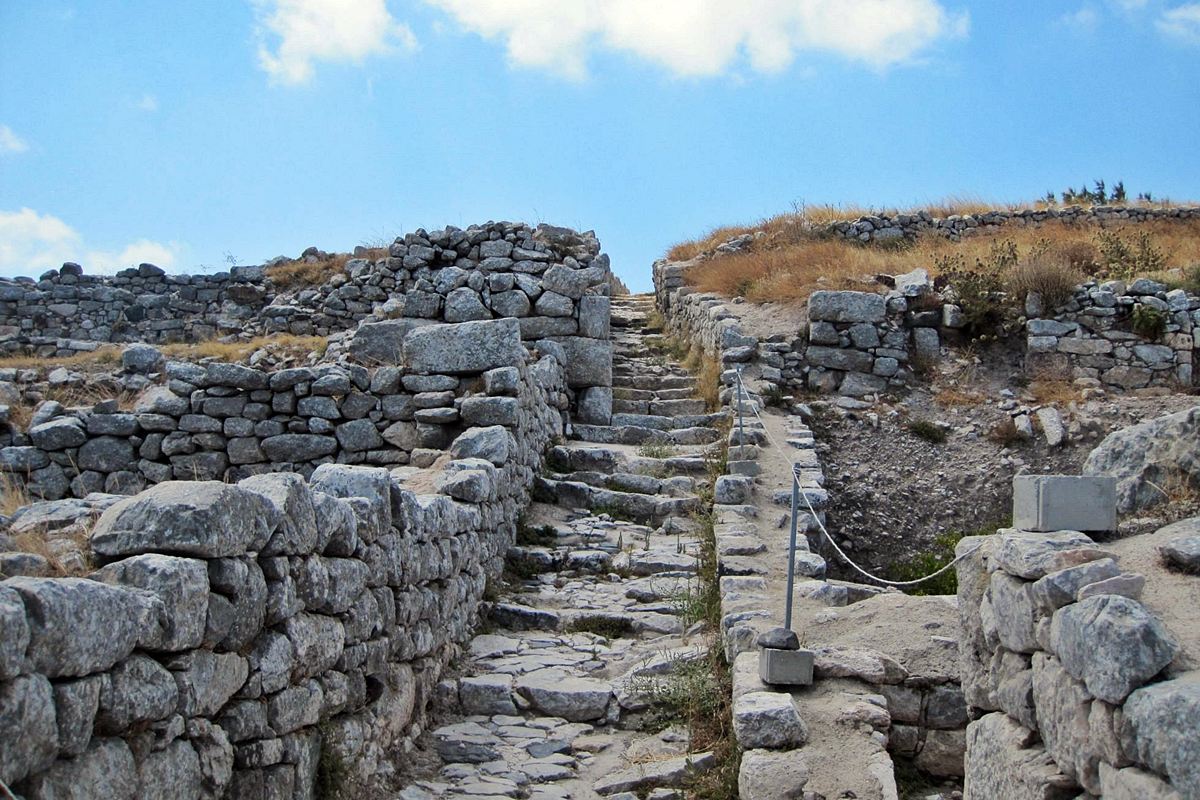
The main access to the castle is located in the NW, from Sellada, from where the main road that passes through the Agora of Ancient Thira begins. At this point is the only entrance gate to the Castle. The entrance gate is a reconstruction of an older one in the same location, as is evident from its masonry, with the extensive use of lime mortar.
The Byzantine houses of Ancient Thera are relatively small dwellings, built relatively haphazardly and with extensive use of ancient building materials.
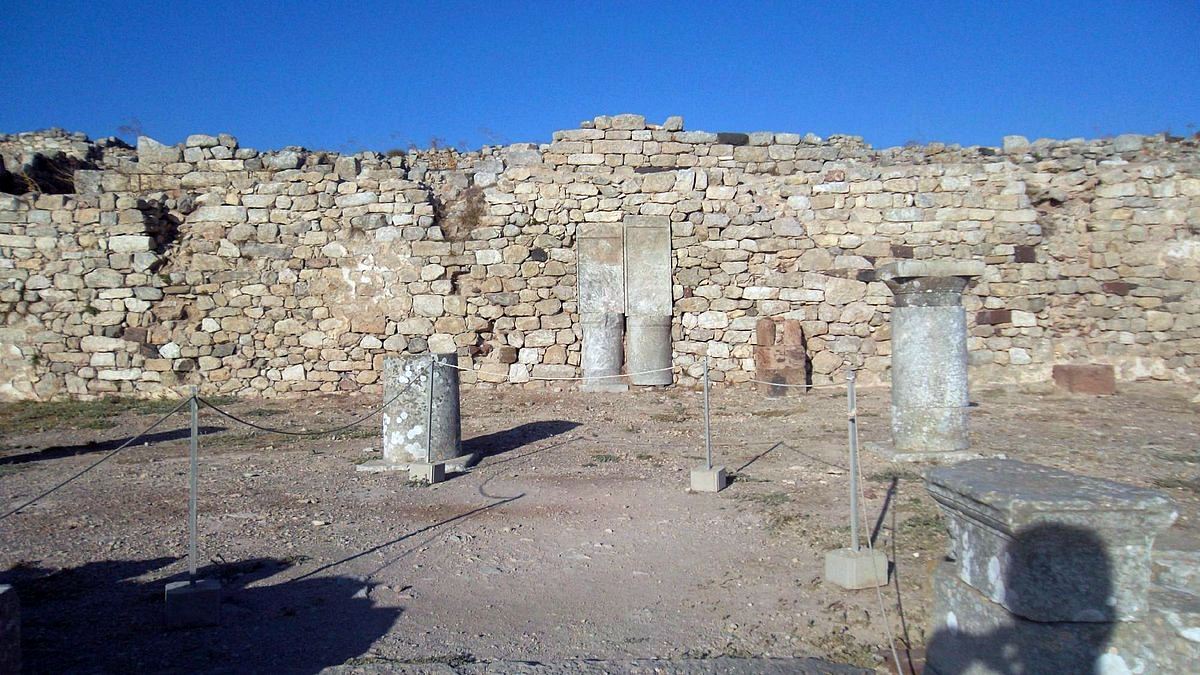
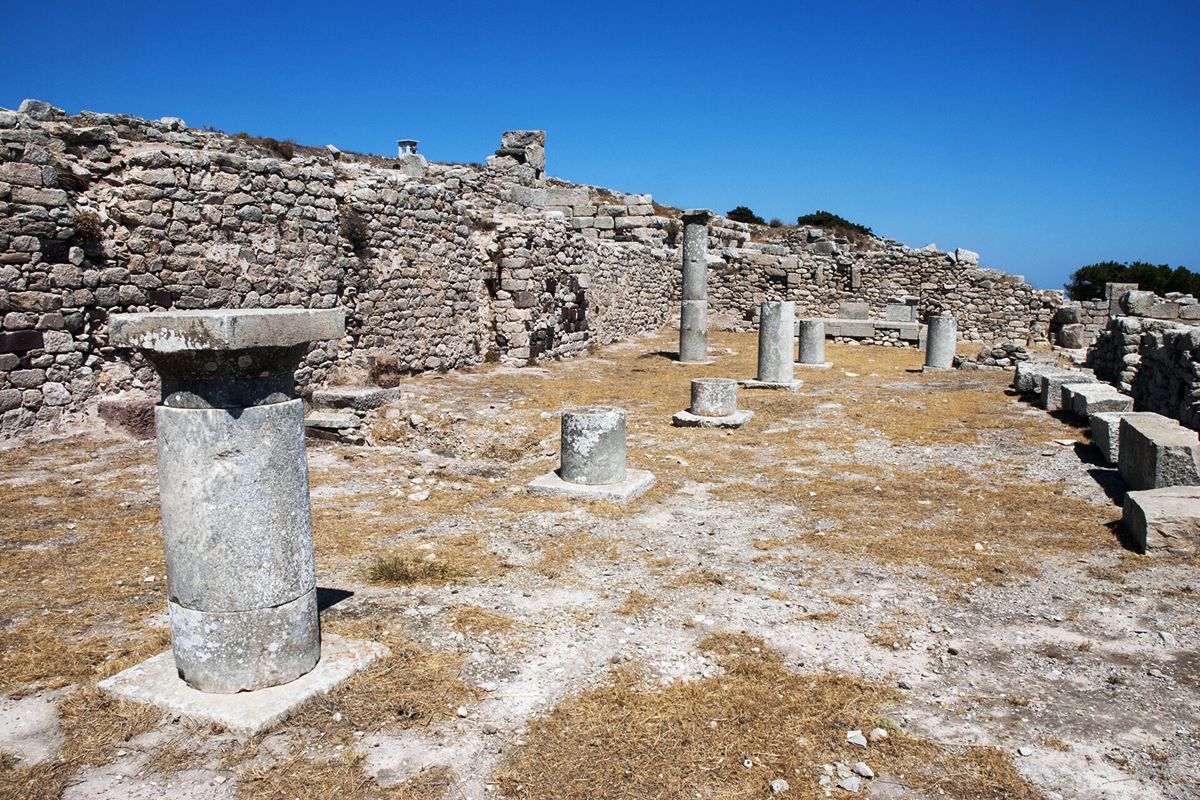
Important sites of Ancient Thera are the Agora, the sanctuary of Artemidoros , the temple of Dionysus, the sanctuary of Apollo Karneion, the Royal Stoa, the Theater, the sanctuary of the Egyptian Gods and the cemetery.
Sources
- Ιστοσελίδα Cycladic Castles της Εφορείας Αρχαιοτήτων Κυκλάδων, ΚΑΣΤΡΟ ΑΡΧΑΙΑΣ ΘΗΡΑΣ
- Ιστοσελίδα ΟΔΥΣΣΕΥΣ - Υπουργείου Πολιτισμού - Αρχαία Θήρα
- Φυλλάδιο Υπουργείου Πολιτισμού ΑΡΧΑΙΑ ΘΗΡΑ - ANCIENT THERA (κείμενο: Μάγια Ευσταθίου)
- Πληροφορίες: Χαράλαμπος Παπαδόπουλος
| Access |
|---|
| Approach to the monument: |
| Access to the ancient city is on foot, via stairs on the mountainside starting from Kamari. |
| Entrance: |
| Controlled entrance without ticket. |
| Other castles around |
|---|
| Kasteli of Akrotiri |
| Kasteli of Emporeio |
| Goulas of Emporio |
| Kasteli of Pyrgos |
| Citadel of Oia |
| Castle of Skaros |