Vido (islet), Kentriki Kerkyra, Kerkyra,Ionian islands
Vido fortifications
1
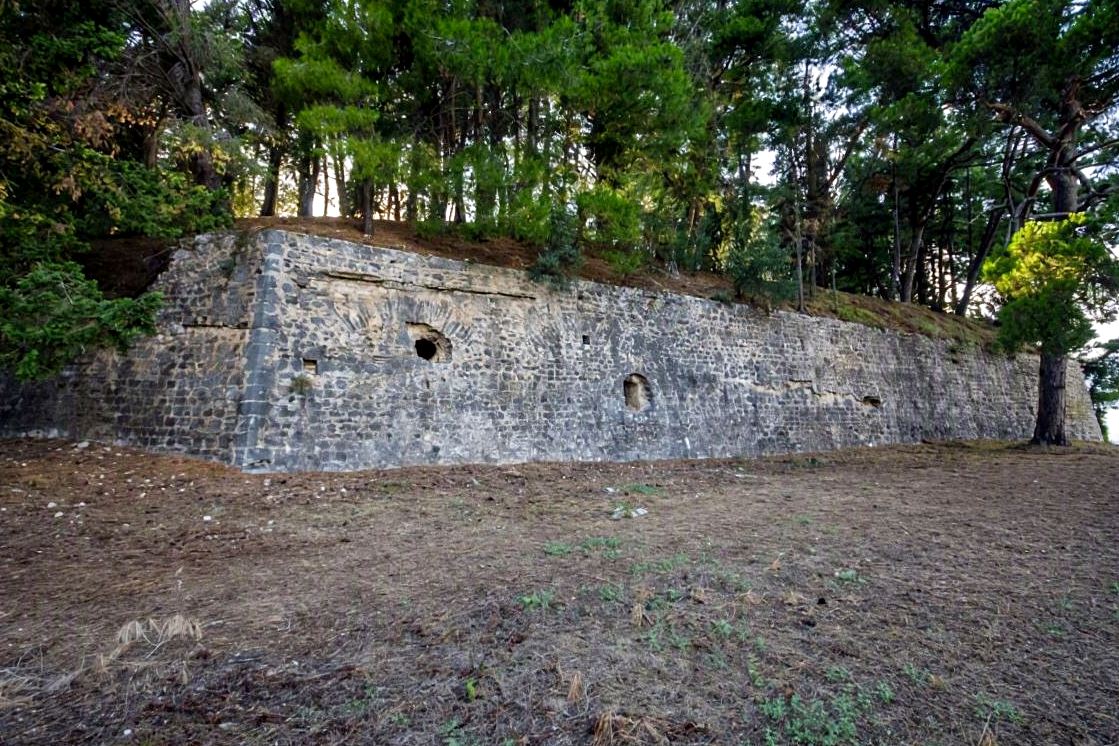
2 / 30
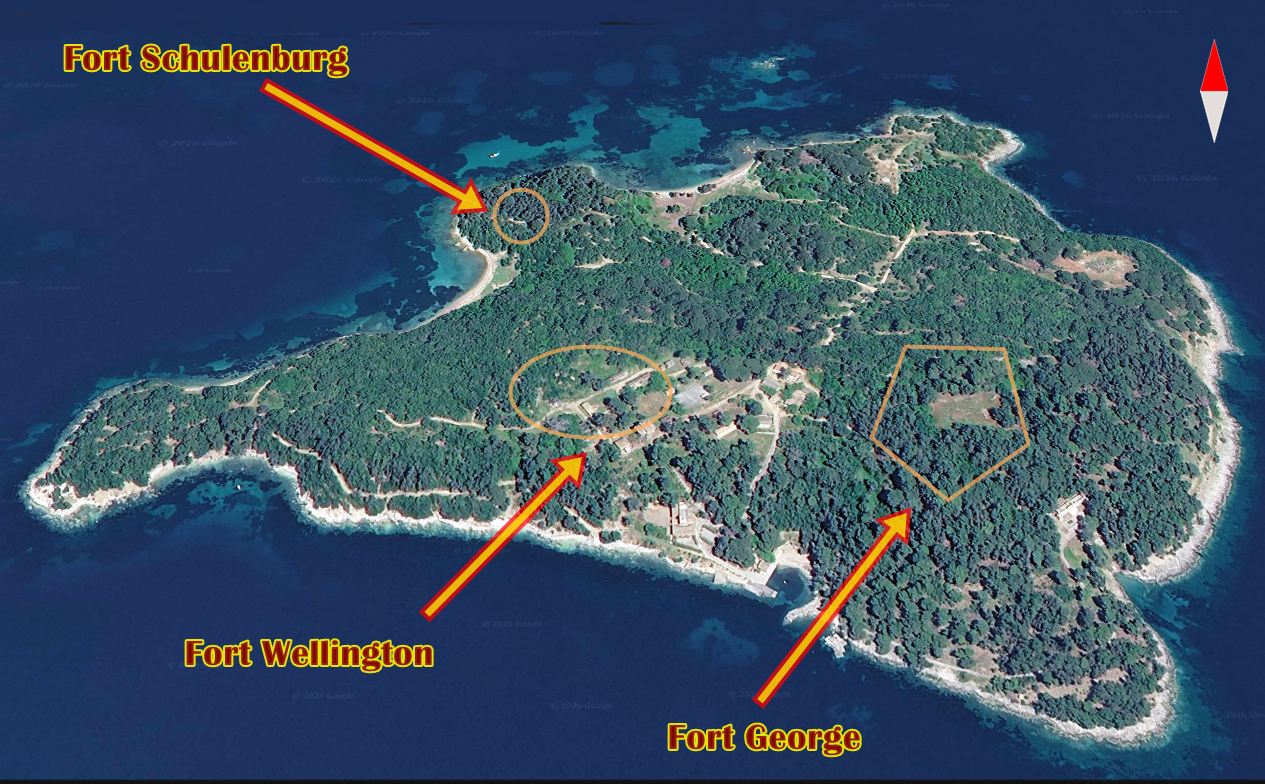
the locations of the forts in Vido
3 / 30
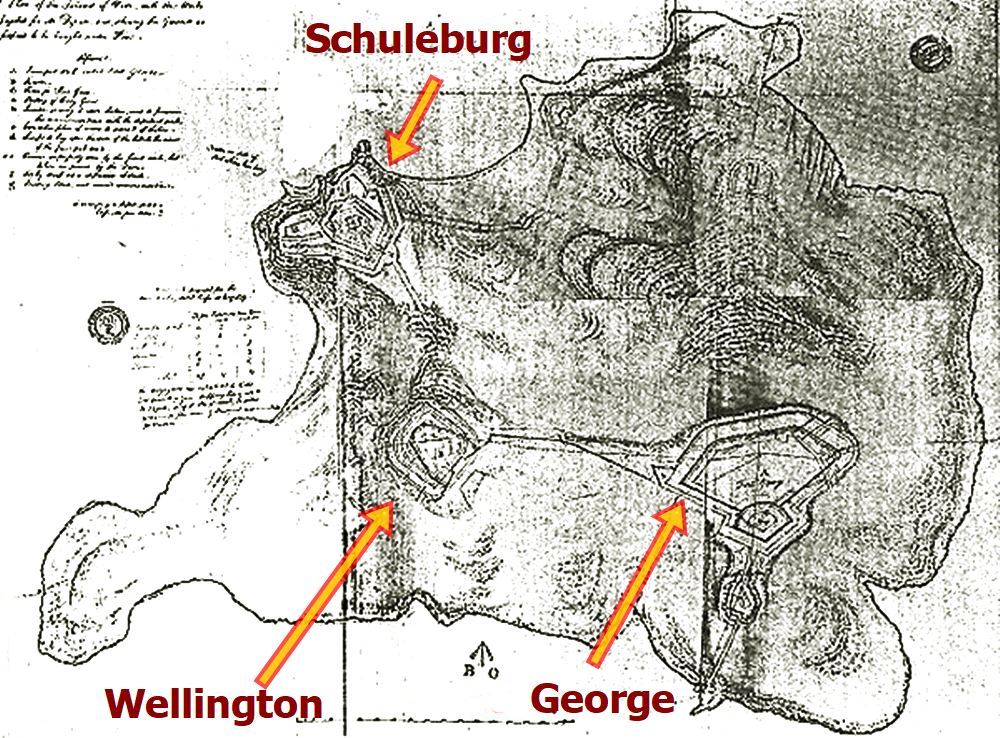
layout from 1824 with the layout of the forts
4 / 30
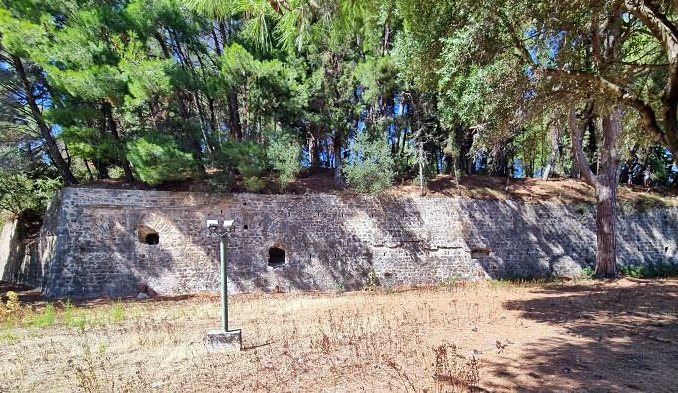
standing wall of the Schulenburg fort
5 / 30
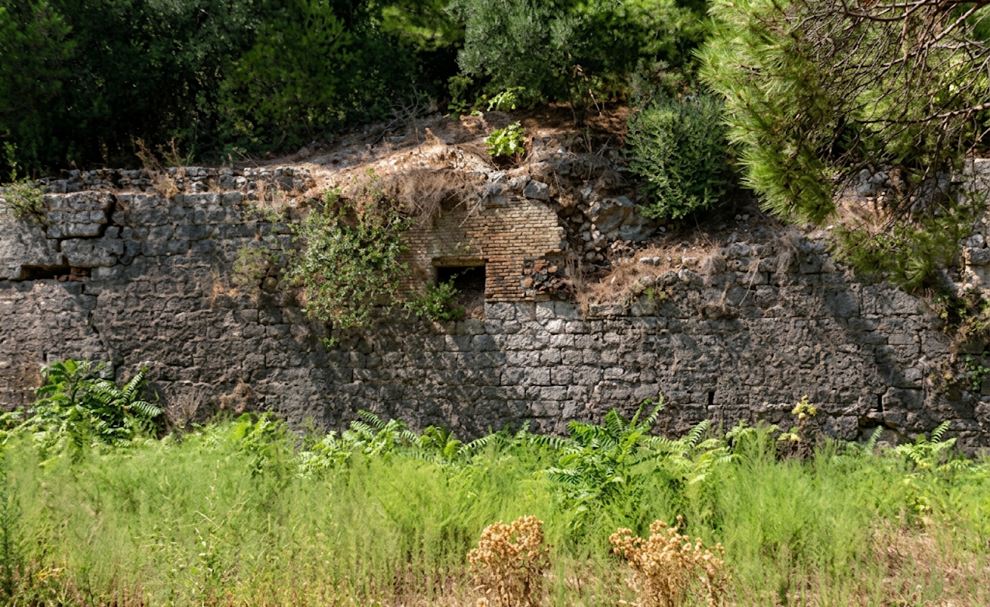
standing wall of the Schulenburg fort
6 / 30
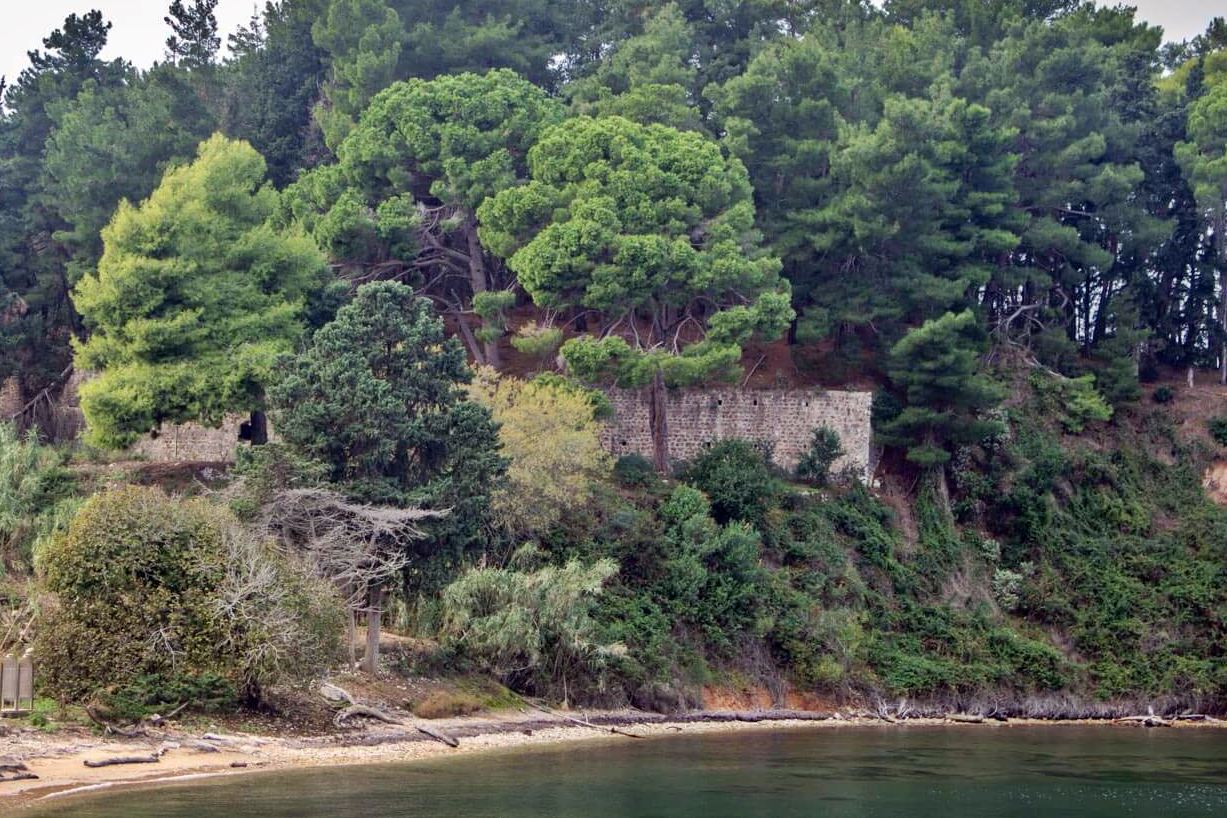
seaside wall of the Schulenburg fort
7 / 30
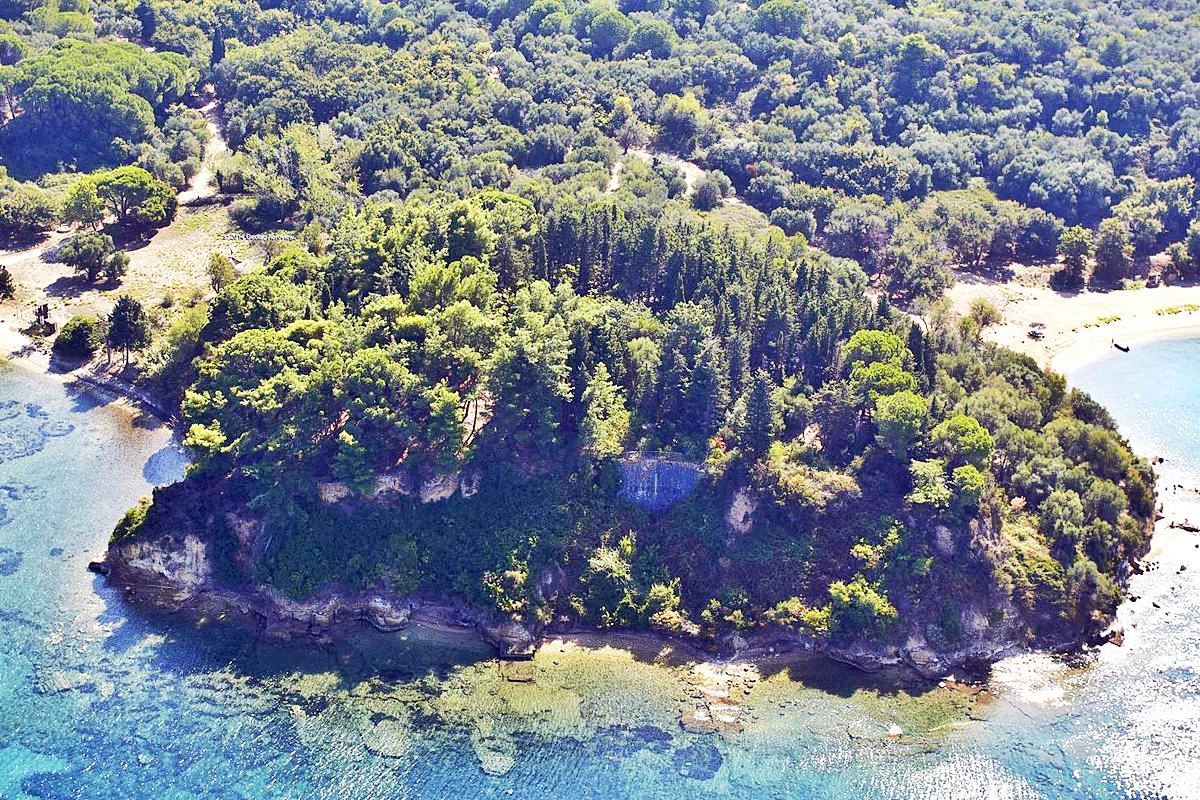
location of the Schulenburg fort
8 / 30
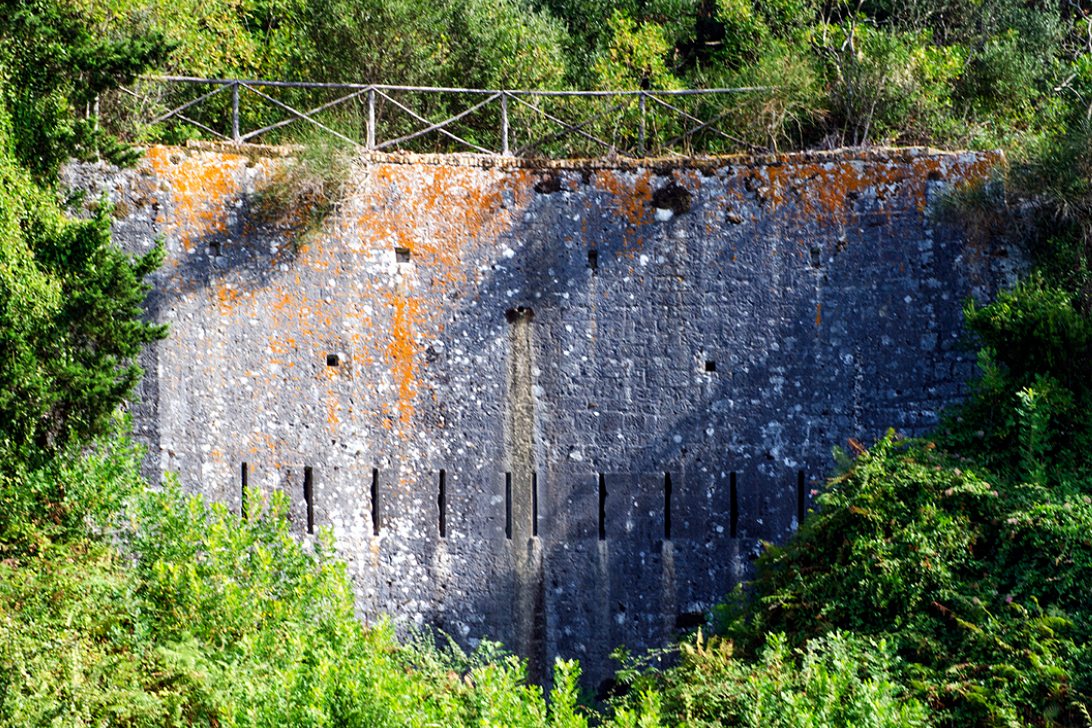
the front of the emplacement next to the Schulenburg fort
9 / 30
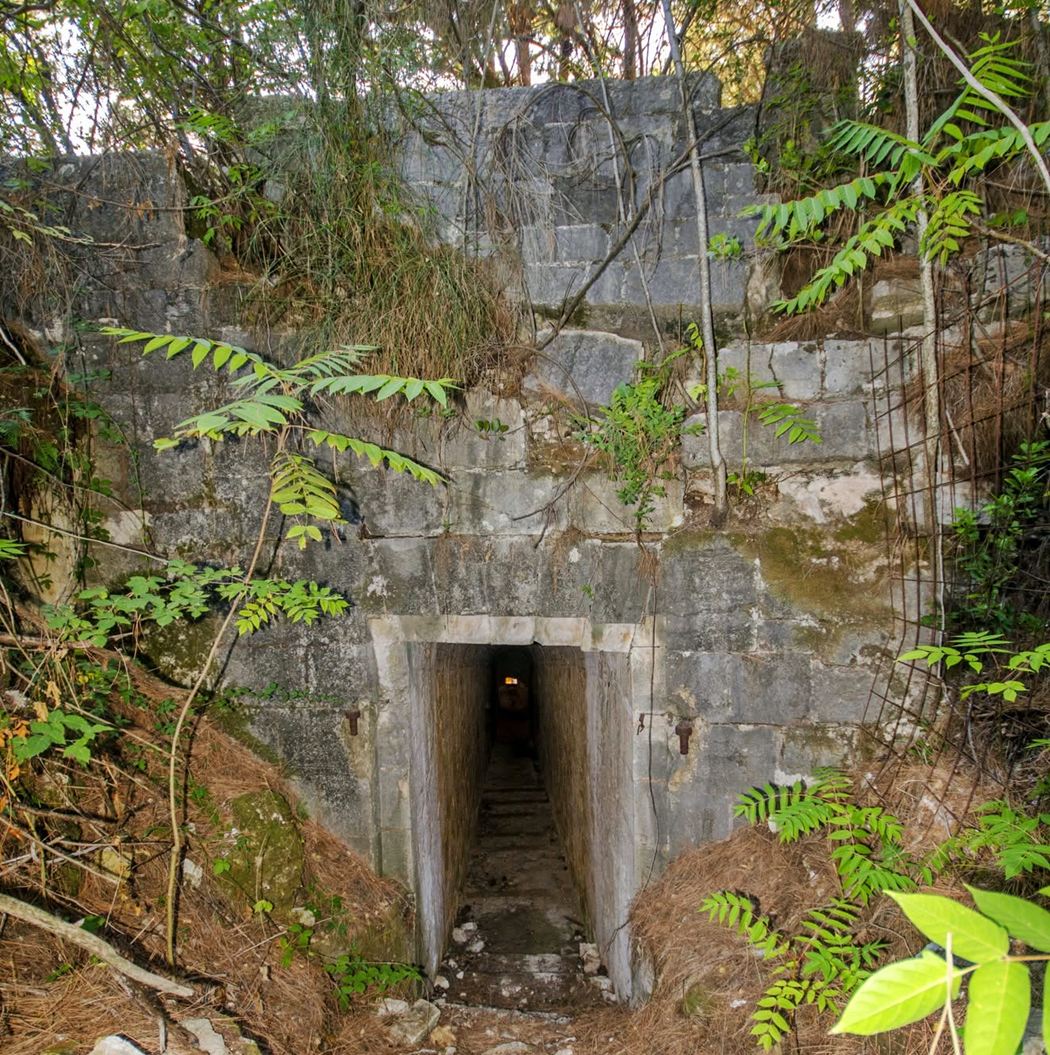
the entrance to the emplacement next to the Schulenburg fort
10 / 30
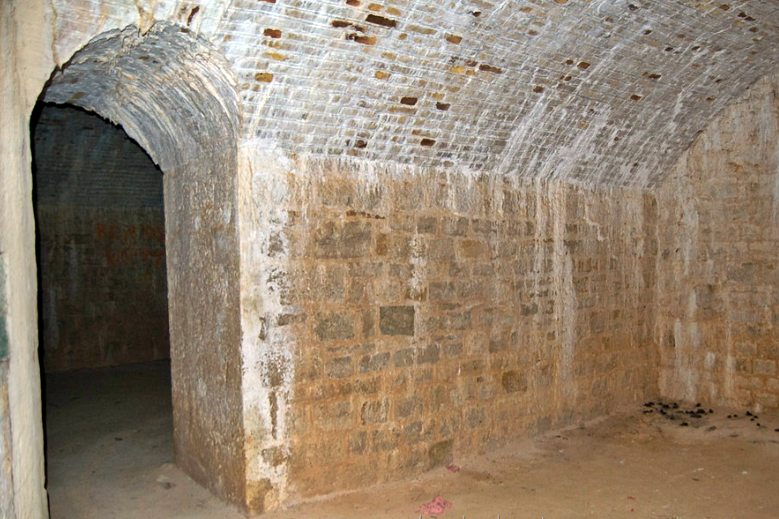
the underground interior of the emplacement of the Schulenburg fort
11 / 30
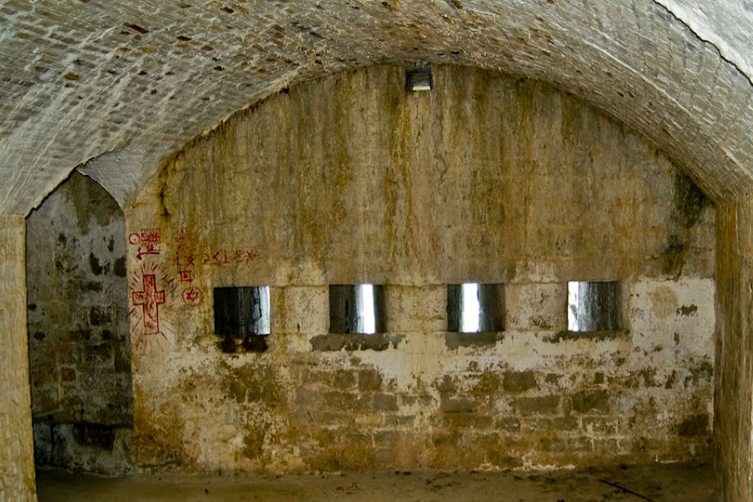
fire positions in the interior of the emplacement of the Schulenburg fort
12 / 30
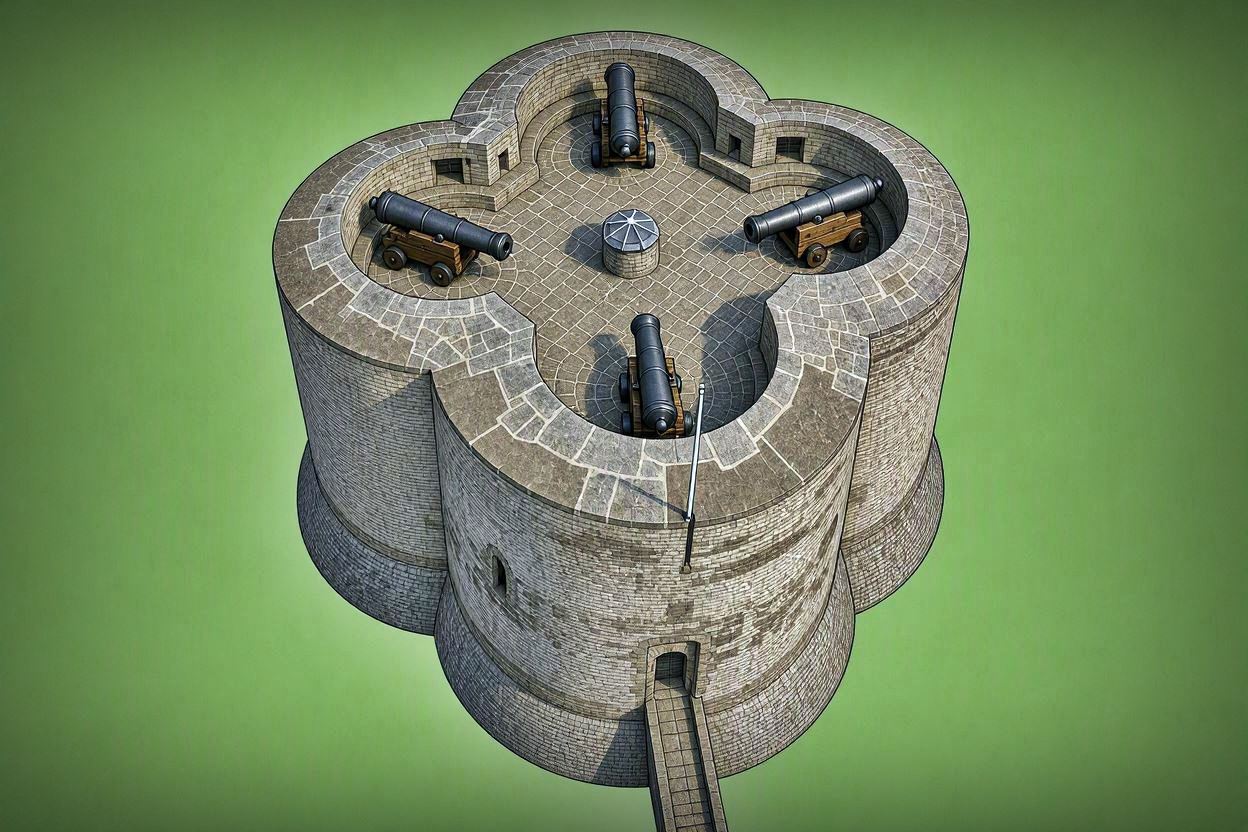
depiction of a tower of Martello type,similat to the Maitland/Schulenburg tower
13 / 30
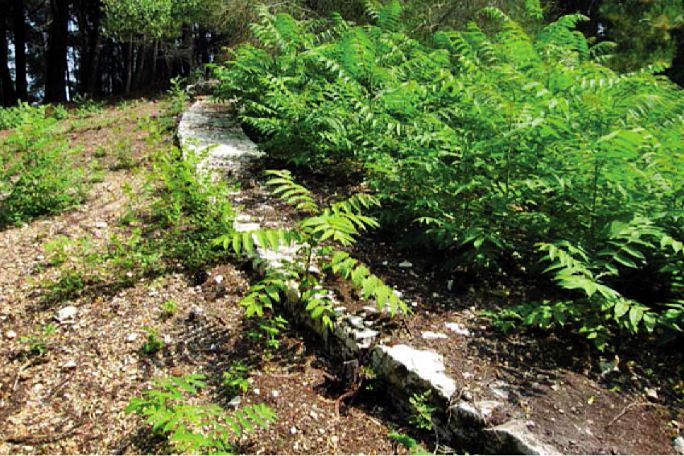
remains of the Maitland tower in the Schulenburg fort
14 / 30
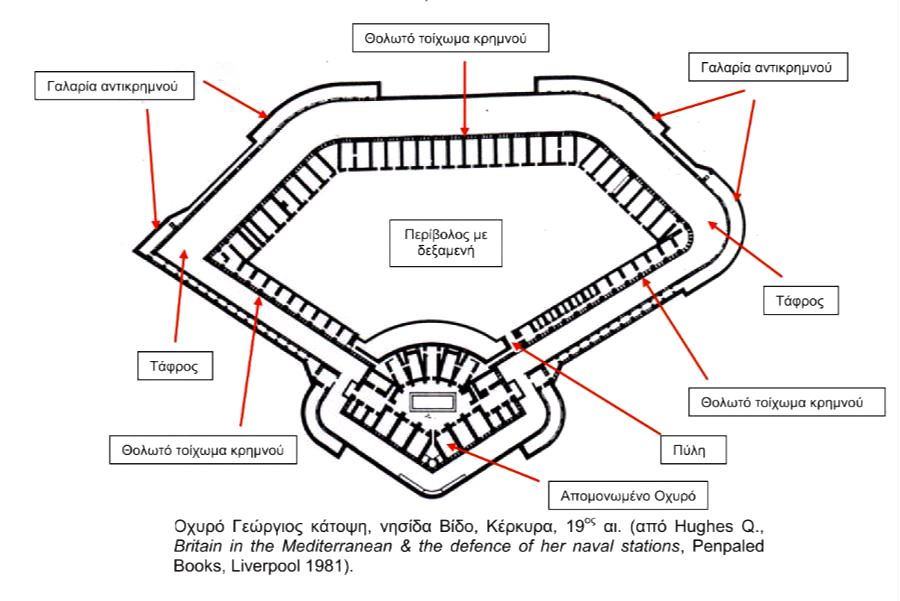
drawing of the George fort
15 / 30
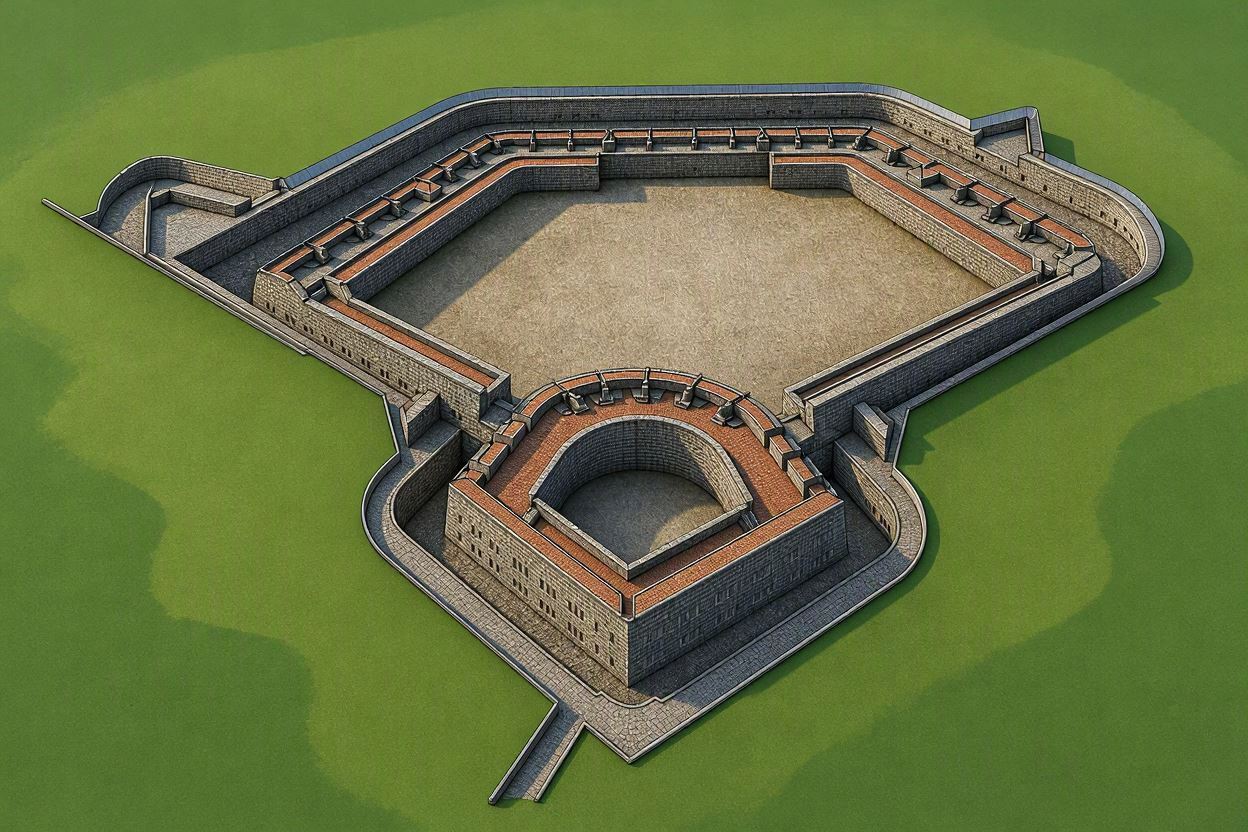
depiction of the George fort
16 / 30
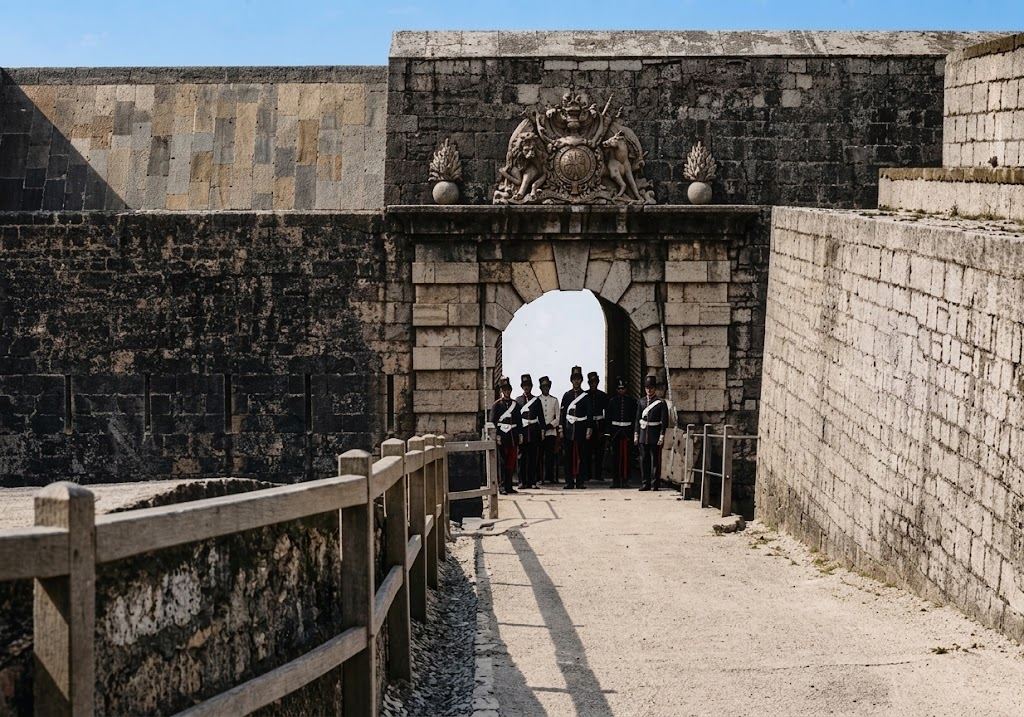
photo of the British garrison at Fort George before its demolition (1864)
17 / 30
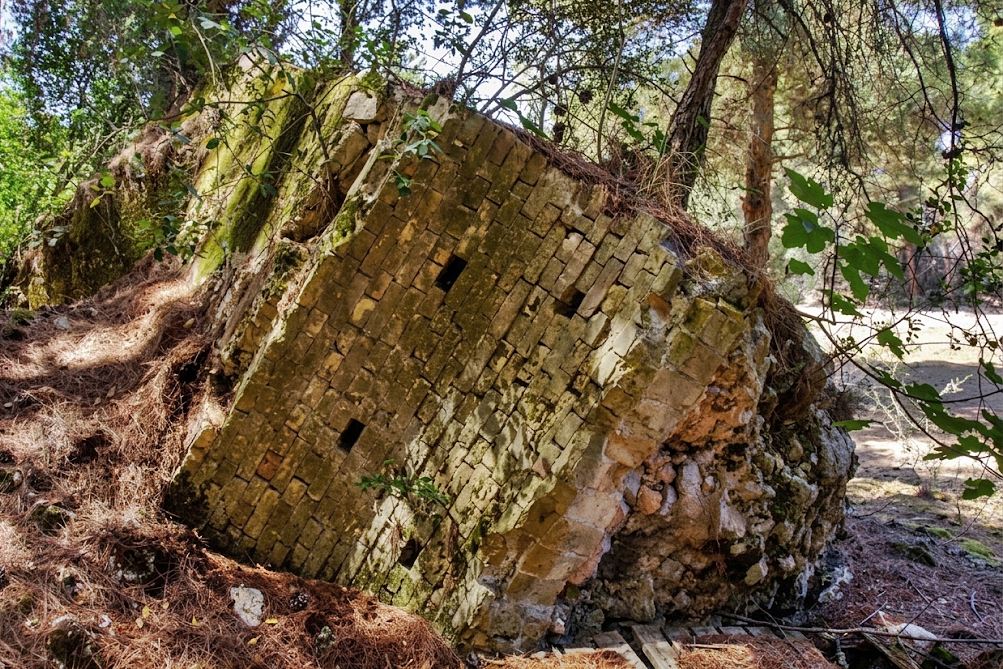
remains of the fort George
18 / 30
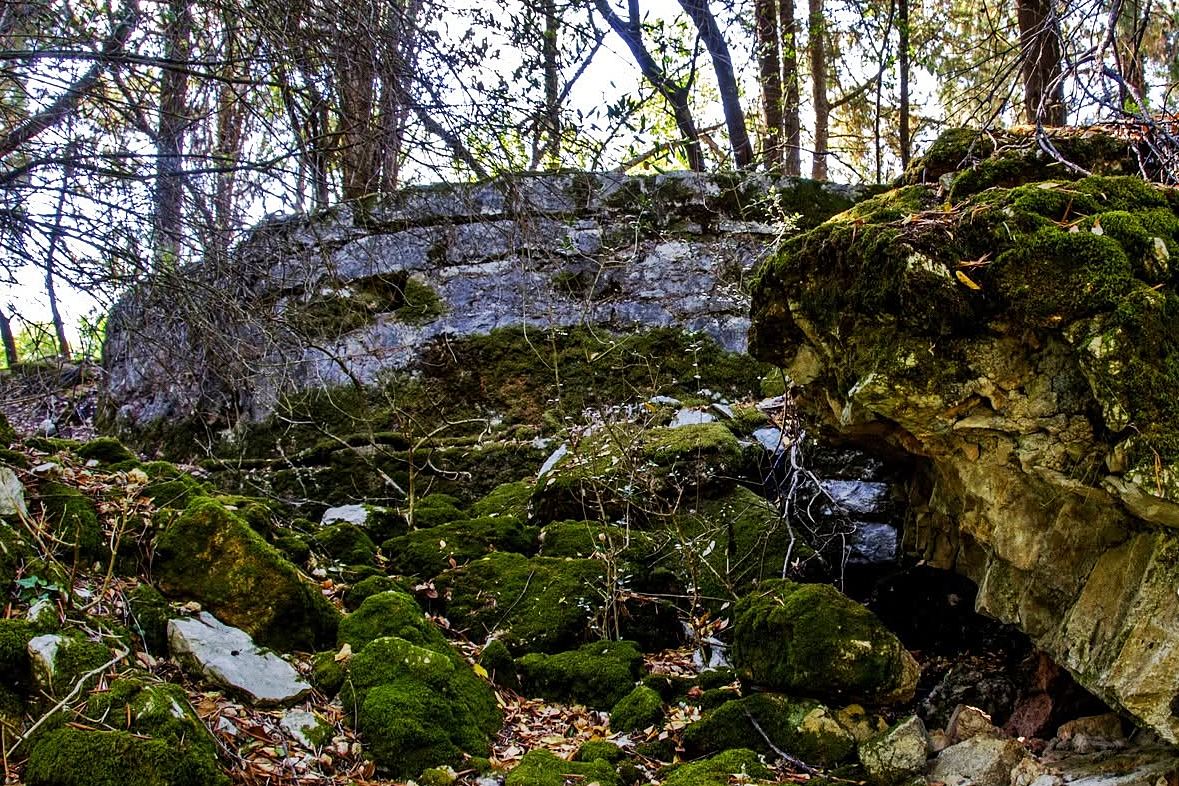
remains of the fort George
19 / 30
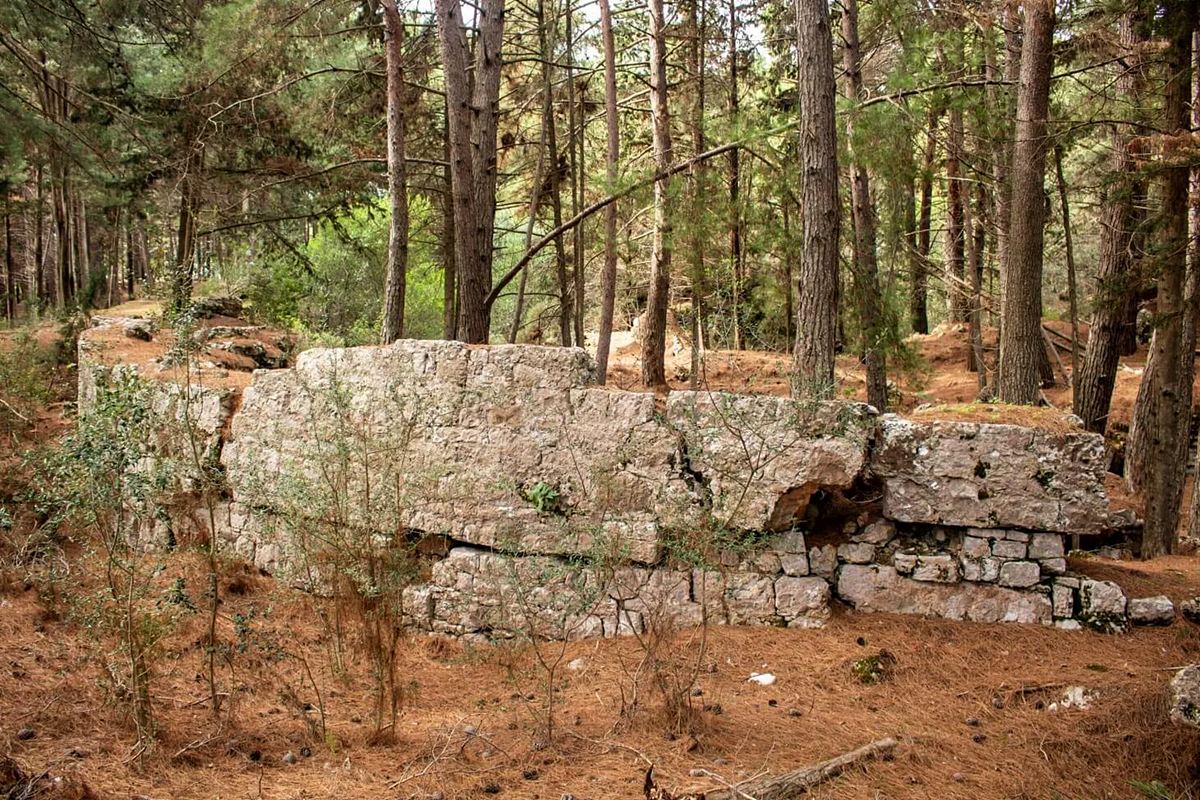
remains of the fort George
20 / 30
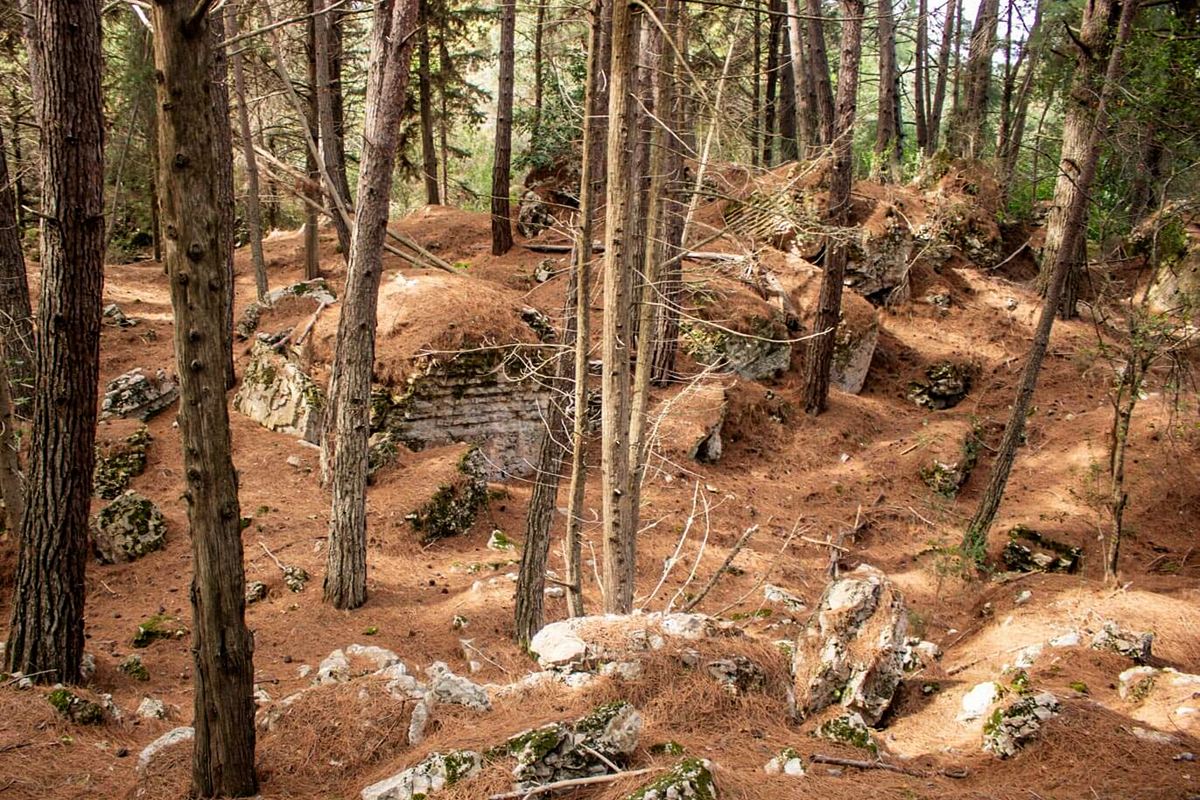
remains of the fort George
21 / 30
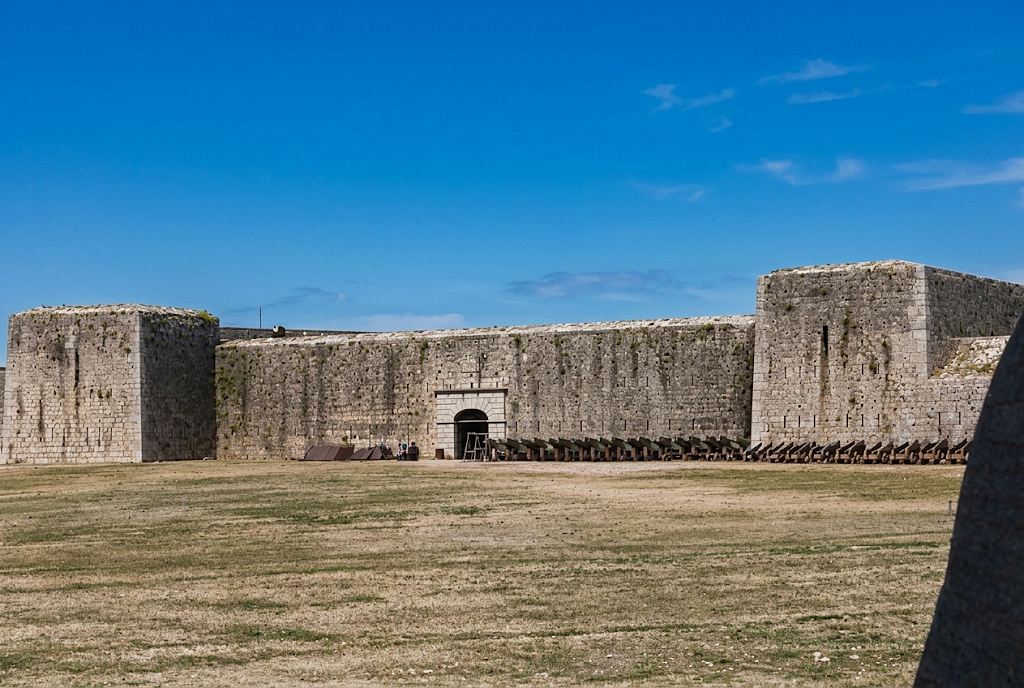
colored photo of Wellington fort just before the demolition
22 / 30
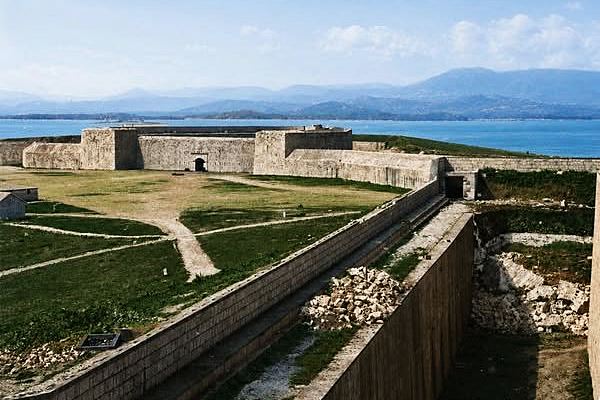
colored photo of Wellington fort viewed from fort George
23 / 30
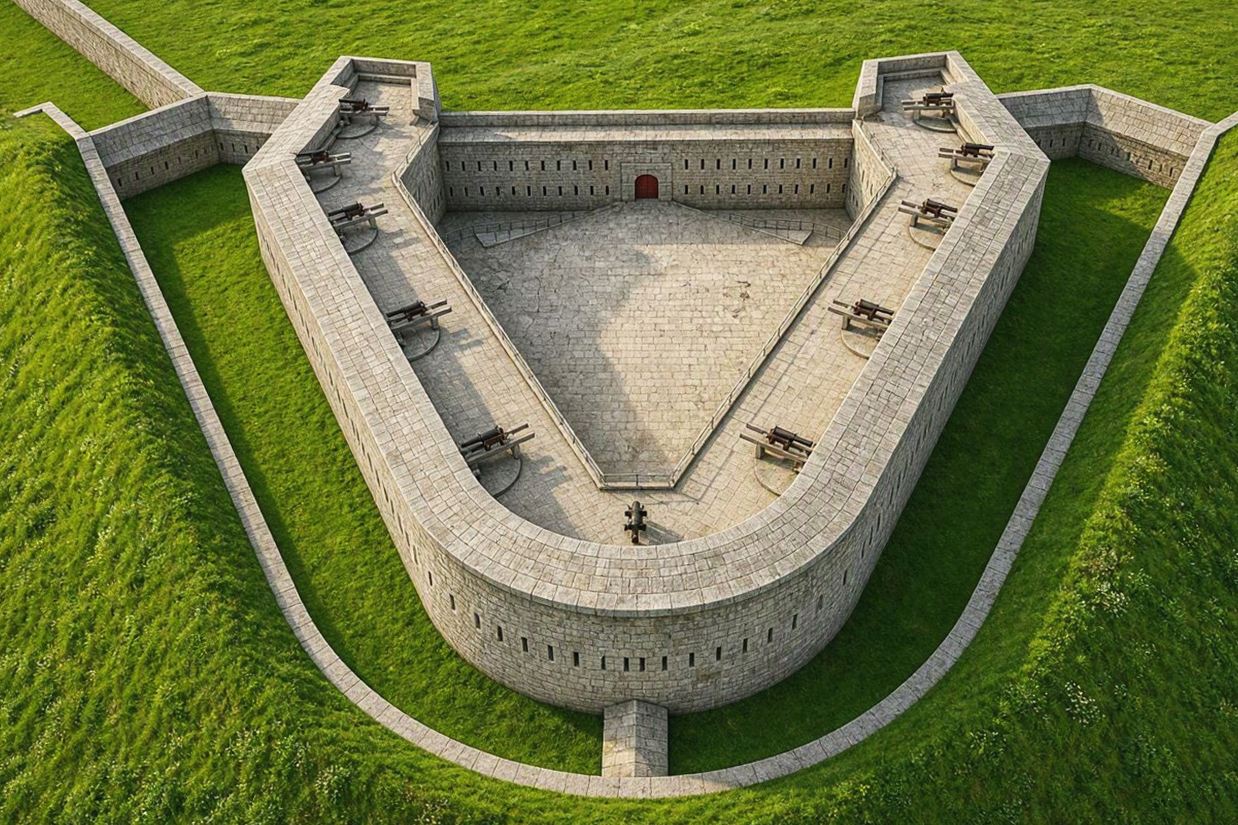
depiction of the Wellington fort based on technical drawings
24 / 30
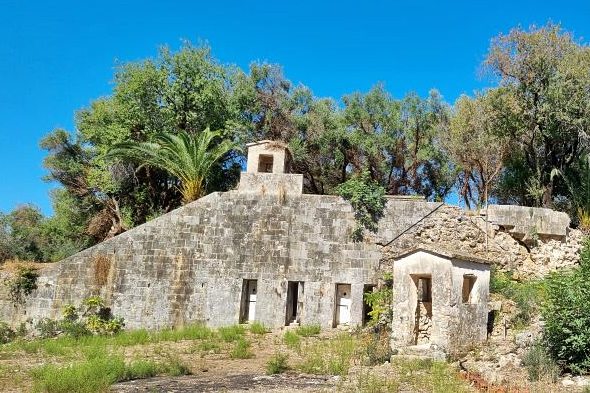
survived part of the Wellington fort that was converted to prison
25 / 30
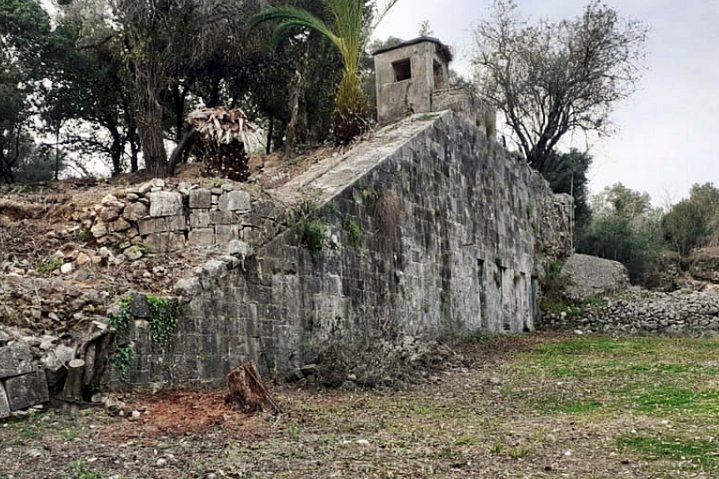
survived part of the Wellington fort that was converted to prison
26 / 30
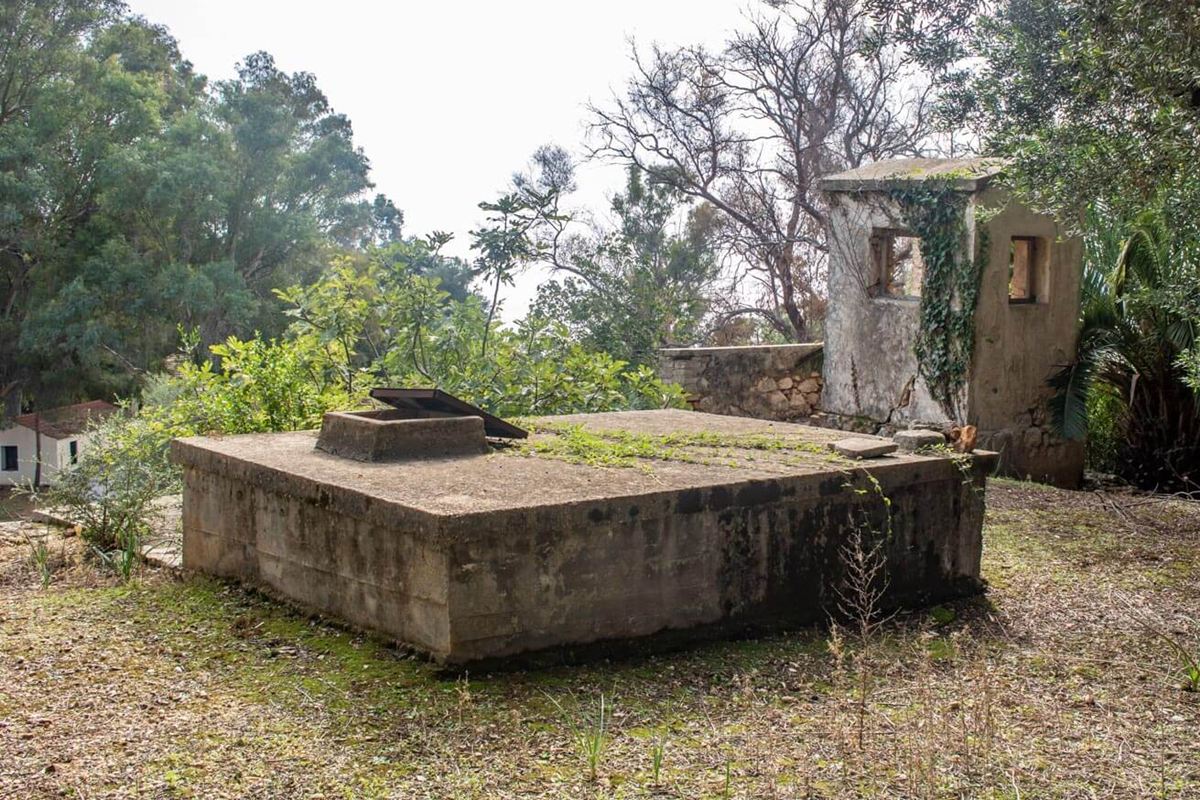
cistern of the Wellington fort (still in use)
27 / 30
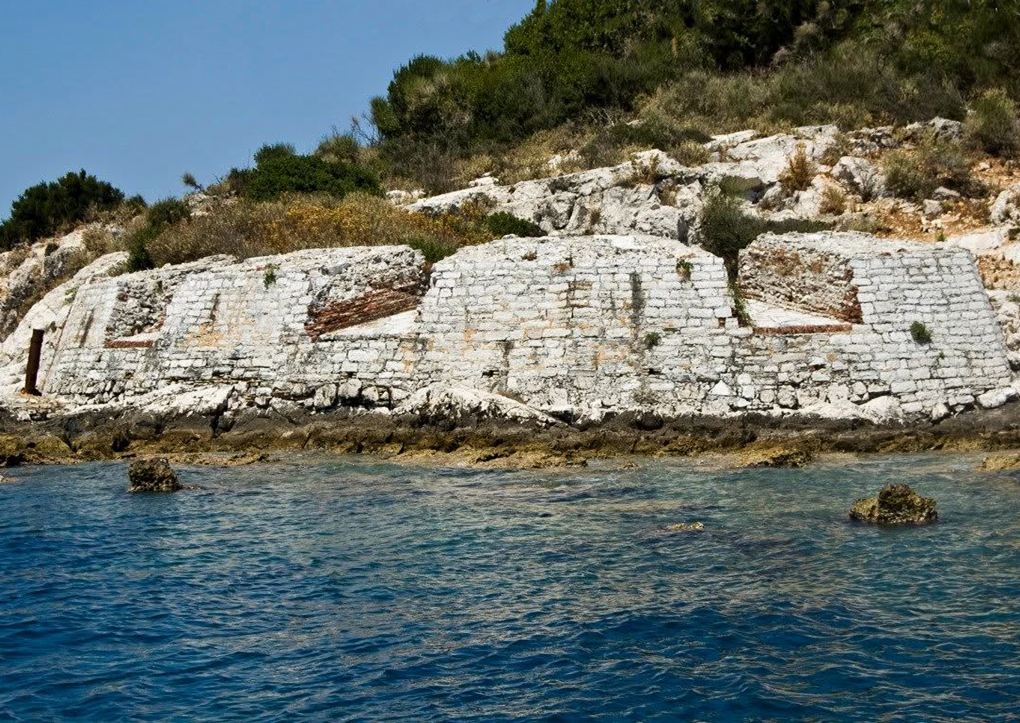
the emplacement at the NW side of the islet – perhaps from the Russian period
28 / 30
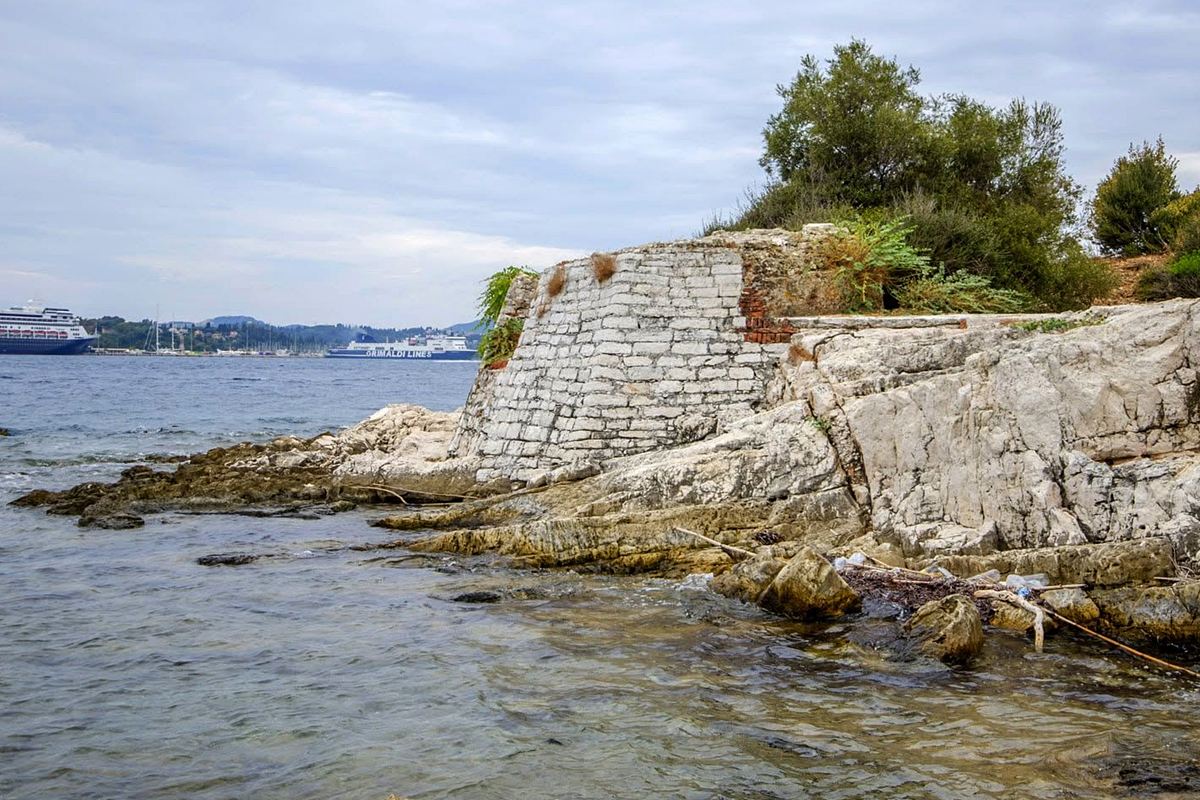
the emplacement at the NW side of the islet – perhaps from the Russian period
29 / 30
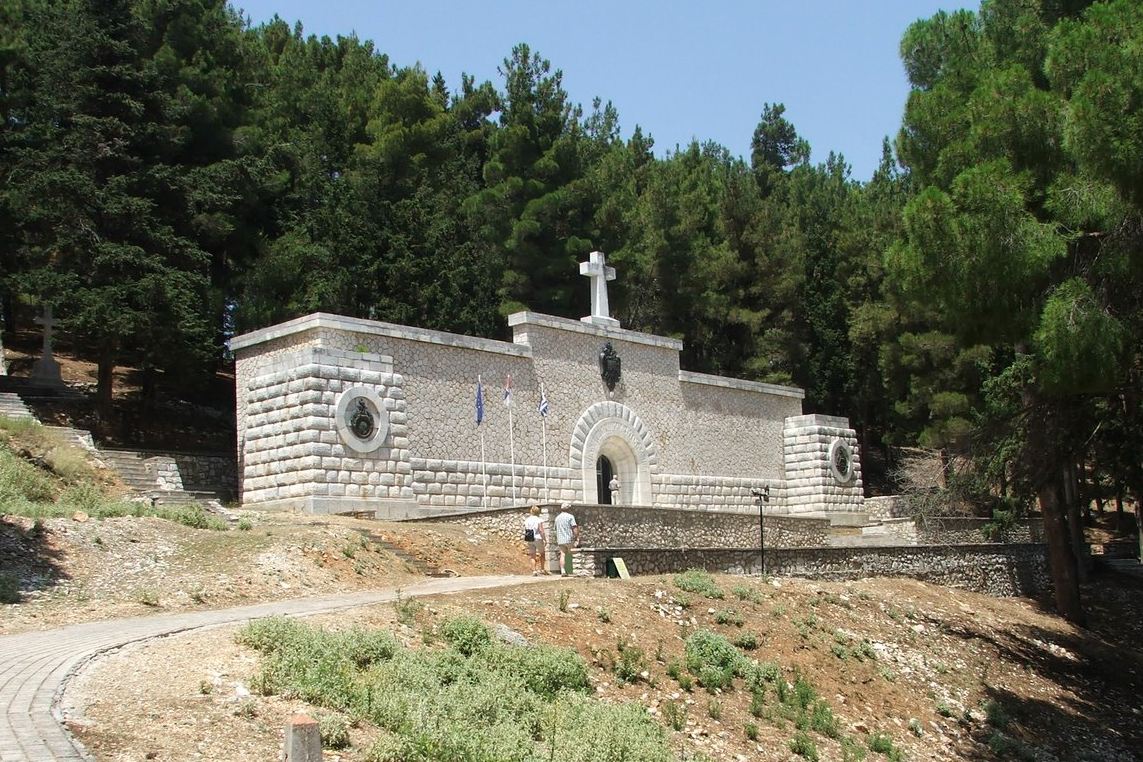
the Serbian Mausoleum
30 / 30
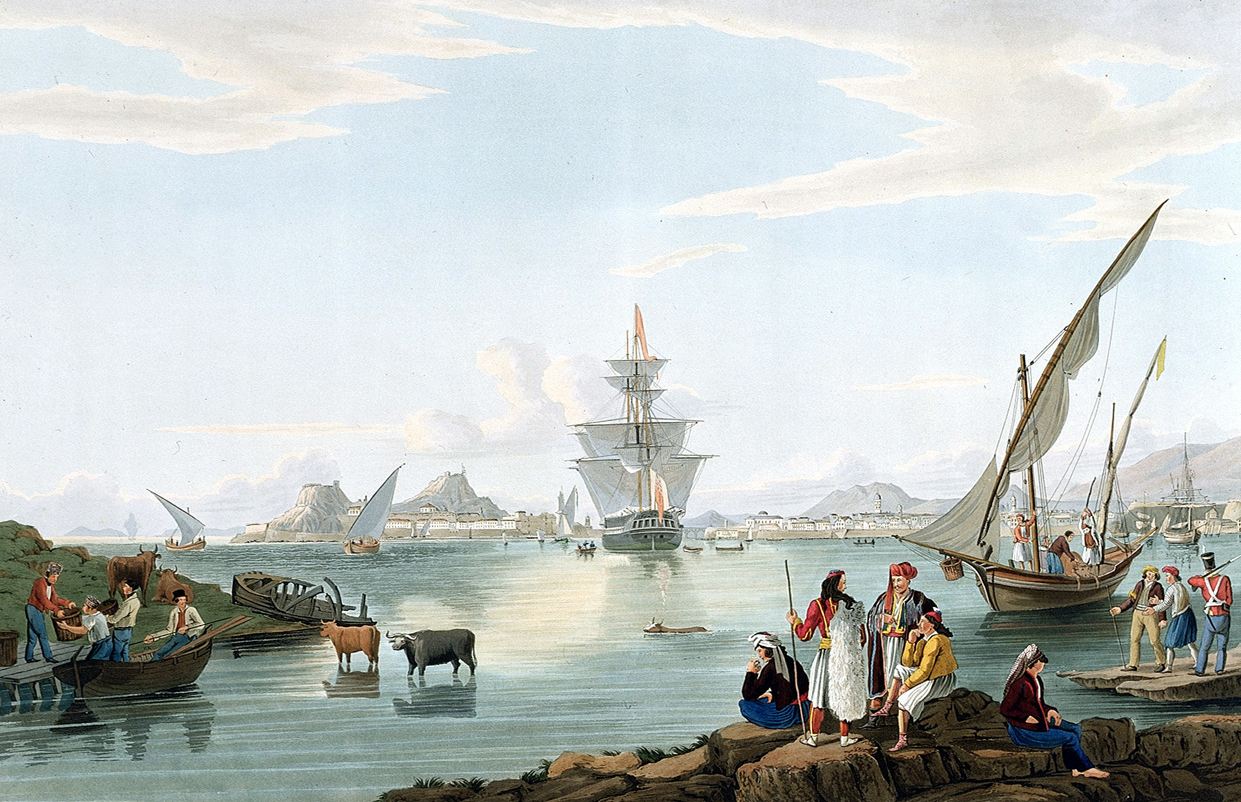
Joseph Cartwright (1789-1829) - Corfu, from the Island of Vido
THE END
| Location: |
| Islet Vido, opposite the port of Corfu |
| Region > Prefecture: | 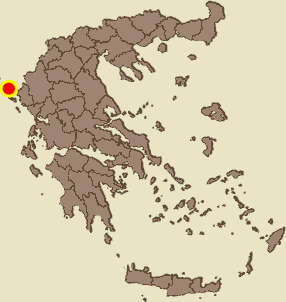 |
| Ionian islands Kerkyra | |
| Municipality > Town: | |
| City of Kentriki Kerkyra • Vido (islet) | |
| Altitude: | |
| Elevation ≈ 35 m |
| Time of Construction | Origin | |
| 19th cent. | FRENCH  |
|
| Castle Type | Condition | |
| Fortress |
In Ruins
|
Vido is a lush green islet of 538 stremmata (about 133 acres) opposite the port of Corfu to the north, at a distance of less than one mile.
The official name of the island is “Ptychia”. According to the 2021 census, the island is uninhabited, although in summer there is tourist activity, so, logically, during the summer months it is inhabited.
Vido once had strong fortifications, whose purpose was the protection of Corfu. The fortification consisted basically of 3 strong forts that were mostly constructions of the 19th century:
1) the fort Wellington,
2) the fort George and
3) the fort Schulenburg or tower Maitland.
Besides the main forts, at at least 9 coastal points of the island there were also gun emplacements (platforms for cannons).
The first fortification works were carried out by the Venetians in the 18th century, continued by the French in the early 19th century and completed by the British until the middle of the same century.
After the union of the Ionian Islands with Greece, the British, before their departure, in 1864, blew up all the fortifications on Vido. Today only traces of the forts survive – basically rubble created by the explosions. At a few points walls are still discernible, while some cisterns and gun emplacements have also been preserved.
History
It goes without saying that the Vido’s history follows that of Corfu, which from the Late Byzantine period onward is, in brief, as follows:
In 1207, in the aftermath of the fall of Constantinople, the Venetians became masters of Corfu for the first time, but lost it in 1213 to the Despot Michael I Angelos Doukas of Epirus. Thus Corfu remained for some decades part of the Despotate of Epirus. In 1257, it was given as a dowry to Manfred of Sicily (son-in-law of Michael II) and in 1267 it was conquered by Charles of Anjou and became a possession of the Angevins and the Kingdom of Naples. It remained in this regime for more than 100 years.
In 1381 the Kingdom of Naples lost Corfu to Giacomo Del Balzo, a claimant to the throne of the Principality of Achaea.
Venetian rule in Corfu began in 1386, when the inhabitants, after a period of anarchy and uncertainty following the death of Giacomo Del Balzo, chose to declare themselves subjects of the Most Serene Republic of Venice.
Eleven years later, Venice secured its new possession formally as well, paying the King of Naples 30,000 ducats.
Corfu never experienced the Turkish yoke, although the Ottomans tried several times: in 1431, 1537 (under the terrible Hayreddin Barbarossa), 1571, 1573, and 1716. Each time the Ottomans raided the island, but could not capture the castles.
The siege of 1716 caused a particular sensation throughout Europe, when a large Turkish force besieged the island, but Venetians and Corfiots under the leadership of the German field marshal (in Venetian service) Johann Matthias von der Schulenburg managed to repel them.
Venetian rule lasted over 400 years, until 1797, when the Republic of Venice was dissolved by Napoleon. Corfu then passed briefly into French hands with the Treaty of Campo Formio.
In 1799, after a four-month siege, the Russians, allied with the Turks, became the new rulers and created a new independent state under their protection.
In 1807, by the Treaty of Tilsit, the Russian Empire ceded control of the islands back to France. In 1814, the French left and the British came, when by the Treaty of Paris a new entity was founded, the United States of the Ionian Islands, under the protection of Great Britain.
Sir Thomas Maitland was appointed first British Commissioner, simultaneously serving as governor of Malta.
By the Treaty of London of 1863, the union of the Ionian Islands with Greece was agreed. By this treaty Corfu was declared an unfortified city, so that no other Great Power would have the right to claim it. For this reason the treaty provided for the destruction of all fortifications.
Indeed, the British, before their departure, prepared to blow up all the forts and fortresses, but in the end, after strong protests by the locals and diplomatic efforts by Charilaos Trikoupis, only part of the western fortifications of the city of Corfu was destroyed, while the Old and New Fortresses were spared.
The fortifications on Vido, however, were not spared and were completely destroyed.
Vido had not been fortified in Antiquity, nor in the Byzantine period, nor under Venetian rule.
Only after the great siege of 1716, when cannons had acquired greater range, was the strategic importance of the islet for the defence of Corfu realized.
Thus in 1727, at the urging of Marshal Schulenburg, fortification of the island was planned with a continuous wall around its shores. This plan was not implemented except for a hexagonal fort on a peninsula on the northwestern side, built after 1735 and named Fort Schulenburg.
When the French first came to the Ionian Islands after the treaty of 1797, they considered Vido of vital importance and stationed there 450 soldiers and 40 cannons. They established their headquarters in Fort Schulenburg and very soon built the first fortifications. The island was stripped of vegetation (until then it had olive and vine cultivations) and the Byzantine church of Saint Stephen was demolished.
However, the French did not manage to implement their fortification plans for Vido, as the Russians intervened in Corfu in alliance with the Turks. A large fleet of Russian and Turkish ships besieged Corfu under the Russian admiral Ushakov. Vido was then considered the key to the defence of Corfu, and after 4 months of hostilities the final attack focused there. On 18 February 1799, Ushakov ordered a general attack on Vido and after heavy bombardment landed 2,159 soldiers in three bays. After a three-hour battle, the French defence collapsed. A massacre of prisoners by the Turks followed. After this development, the French general Chabot capitulated and abandoned Corfu with the remnants of his army.
When the French came to Corfu for the second time, in 1807, they found on Vido nine coastal gun emplacements built by the Russians, some in positions of older French ones, as shown on maps of the period.
Having the unpleasant experience of the 1799 campaign, the French immediately began designing strong forts on Vido.
Emperor Napoleon himself approved the fortification plans. Execution of the work was assigned to General Guillaume-Henri Dufour. Three strong forts were then built: the first, on the western side of the ridge, was named Redoute Napoleon and was connected underground with another fort on the eastern side of the ridge called Redoute du Signal. The older Fort Schulenburg on the northwestern side of the island was repaired and incorporated into the new defensive network.
The scene changed again in 1815 when the British came. The French fortifications had almost been completed (though it is unknown to what extent), but for the British these fortifications were no longer strong enough to face new-technology canons. For this reason, it was decided to build new fortifications to replace the older ones, which had to be demolished. Only a few points were spared, such as a section of wall from Fort Schulenburg and some of the coastal gun emplacements.
The design of the new fortifications on Vido was approved in January 1825 with a budget of £180,000. Work began immediately under extreme – and unusual for the time – secrecy. Construction continued at least until 1836, after some delays and disputes over the project's feasibility. The handover protocol was signed in 1841.
In the end, three new strong and modern forts stood in place of the three older French ones: at the eastern end of the ridge, on the site of Redoute du Signal, a large, impressive, pentagonal fan-shaped fortress was built named Fort George in honour of King George IV of England. At the other end of the ridge, Redoute Napoleon was replaced by the Lunette Wellington, a half-moon-shaped fort named in honour of the Duke of Wellington, victor at Waterloo and British Secretary of War at the time. The old Fort Schulenburg was demolished and in its place a new Martello-type tower (photo 12) was erected (with four cannons on its four-embrasure top platform), named Maitland Tower in honour of the then British Commissioner. The tower had a diameter of 20m, a height of 12m, and was surrounded by a moat 4.4m deep. On the north side of the tower, toward the steep slope above the sea, a closed two-room gun emplacement was built, communicating with the ditch via a gallery.
The remaining fortified positions of the French around the island were repaired and integrated into the new defensive layout.
In the interior of the island, in the protected area between the three forts, barracks, stables, warehouses and other auxiliary buildings were later built, in the 1840s.
In the end, the strong and costly defensive system on Vido never needed to be tested in war, while it is not certain that it played even some deterrent role. As mentioned above, after the decision for the union of the Ionian Islands with Greece, the British destroyed, in March 1864, all the fortifications on Vido.
In December 1916, 130,000 Serbian soldiers arrived in Corfu after their defeat by the Austrians. Disease and poor sanitary conditions decimated 30,000 Serbs. Vido was then used as a quarantine area. Years later, in 1936, permission was given to the Yugoslav government to erect on the eastern side of the island a monument/cemetery, the so-called “Serbian Mausoleum” (photo 29).
From 1918 to 1925, agricultural prisons operated on Vido, which in 1925 became an annex of the Corfu prisons. As such they were also used during the German Occupation and during the Civil War. The isolation cells are still visible in the wall of the – suitably converted – Fort Wellington. From 1946 they again became independent agricultural prisons, while from 1949 they operated as a juvenile correctional facility.
In 1976 Vido was granted to the Greek National Tourism Organization (EOT) and in 1985 it was assigned to the Municipality of Corfu.
Structure, Fortification & Buildings
Today, ruins of the fortifications can be found at various locations on the islet where the forts once stood. Much of the ruins is covered by vegetation.
Fort George was almost completely razed by explosions; only at one point does a section of the fort's wall remain standing at a height sufficient to indicate that a structure once existed there (photo 17-20).
Many parts of Fort Wellington are also clearly discernible; at its westernmost end, the vertical wall of the moat remains. A section featuring a guardhouse—which had been modified when the site was converted into a prison—also survives (photo 24,25).
The outer walls of Fort Schulenburg are preserved to some extent (photo 1,4-6), though nothing but rubble remains at the center of the fort, where the Maitland tower once stood (photo 13).
An underground passage survives at Fort Schulenburg, leading to an underground chamber with gun emplacements (photo 8-11).
Some of the forts’ water cisterns (one at Fort George and two at Fort Wellington) escaped destruction; they remain in good condition and are actually still in use today. The coastal gun emplacement known as “Kanonieres” (photo 27,28) —located at the island's northwestern tip—also survives in relatively good condition; it is likely a remnant of the Russian period (1800–1807).
| First entry in Kastrologos: | September 2026 |
Sources
- Στανέλλος, Λεωνίδας (2015), «Η Βρετανική στρατιωτική αρχιτεκτονική στην Κέρκυρα: οι επεμβάσεις των Βρετανών στα φρούρια, τις οχυρώσεις, τα κτίρια και τις στρατιωτικές εγκαταστάσεις: 1814 – 1864», Διδακτορική διατριβή – Εθνικό Μετσόβιο Πολυτεχνείο (ΕΜΠ). Σχολή Αρχιτεκτόνων Μηχανικών. Τομέας Ι : Αρχιτεκτονικού Σχεδιασμού. 44-45, 221-229.
- Facebook page Corfu Fortifications - Προστασία & Aνάδειξη των Kερκυραϊκών Oχυρώσεων
- Webpage corfuhistory Το νησί του Βίδο
- Info by Charalampos Papadopoulos
| Access |
|---|
| Approach to the monument: |
| By boat from the port of Kerkyra |
| Entrance: |
| Free access to the ruins of the forts |
| Other castles around |
|---|
| Western fortification of Corfu |
| Gardiki Castle |
| Tower of Garoufa |
| Fort of Gouvia |
| Fortress of Kassiopi |
| New Fortress of Corfu |
| Old Fortress of Corfu |
| Fortress of Strovili |