Megali Volvi, Volvi, Thessaloniki,Central Macedonia
Volvos Fortress
| Location: |
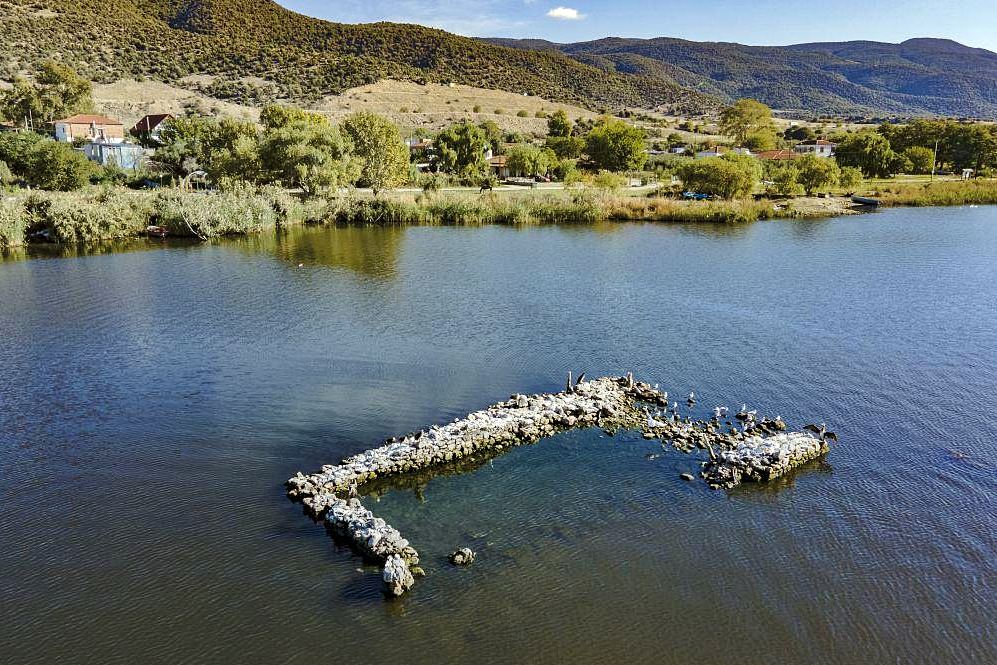
| In the lake Volvi of Macedonia, 65m south of the shore of the village Megali Volvi |
| Region > Prefecture: |  |
| Central Macedonia Thessaloniki | |
| Municipality > Town: | |
| City of Volvi • Megali Volvi | |
| Altitude: | |
|
Elevation ≈ 30 m (Relative Height≈0 m) |
| Time of Construction | Origin | |
| probably 6th cent. | Early ΒΥΖΑΝΤΙΝΕ  |
|
| Castle Type | Condition | |
| Castle Ruins |
Few Remains
|
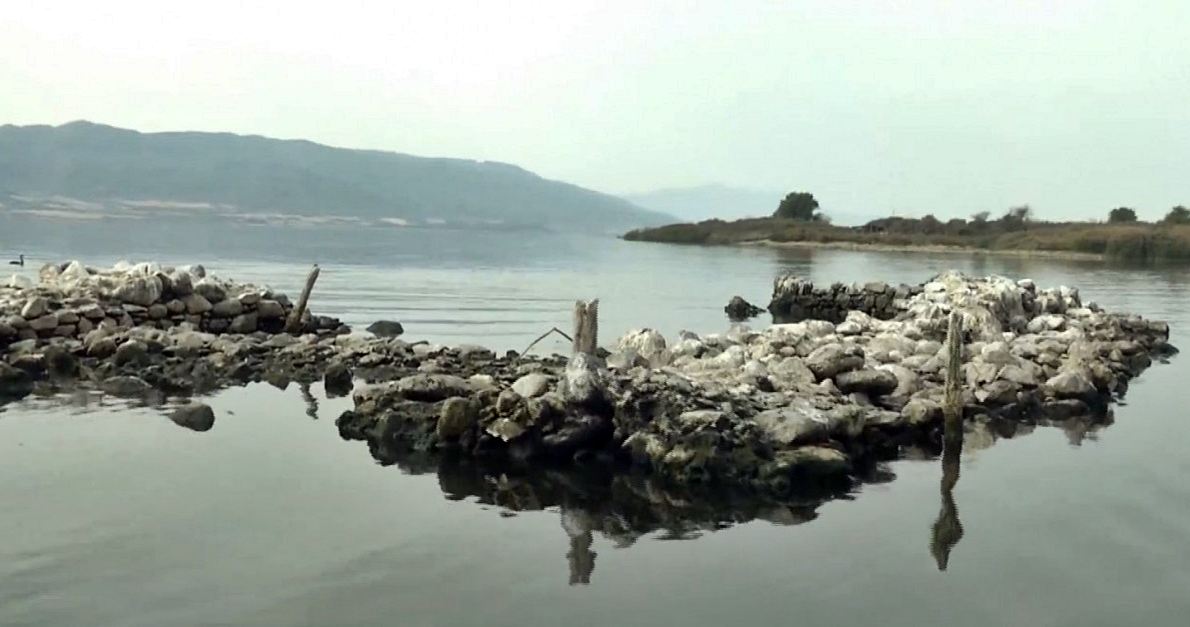
Ruins of a fortress in Lake Volvi.
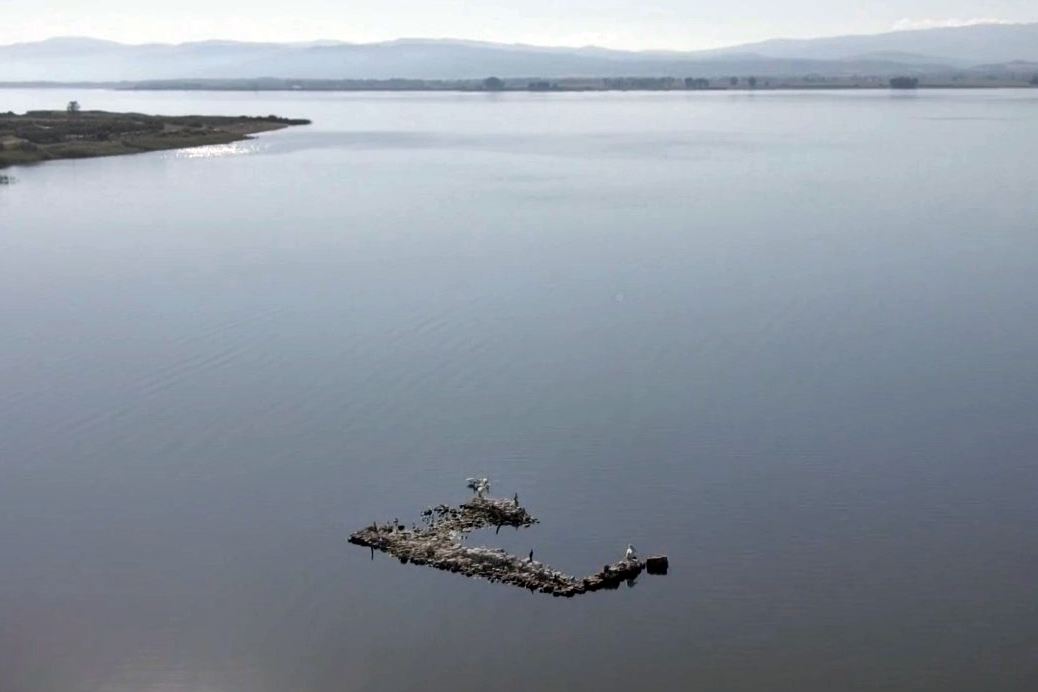
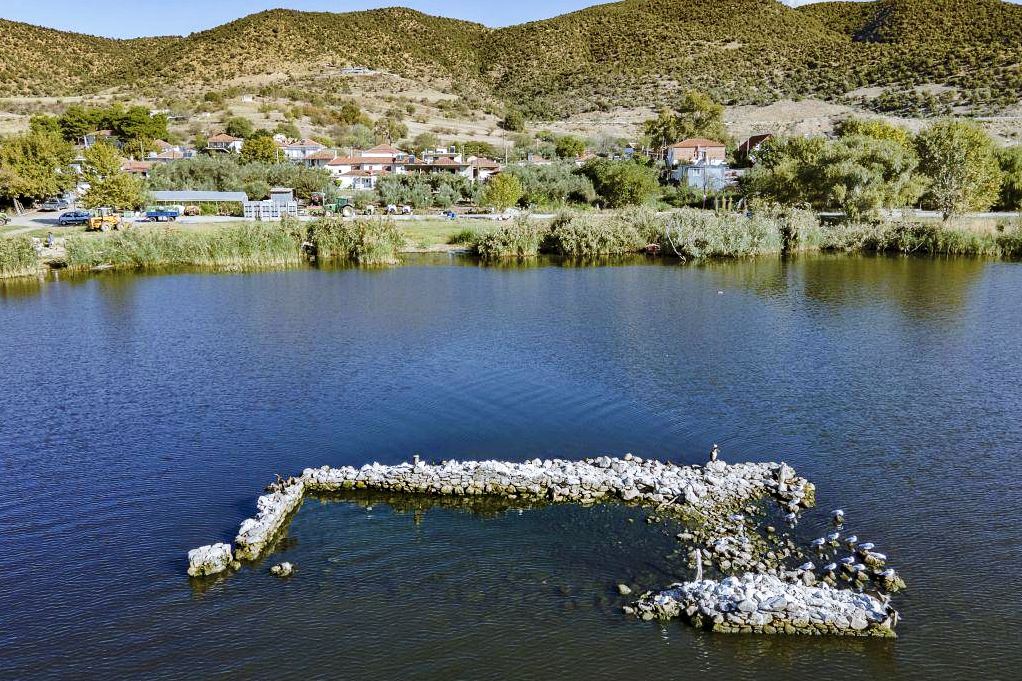
Under normal conditions, the fortress remains submerged under the water of the lake and is not visible. However, the upper part becomes visible during periods of prolonged drought, when the lake level drops significantly. The last such emergence occurred during the period 2024–2025 and was accompanied by increased publicity, however, the phenomenon is not unknown: it has been repeated several times in the past, as can be seen by studying the historical images of Google Earth.
The location of the fortress is approximately 65 meters from the northern shore of the lake, just south of the village of Megali Volvi.
History
The castle has been studied in the past by Nikolaos Moutsopoulos (1927-2019), a professor at the Polytechnic School of the Aristotle University of Thessaloniki, who had even collaborated in the 1960s and 1970s with divers who conducted underwater research – probably of an amateur nature – at the fortress. Apart from Moutsopoulos – who was a professor of Architecture and not an archaeologist – no systematic research has been carried out at the castle, as far as we know.
According to Professor Moutsopoulos, this fortress is the castle of Volvos mentioned by the historian Procopius in his work On Buildings (Peri Ktismaton), book IV, which records all the castles that were built or repaired under Justinian in the 6th century.
This identification is generally accepted, but is not considered absolutely certain, as there are other ruins in the wider area that could correspond to the name “Volvos”.
If, however, this is indeed the “Volvos” fortress, we must conclude that the level of Lake Volvi during Byzantine times was significantly lower. This conclusion does not contradict what we know about the history of the area: it is known that until the 19th century, north of Volvi, in the area of the present-day village of Mavrouda, there were two more large lakes. When these dried up, a large part of their waters ended up in Volvi, raising its level (a similar case had occurred in lake Yliki after the drying up of Kopaida).
Apart from the possible mention of the castle by Procopius, we have no other reference to the castle from a later historical source. It is not mentioned either by travelers who could not possibly have missed a castle on a lake, which was also located very close to the Egnatia road. This means that the castle probably did not exist during the Middle Byzantine and Late Byzantine periods. It seems that it fell into disuse or was destroyed relatively soon, either due to the barbarian raids that began in the late 6th century and led to the desolation of many areas of central Macedonia, or due to the unpredictable behavior of the lake’s waters.
Structure, Fortification & Buildings
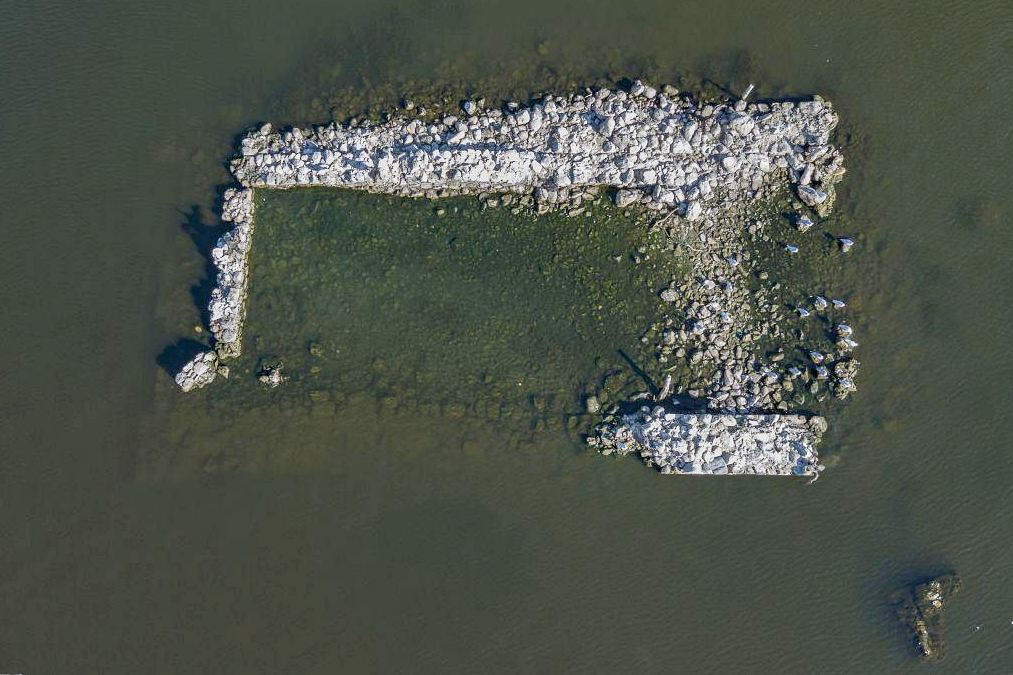
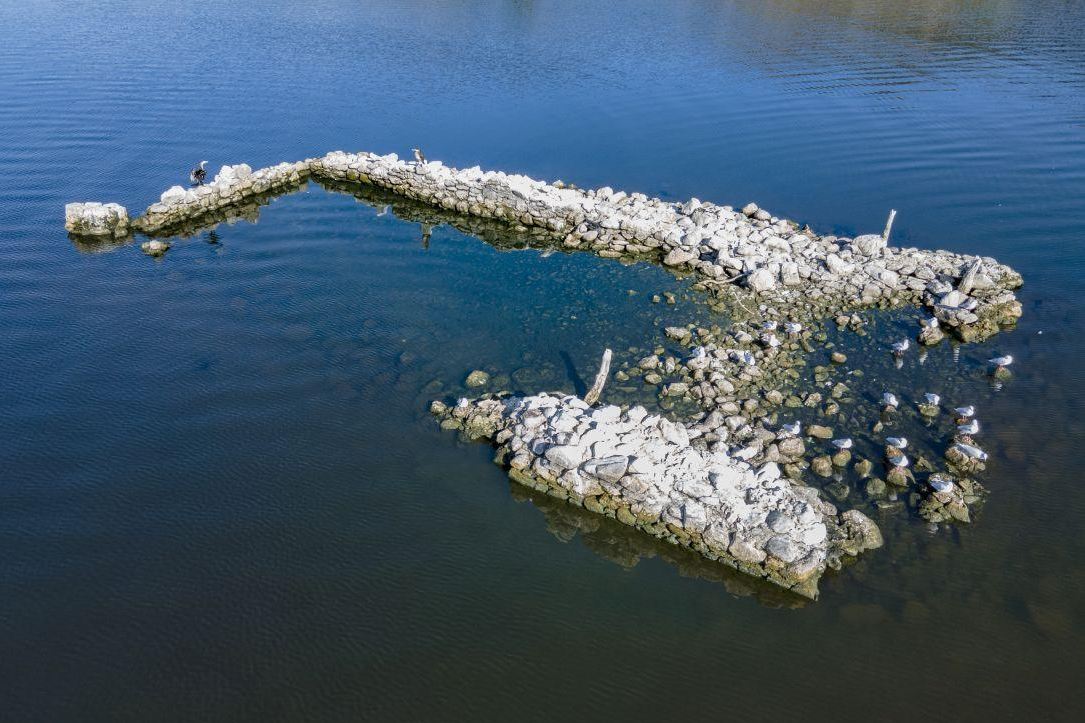
What is mainly visible in the castle today, when it emerges, is the base of a large rectangular building with an internal coating, which was most likely a cistern (water tank). Around it, ruins of other buildings of undetermined use can be seen, which are densely arranged but do not occupy a large area.
In general, cisterns were usually placed in the basement of towers, especially when the available space within the castle was limited. Given the large size of this particular cistern, it can be reasonably assumed that it was located at the base of a large tower that does not survive today. Of course, the question arises as to why such a large water tank was necessary in the middle of the lake; however, the existence of an internal coating removes any doubt as to the use of the building.
We assume that in its original form the fortress was a small fortified complex on a rock near the shore of the lake. This complex would have included a large tower and a few auxiliary buildings, while it would probably also have had a peripheral wall. The rock, apparently, communicated with the coast either through a narrow strip of land or through a jetty, traces of which have indeed been identified.
| First entry in Kastrologos: | August 2026 |
| Access |
|---|
| Entrance: |
| Access is possible by boat from Megali Volvi only when the water level is low. For most visitors, the view from the shore is enough. |