Kefalovryso, Messini, Messenia,Peloponnese
Castle of Chalvatsou
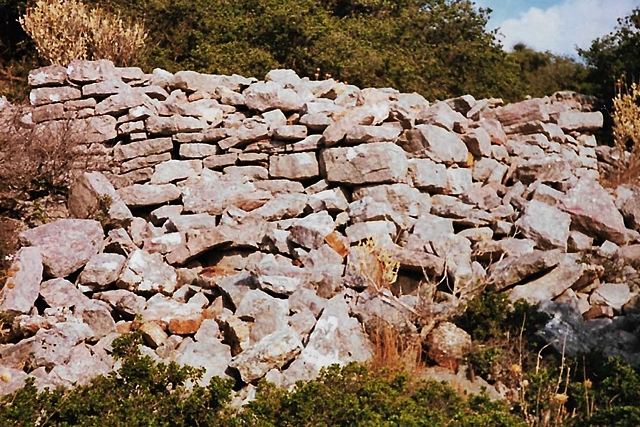
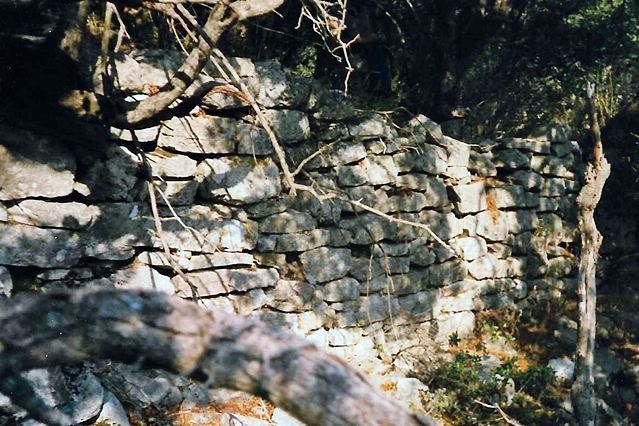
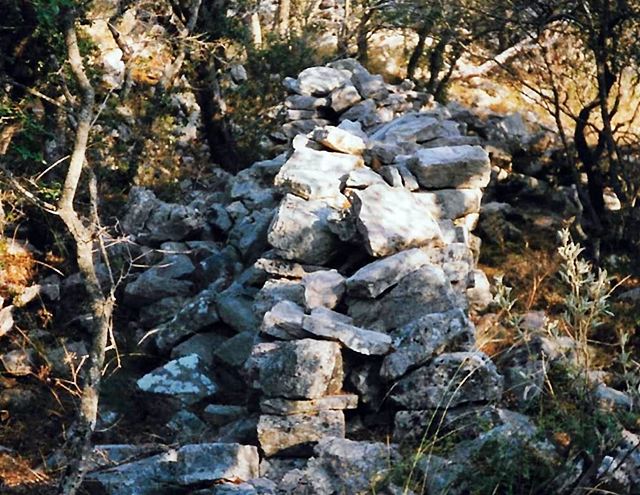
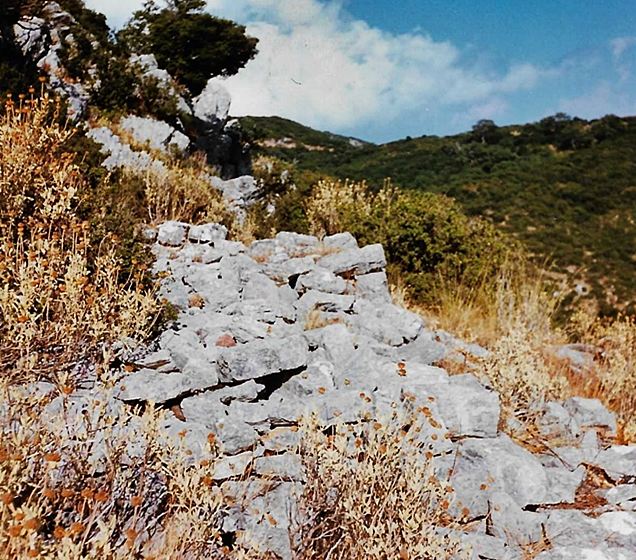
| Location: |
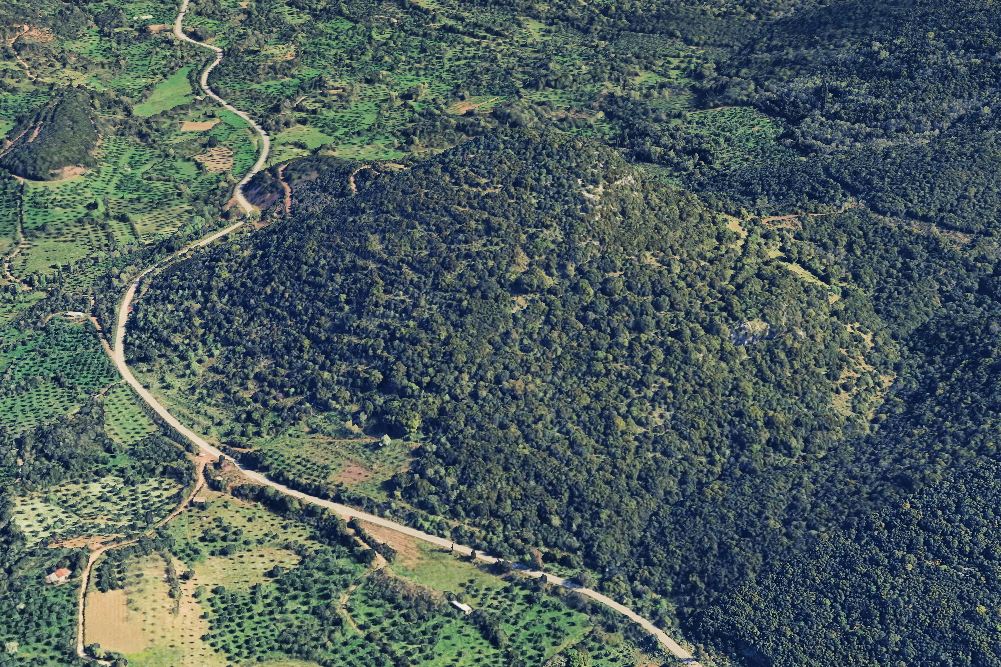
| On a hill between the villages Platanovrysi and Kafalovryso in Messenia |
| Region > Prefecture: | 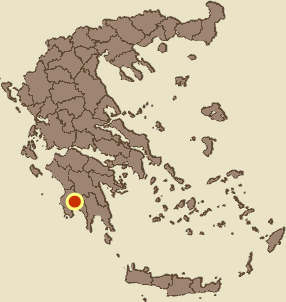 |
| Peloponnese Messenia | |
| Municipality > Town: | |
| City of Messini • Kefalovryso | |
| Altitude: | |
|
Elevation ≈ 630 m (Relative Height≈160 m) |
| Time of Construction | Origin | |
| 13th or 14th cent. | FRANKISH  |
|
| Castle Type | Condition | |
| Castle Ruins |
Few Remains
|
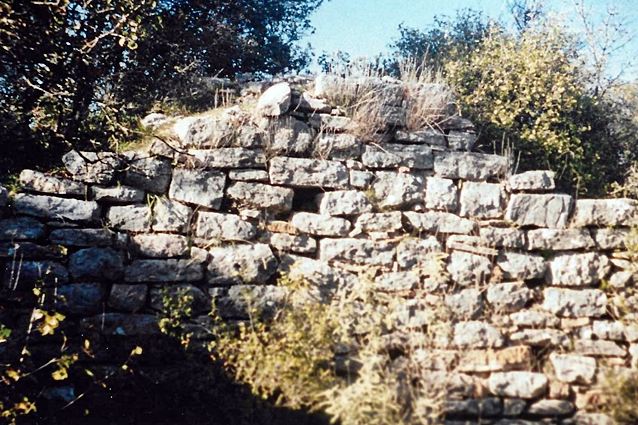
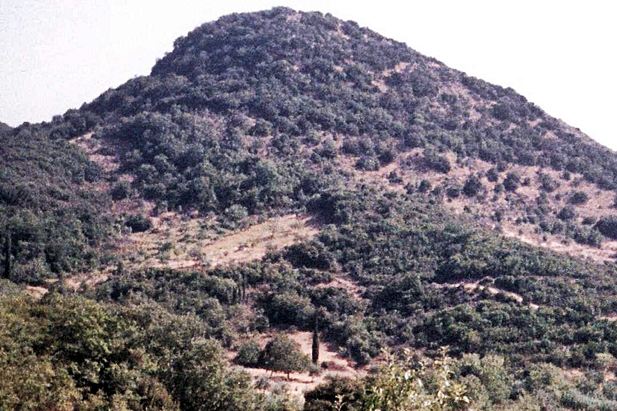
The ruins of a castle and a settlement, hidden amidst the vegetation on a conical hill between the villages of Platanovrysi and Kefalovryso in Messenia. Before 1956, Kefalovryso was known as Chalvatsou or Chalvatso.
History
The history of the castle is unknown. The visible ruins are undoubtedly medieval, but the hill has never been systematically investigated, making a more precise dating impossible.
However, it is possible that the hill was inhabited as early as Antiquity. This hypothesis is supported by certain finds from the Classical period —such as a bronze double axe and coins— as well as the presence of a Proto-Mycenaean tomb a short distance to the west of the hill. Furthermore, the hill’s morphology —its commanding, position within a small valley, combined with adequate natural defenses and the presence of springs— favors settlement and reinforces the theory of earlier habitation.
It is possible that the castle dates back to the Byzantine period, though it is most likely of Frankish origin.
It is highly likely that the castle is to be identified with the Janina castle, which appears in the Venetian lists of castles from the years 1463, 1467, 1469, and 1471. From 1467 onwards, it is recorded as destroyed.
Janina is also mentioned in the Chronicle of the Tocco. This anonymous chronicle in verse recounts events from the period 1375 to 1425, focusing on the Tocco family (rulers of Cephalonia who also played a leading role in the Despotate of Epirus and the Principality of Achaea).
Janina is mentioned alongside Voutaina in that chronicle. Moreover, in the 1463 list of castles, Janina is recorded immediately before Voutaina. Thus, Janina was certainly located near the castle of Voutaina. The Voutaina Castle is located very close to the Chalvatsou Castle – just 3.5 km to the northwest. Given the absence of ruins from any other castle in the vicinity, the hypothesis that Chalvatsou Castle was the Frankish “Janina” is highly logical and extremely probable. If this is indeed the case, Chalvatsou Castle must have been built during the 13th or 14th century.
The name “Chalvatsou” first appears in census records from the Second Venetian Period, specifically in 1689 and 1700. The name is of either Turkish or Slavic origin and remained in use until 1956, when it was changed to Kefalovryso. However, from that first record, “Chalvatsou” referred to the village at its current location rather than to the castle/settlement (Janina) situated approximately 2 kilometers to the south.
Structure, Fortification & Buildings
To the best of our knowledge, the hill has not been archaeologically investigated; consequently, we lack a complete picture of the layout of the fortifications and the settlement situated upon it.
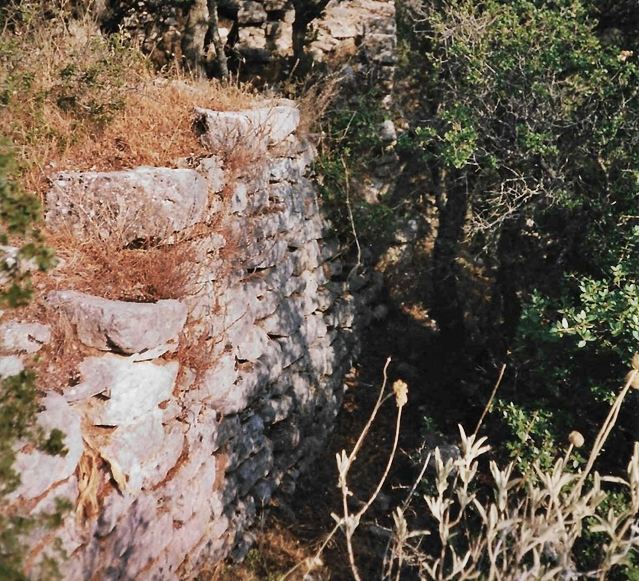
The ruins are located on the southern and southeastern sides of the hill. The thickness of the walls reaches 2m and the enclosure appears to be unusually large for a castle in such a remote region.
Notable among the interior structures are a cistern located in the western section and the ruins of a church situated roughly in the center of the enclosure.
The castle’s water supply was secured by springs found all around the hill's slopes, as well as by the stream flowing at the hill's northwestern foothills, which originates from the Kefalovryso spring.
Accessing the castle from the surrounding slopes is extremely difficult, except on its western side. However, the mountain saddle to the east of the castle also constituted a vulnerable point.
| First entry in Kastrologos: | October 2026 |
Sources
- Website Αριστομένης ο Μεσσήνιος - Κάστρο Χαλβάτσου, Μεσσηνία
| Access |
|---|
| Entrance: |
| Free access. |